


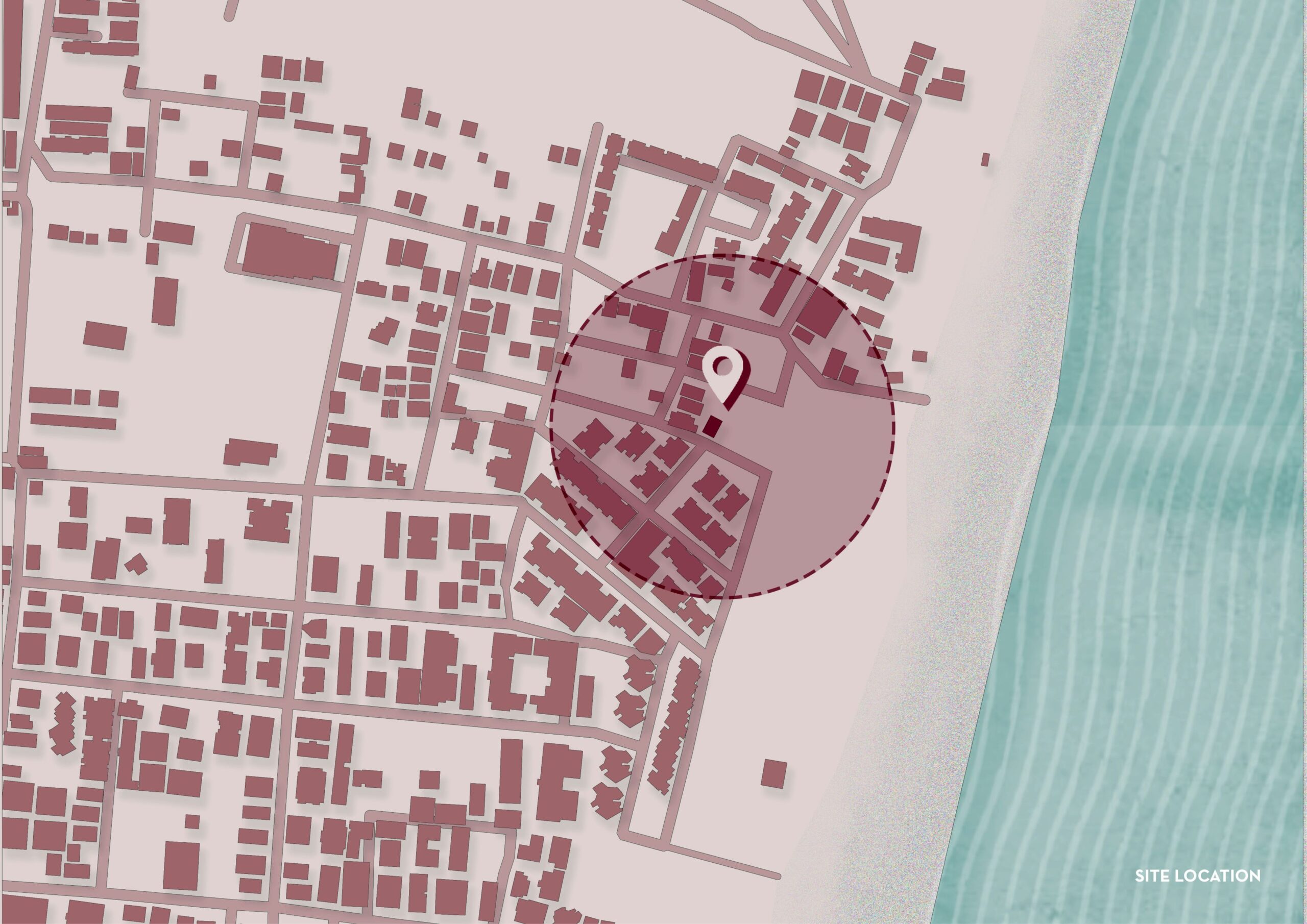
Located on the end of a quiet, residential street in Chennai, overlooking the ocean – the project site called out for a house that opened and offered itself to the surroundings but also swaddled in its layers of privacy and barriers shielding itself from the open environment it is placed in. The design brief was very simple hence making it much more challenging – a gift from a father for his daughter who was getting married and the house would be the starting point of her new journey. The 39’x93’ linear plot had its larger side facing the ocean front with a beautiful view of the Bay of Bengal. Like every beach front property, a default requirement was to ensure that every part of the house had a view of the ocean.
Design Planning:

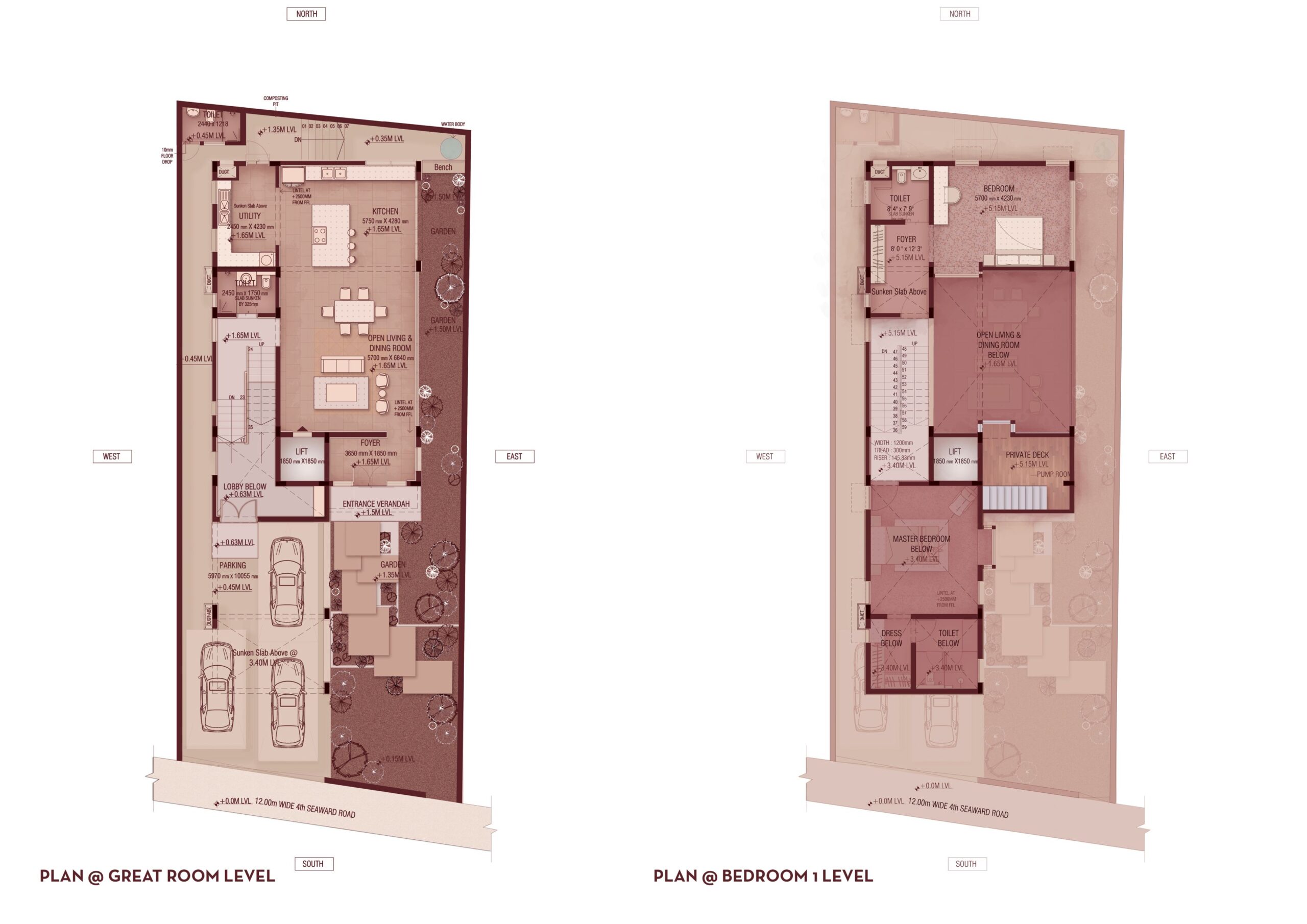
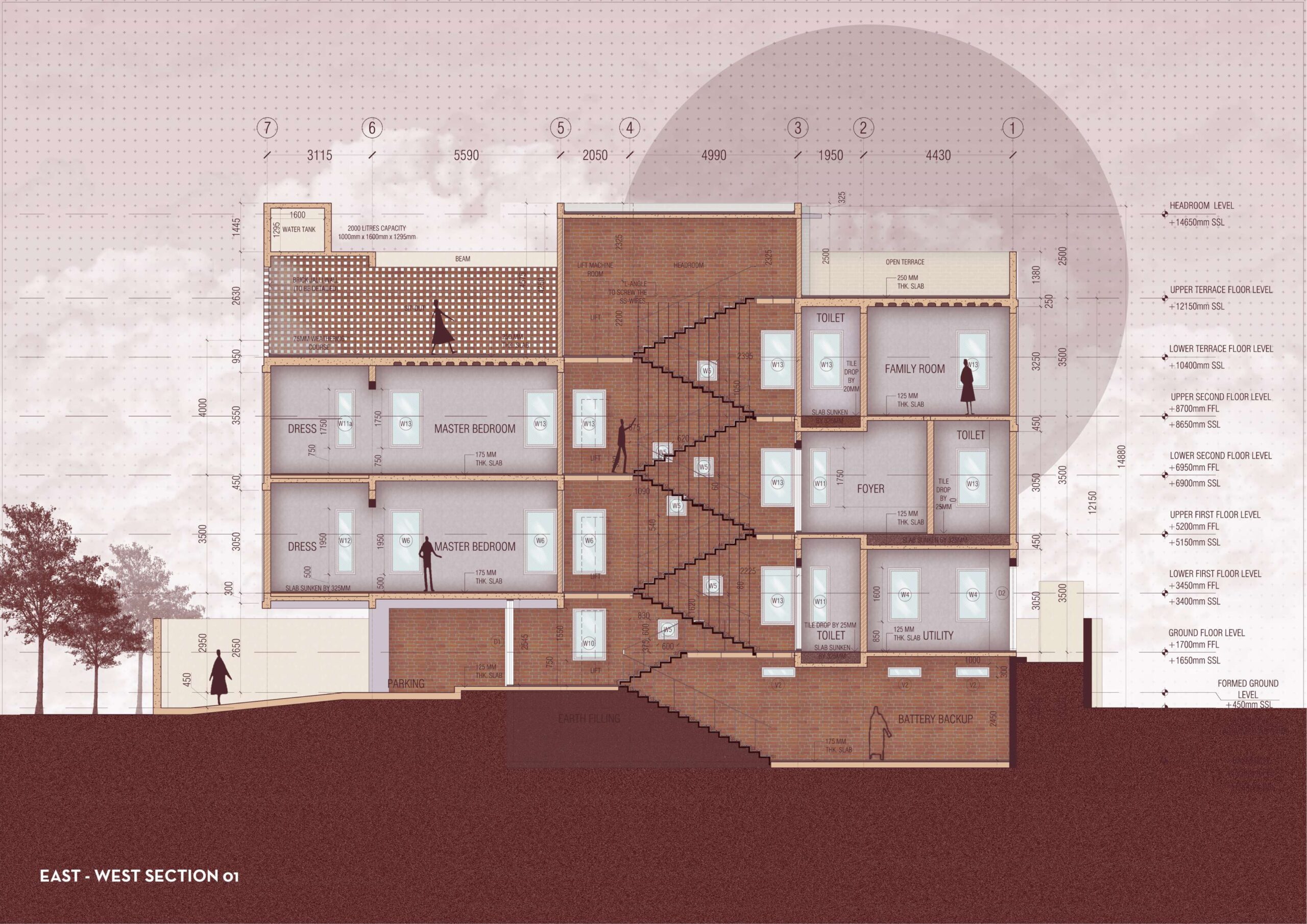
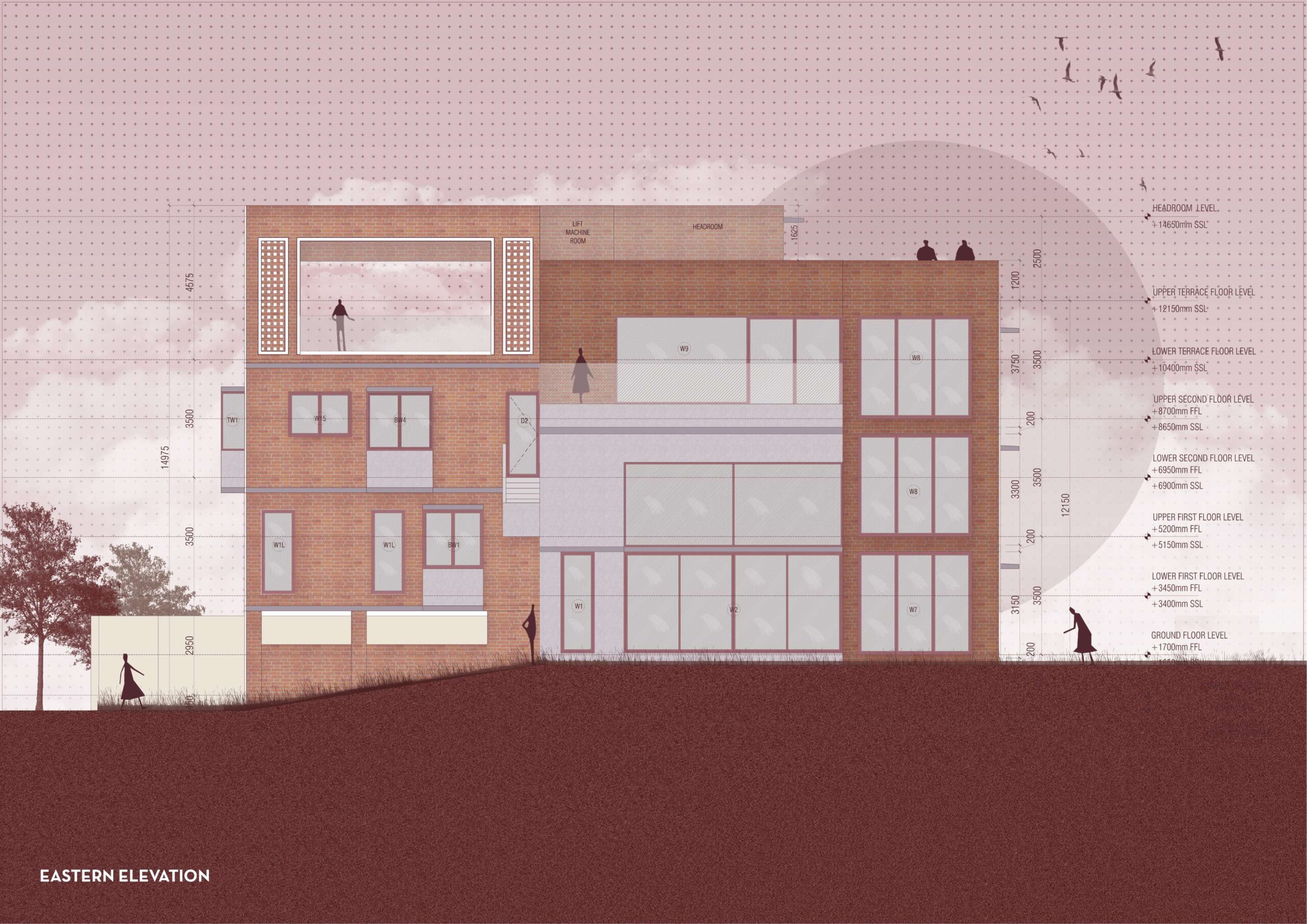
The entire house was elevated by 1.5meters with a meandering pedestrian approach through an entry garden that led the user into the house. The services and utilities like the car parking, helper’s accommodation and battery backup room were placed in a part basement. The entry garden takes the user into a small foyer that leads one into a large great room.


It is through this great room that the project derives its name – “The Gully Home”. The great room takes its inspiration from a simple vibrant street (gully) of the older parts of the city. The street is where all the residents assemble – conversations take place, bonds are formed, one hears the sound of laughter, children playing and a whole lot of joy. Similarly, the great room is envisaged as where most of the happy memories of the users are made and is the core of all activities of the house. The triple-height space has an open living-dining-kitchen layout, that opens itself into a linear garden with a view of the sea beyond. Once within the space, the users are cut away from the hustle and bustle of the city and enter a world of their own.


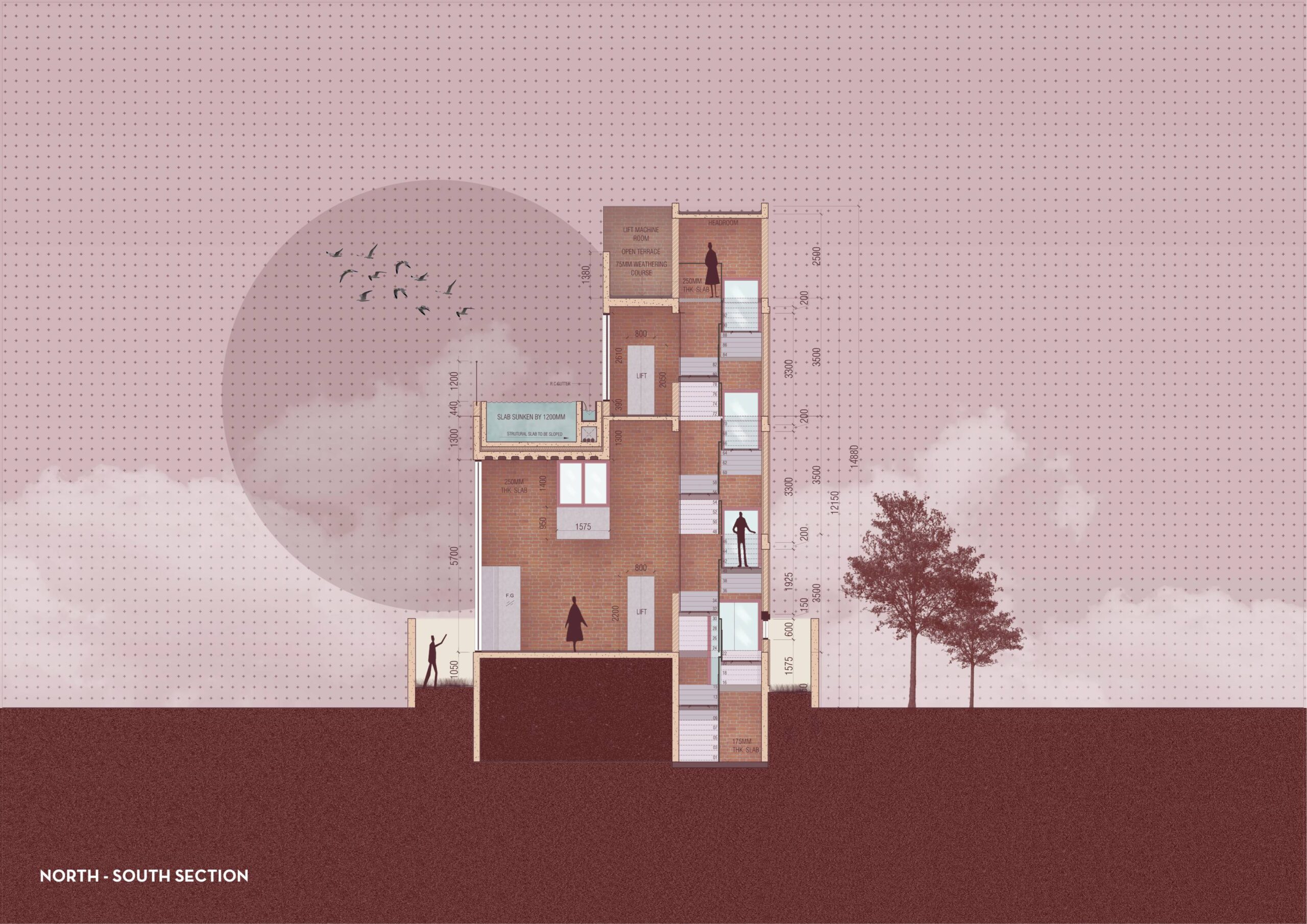
A conventional residence would involve floor planes stacked across three levels. But to further enhance vertical cross connectivity, the floor plates are staggered by 5 feet on either side of the triple height space, creating views into the great room from the other spaces. The floor plates are connected by an open metal dog legged staircase with each flight leading the user into a bedroom. A set of internal bay windows from every bedroom look down into the great room thus making the entire space, visually and physically interconnected. In addition to the internal bay windows, a set of exterior ones project themselves out to get a 180 view of the ocean with a small seat making it a cozy reading/coffee nook.


The master bedroom has a set of private stairs that lead to a private terrace sandwiched between the foyer and the swimming pool. The terrace gets a direct view of the ocean on the front, the entry garden on the right and a bay window looking down into the great room on the left, thus truly making it a master space for the couple. The upper most level hosts the lounge room overlooking a swimming pool. The glazing is done in manner that once opened; the deck becomes a part of the lounge connecting it directly with the pool. Finally, the top most level of the house is a terrace sit out enclosed by brick jaalis creating framed openings towards the ocean.


Bio Climatic Design Approach and Materials
While the east facing building works well in creating direct views towards the ocean, it also faces the wrath of the hot morning sun causing immense heat gain. The entire façade is double skinned with a layer of porotherm blocks forming the inner core and half cut bricks on either side. The use of natural clay materials for the exterior skin of the building results in cooling the interior spaces and also retains the heat within the walls instead of transmitting it. While this solves the heat gain within the area of solid walls, for expansive views of the ocean it is essential to give large glazing which would lead to heat gain within the spaces.
A window system was designed where each window consisted of an inward opening glass shutter and an outer aluminium shutter with operable louvers. Due to this the following 6 permutations were possible –
1. Completely shut with zero visibility and ventilation
2. Complete open with visibility and airflow
3. Visually open but no air flow
4. Partial Visibility with 50% airflow
5. No Visibility with 25% air flow
6. 50% Visibility with no airflow. This system lets the user alter the experience within the room based on the requirement and usability.

The internal walls too are a combination of sliced bricks and lime plaster walls continuing the materiality from outside to inside. The flooring is natural polished kota, that reflects heat and remains cool throughout. The bedrooms are finished with terrazzo flooring of different patterns. The roof of a building usually contributes to majority of the heat gain. Hence, to minimize this, the slabs are doubly insulated by inserting terracotta pots as fillers that minimize the volume of concrete used in the slabs as well. The roof of the terrace is covered by solar panels hence the entire house can be operated using only solar energy.


Interior Design
The Gully Home is a one-off project where the architecture completely defines its interiors. With a connect of the inside to the outside, there is no difference between the exterior and interior materials. Sliced brick cladding and lime plastered walls along with exposed concrete structural elements form the major interior materials. The terracotta pots on the ceiling accentuate these materials and add an interesting touch to the space. No false ceiling is used within the house and all the slabs are exposed concrete. The furniture is a combination of wood with fabric and cane to continue the rustic theme within the house. Most of the furniture is custom made using artisan carpenters and designed per the users’ specific requirements.


The Gully Home is an attempt at reimagining how modern-day family living can exist in a sustainable manner. It is a house that is contextually rooted and responds to all surrounding architectural and climatic requirements thus making it an embodiment of climatic responsive and functional design principles.
More images


Drawings



Project facts
Architects: ED+ Architecture
Architects Scope: Architecture, Interior Design, Landscape Design, Lighting Design, HVAC & MEP Coordination, Structural Coordination, Civil Coordination
Project Team: Ammaar Chowdry, Mridula S Chowdry, Purva Bhende, Mano Bharathi, Sai Maalavika
Project Location: Chennai, Tamil Nadu, India
Project Cost: INR 40 Million (1,000,000$)
Completion Year: 2022
Site Area: 3661 sq.ft
Gross Area: 6275 sq.ft
Execution Team: Ramaniyam Real Estate
Photography: BRS Sreenag


One Response
Great