VINOD RESIDENCE, at COIMBATORE, by Murali Architects Team

Vinod Residence, at Coimbatore, by Murali Architects Team

This sculpture has been positioned in a residential zone in Coimbatore, with a rustic yet futuristic parametric façade. Privacy being the most required factor, the façade gets a rustic double skin. And a search for newness with composite construction technique gave way for this. And this was a crucial step, coming out of the indigenous way and breaking into novelty.
VINOD RESIDENCE, at COIMBATORE, by Murali Architects Team

VINOD RESIDENCE, at COIMBATORE, by Murali Architects Team 

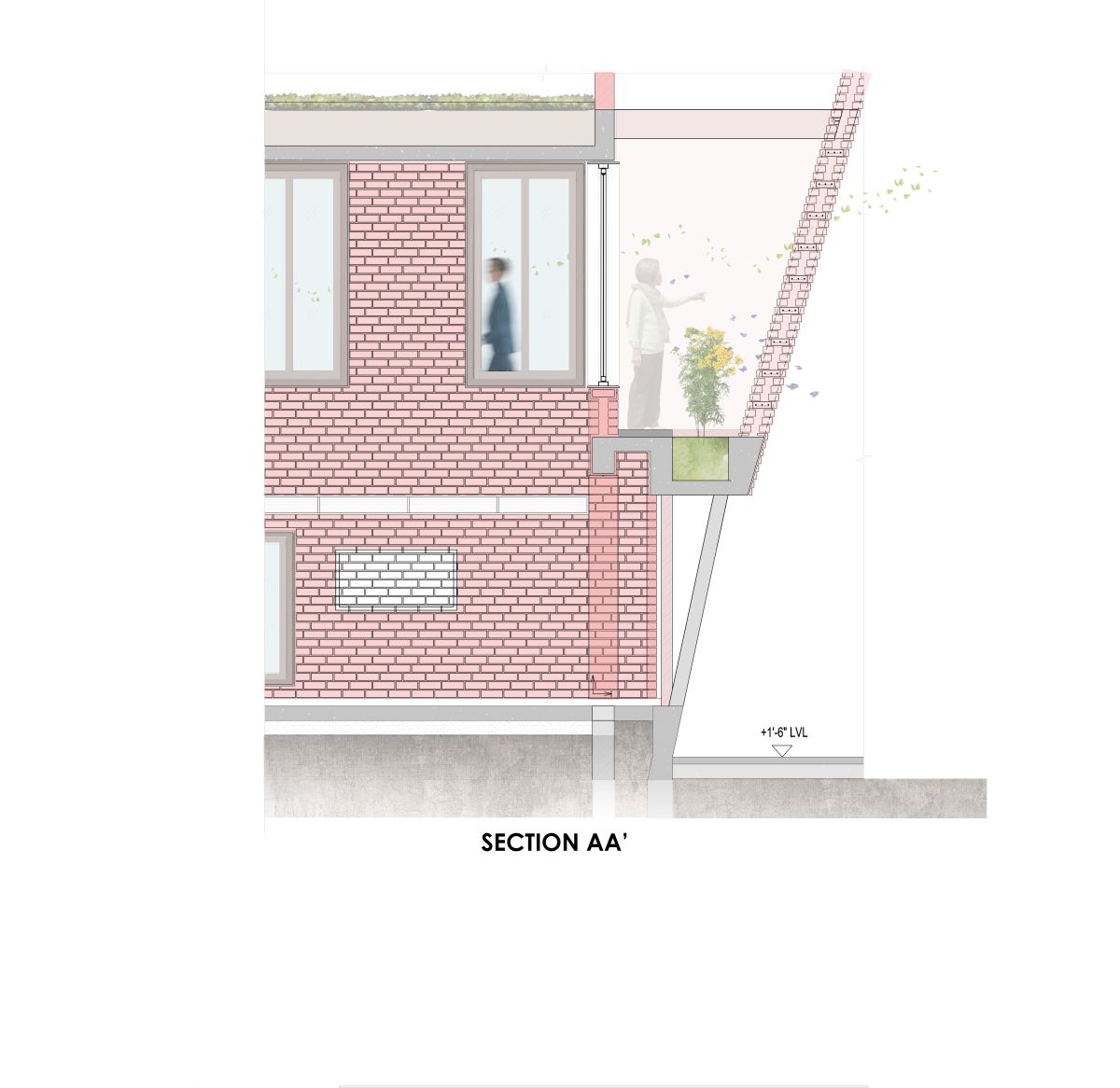
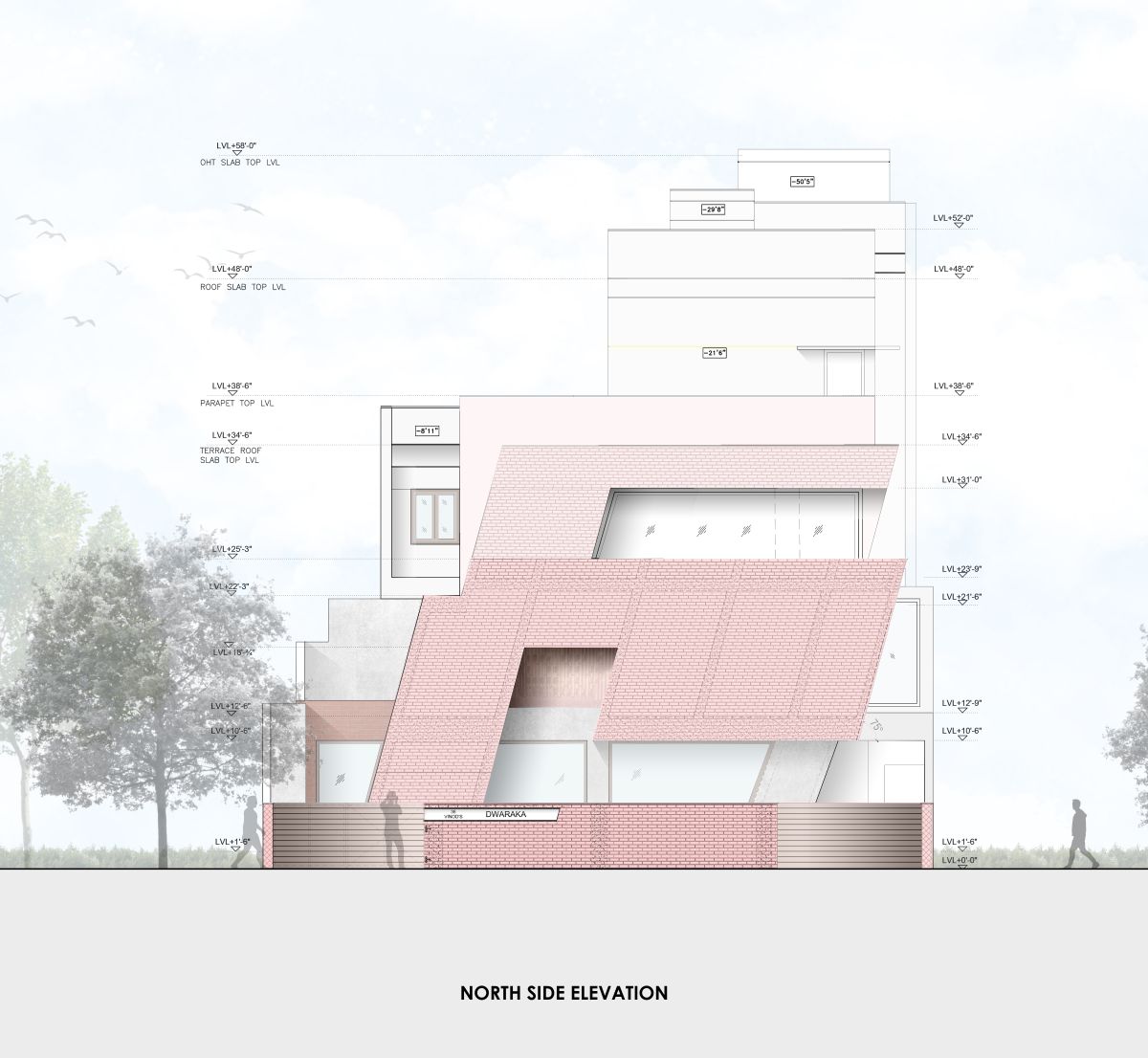
This sculpture has been positioned in a residential zone in Coimbatore, with a rustic yet futuristic parametric façade. Privacy being the most required factor, the façade gets a rustic double skin.

And a search for newness with composite construction technique gave way for this. And this was a crucial step, coming out of the indigenous way and breaking into novelty.

The façade brings out the dynamic side of the bricks. They unveil its frozen state in a new dimension, parallelly its sturdiness is also set out by its genuine exposed skin.

It is not just the façade that speaks out for itself, but also the well-ventilated interiors, where the play of light creates statements in every face of the inner brick walls.

This Introverted house cuts down the visual interaction with the outside, but it opens up spaces towards the inside into many pocket courts on various levels and a large central court that brings in a lot of sunlight and lights up the interior. It is a balanced mix of contemporary and traditional architecture, conceiving new values that respond to regionalism and a new future.

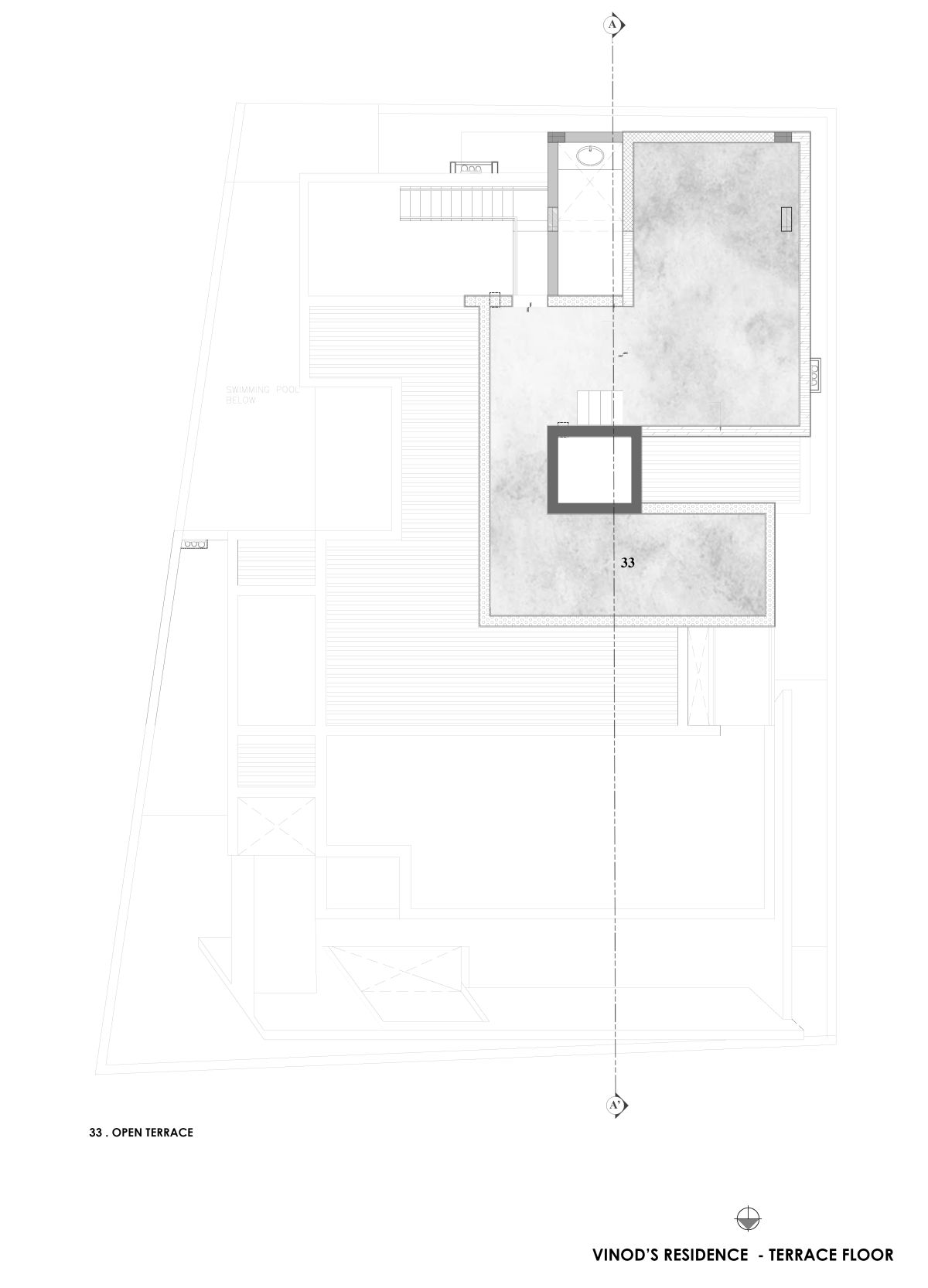
This house plays with Multi-level floors connecting through open courtyards and glass floors, creating spaces within a space.

The Massive inclined walls on the entrance welcome the user warmly and boldly.

On the Ground Floor, the double-height living room near the entrance is surrounded by green courts on two sides and gives a fresh welcoming feel to the user.

Leading to the dining is the central courtyard with puja and leveled inbuilt seating.

The Dining, Kitchen, and Gym area open out to a large sky court with a swimming pool, and this court adds a serene beauty and offers a lot of visual interconnections between spaces on various levels.

The mezzanine floor compasses a Guest room and a Family lounge for them to spend their Times together. Apart from this, there is a beautiful and serene reading nook lead from the mid-landing. As it is adorned with greenery and a swing, it makes it the right place to get lost in nature while reading.

The first floor accommodates two bedrooms. One is a Master bedroom with a landscaped court and Private balcony on either side and the other a Daughter’s bedroom with an elongated Bay window with a Featured inclined wall in the bedroom.

And this brick dream house stands up with numerous characters speaking out for themselves and a lot more to unfold in the future!

Drawings –


Client Name: Mr.Vinod

Location: Vinayakapuram , Coimbatore

Completion Year: 2020

Design Team: 

– Ar.Murali Murugan

– Ar.Seethapathi

– Ar.Deepak muthukumaran

– Mr.Sadham Hussain

– Mr.Bharthy

– Ar.Twinkle Esther

– Ar.Aruna Angelin

Picture courtesy:  Triple o pixel – Binsan Oommen

Leave a Reply

Your email address will not be published. Required fields are marked *

This site uses Akismet to reduce spam. Learn how your comment data is processed.

Recent

Massing during construction, retaining the exposed concrete facade composition, cross columns and profiled beams. Archival collection of Tibet House, 1977. Accessed in 2026

Brutalist India | Tibet House, New Delhi

As part of Brutalist India series Bhawna Dandona writes about Tibet House in New Delhi which is a non-profit cultural centre dedicated to preserving Tibetan heritage, founded in 1965 at the Dalai Lama’s request. The current building’s foundation was laid in 1974, with architect Shivnath Prasad.

Read More »
Vivek Rawal

Architecture, Power, and the Poor | “As a profession, architecture lacks moral position and has become complicit in the neoliberal dispossession of the poor.”—Vivek Rawal

Vivek Rawal argues that architecture—as a profession—is structurally aligned with political and economic power rather than social justice. He critiques how architectural education and practice prioritise developers and real estate over communities, turning housing into a market commodity. Even movements like sustainability and participation, he says, often become tools for elite consumption rather than genuine empowerment. True moral reform, according to Rawal, would mean architects relinquishing control and enabling community-led design and housing decisions.

Read More »
The Chunli Guesthouse, Shanghai, China by TEAM_BLDG 1

The Chunli Guesthouse, Shanghai, China by TEAM_BLDG

The Chunli Guesthouse, Shanghai, China by TEAM_BLDG’s response to nature, memory, and the spirit of place. The design takes “Catching” as its spiritual core, emphasizing the relationship between the architecture and the surrounding rice field landscape.

Read More »
Gender. Hysteria. Architecture. | What Might Care Look Like If It Were Not Afraid of Women? 4

Gender. Hysteria. Architecture. | What Might Care Look Like If It Were Not Afraid of Women?

What kinds of spaces exist where women can breathe without being watched? If hysteria no longer exists as a diagnosis, why does its architecture remain? Aditi A., through her research study as a part of the CEPT Writing Architecture course, in the third and last chapter of this series follows the spatial logics that developed to manage hysteria, which continue in the contemporary environments of care safety, and everyday life. If the diagnosis has been discredited, what explains the persistence of its walls?

Read More »
Kirtee Shah on architecture profession at CEPT University alumni meet

“… the way architecture [profession] is perceived and practised, it needs to move from the pedestal to the ground.”—Kirtee Shah

In his presentation at the CEPT Alumni Meet, in January 2026, Kirtee Shah offers “something to think about” for the architects and planners regarding the future of architecture profession. He urges architects to relearn and refocus on service, sustainability, and inclusivity while addressing urban chaos, poor housing, rural neglect, and climate challenges.

Read More »

Featured Publications

New Release

Stories that provoke enquiry into built environment

www.architecture.live

Subscribe & Join a Community of Lakhs of Readers

We Need Your Support

To be able to continue the work we are doing and keeping it free for all, we request our readers to support in every way possible.

Your contribution, no matter the size, helps our small team sustain this space. Thank you for your support.

Contribute using UPI

Contribute Using Cards