 The Seminar programme is run each year at the 5th year level.
The Seminar series of Fifth Year is one of the pillars holding aloft the pinnacle of the B. Arch. program at SPA, New Delhi. It comprises approximately 16 weeks of research, documentation, analysis culminating in a paper that is published in the Seminar yearbook. Running successfully for over 20 years now, the yearbook has gained a reputation in the larger academic community of Architecture in India. Working in groups of 4-6, students investigate thoroughly their research topics under the guidance of their advisors within a scope devised by the coordinators.
The research topics for the seminar program have been both theoretical and empirical in nature with themes relating to current discussions.
The last few years saw students exploring the idea of “Smart Cities” particularly in Delhi’s context, investigating typical areas of Delhi for their “Inclusivity”, deliberating on the idea of architecture and the city and so on.
However, this year we want to look into the future, 2037 with 135 students and 29 groups.
Seminar 2017- Concept Note
The research seminar program at the School of Planning and Architecture combines the unique academic resources available to the one of the India’s premier schools of design in its capital city with the enthusiasm of research abilities of students in their final year of the undergraduate program. Groups of students select areas of interest and work for a semester with full time academics and practicing architects from a variety of disciplines.
The questions and issues are open ended within a broad defined area of investigation. This allows the students to follow unexpected and unusual paths through their studies; arriving at surprising, dynamic conclusions which are sometimes overlooked or unclear in the realm of dominant, institutional research.
The 2017 research seminar group at SPA has projected Indian urban futures for 2037.
The theme originated from the need to look into the future more proactively to keep up with the technology and changes and more importantly to address the need to shift from more problem solving to visions – an attitude reflected in our research and our designs.
A frame of 20 years was selected to be far enough that the projections will not be more redundancies but close enough to avoid merely prophesying science fiction.
It is also today clear that many science fictions of the recent past have already become our present. As Alvin Tofler stated, “The rate of change of accelerating.”
It was decided that projections of the future are the result of contextual studies of the past and the present. The realms of studies include rapidly depleting resources, climate change, increasing urbanization, rapid advancements in emerging technologies; changing social, economic and political patterns; changes in professions; issues of sustainability and environmental concerns, life-spans and life- styles and changing policies and economic systems.
Indian cities can no longer be viewed as mere applications of master plans. Most Indian cities deviate from carefully planned schemata by embracing the informal, the serendipitous, the chaotic, the weird and the wonderful. If current trends are truthfully analyzed they present projections for the future. These projections foretell, warn and sometimes tell us inconvenient truths. They allow us to retrace our steps, question our beliefs and possibly change.
Projections are derived not just from facts and data but also from hopes and dreams. Students were encouraged to read, watch movies and imagine. They were asked:
What do you see? Where do you stand? Do you know what to expect? Can we at all be expected to project ourselves into the future with our feet so firmly rooted in the present? To use a famous phrase: Yes we can, Yes we must and Yes we will.
The future is now!
Seminar Co-ordinators:
Anjali Mittal, Assistant Professor, Department of Architecture, SPA, New Delhi
Abhishek Bij, Associate and The Lead Designer at Design Plus Architects.
Rajiv Bhakat, Partner of Studio CoDe
Pedagogic methods and Seminar Structure
The Seminar Course designed over 16 weeks is conducted in two formats: Lecture and Studio. Each Seminar class consists of 2 hours of Lectures co-ordinated by the Seminar Co-ordinators, and 3 hours of studio work with their respective Seminar Guides. The selection of the specific seminar topics takes place after a submission of a proposal by each student groups who are then allocated an appropriate Seminar Guide. The student group and the Seminar Guide then work as a team to further detail out their specific area of interest within the broader theme. The Seminar guides include both full-time faculty at the School (across from various departments) as well as experts from the built environment domain.
In addition, Seminar co-ordinators and seminar guides, students are also required to associate themselves with 2-3 resource persons based on the nature of their individual subject. These resource persons could be experts from any related field. This provides an interdisciplinary perspective to the Seminar.
The preparation for the Seminar begins during the summer break preceding the beginning of Fifth Year itself. The Seminar theme for the current semester is usually announced by the end of May or early June. The early announcement of the Seminar theme allows them to organise themselves into groups, identify a sub- theme from the overall theme and conduct some basic research during the vacation. This gives them a way ahead and develop a focus by the time the semester starts. The students are then expected to submit a Seminar proposal during the vacation which includes :
- Research interest
- Group Members
- Preferred Guides
- List of potential resource people
Special Lectures
Deeply rooted in an interdisciplinary approach External experts from non-design backgrounds were invited for Special lectures to provide inputs related future scenario’s in the field of climate change, e-commerce and technology in everyday life. These included:
Jatin Singh,
Founder & CEO, Skymet Weather.
Climate Change impact on India and threats to our cities.
Abhishek Upadhyay,
Head, Brand Marketing, OLX India Pvt. Ltd
The Future of E-commerce in India.
Gautam Ghai,
Founder and CEO of Sourcefuse, Technologies and a Pan-Asian restaurant chain, Happy Hakka
Technological manifestations in everyday life processes
Mode of presentation
This year marked a paradigm shift in the mode of Seminar presentations. Traditionally, the Seminar Programme was based on a presentation mode for two reasons:
a) to help students develop public speaking skills, and
b) to be able to present their arguments in a structured manner.
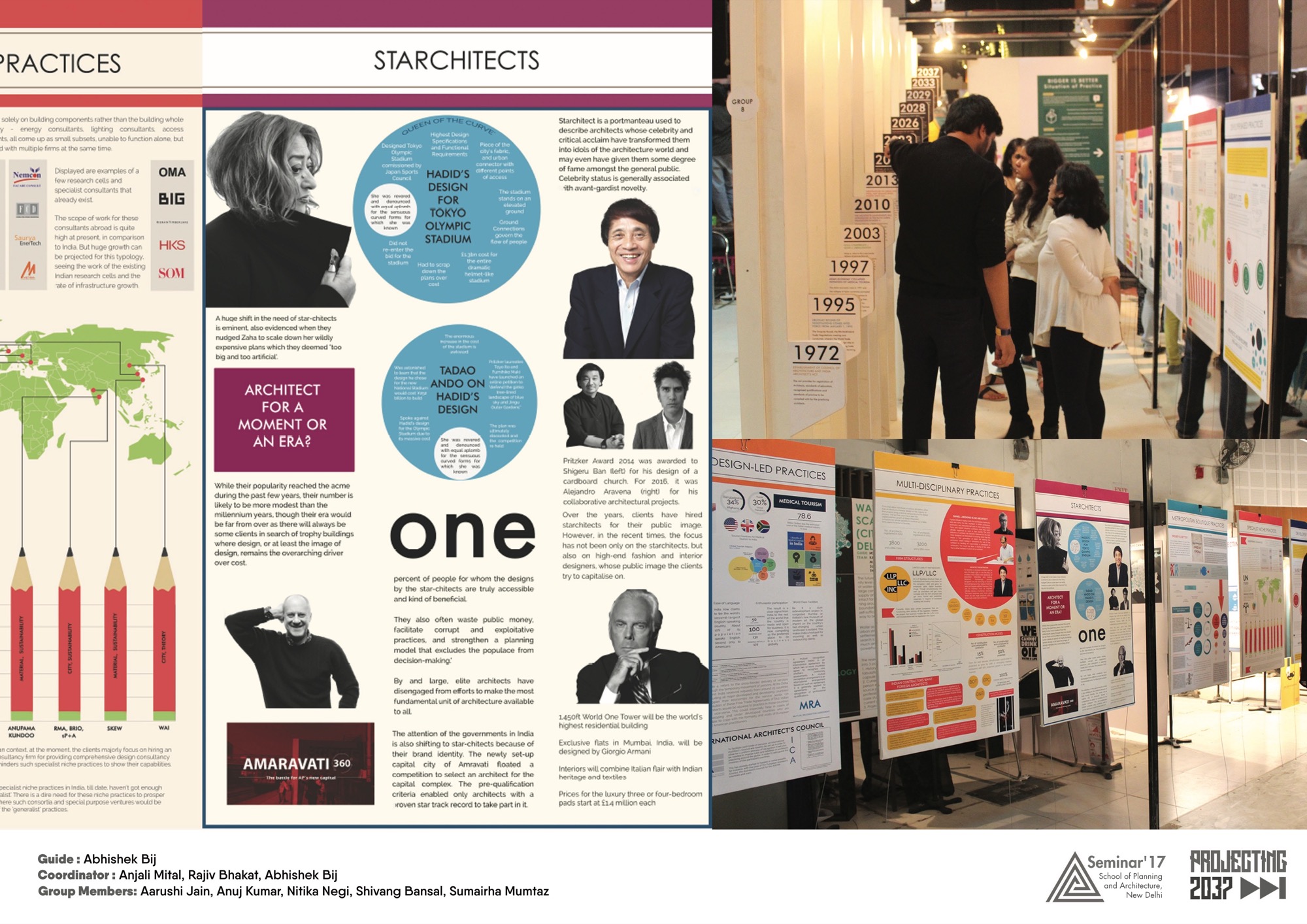
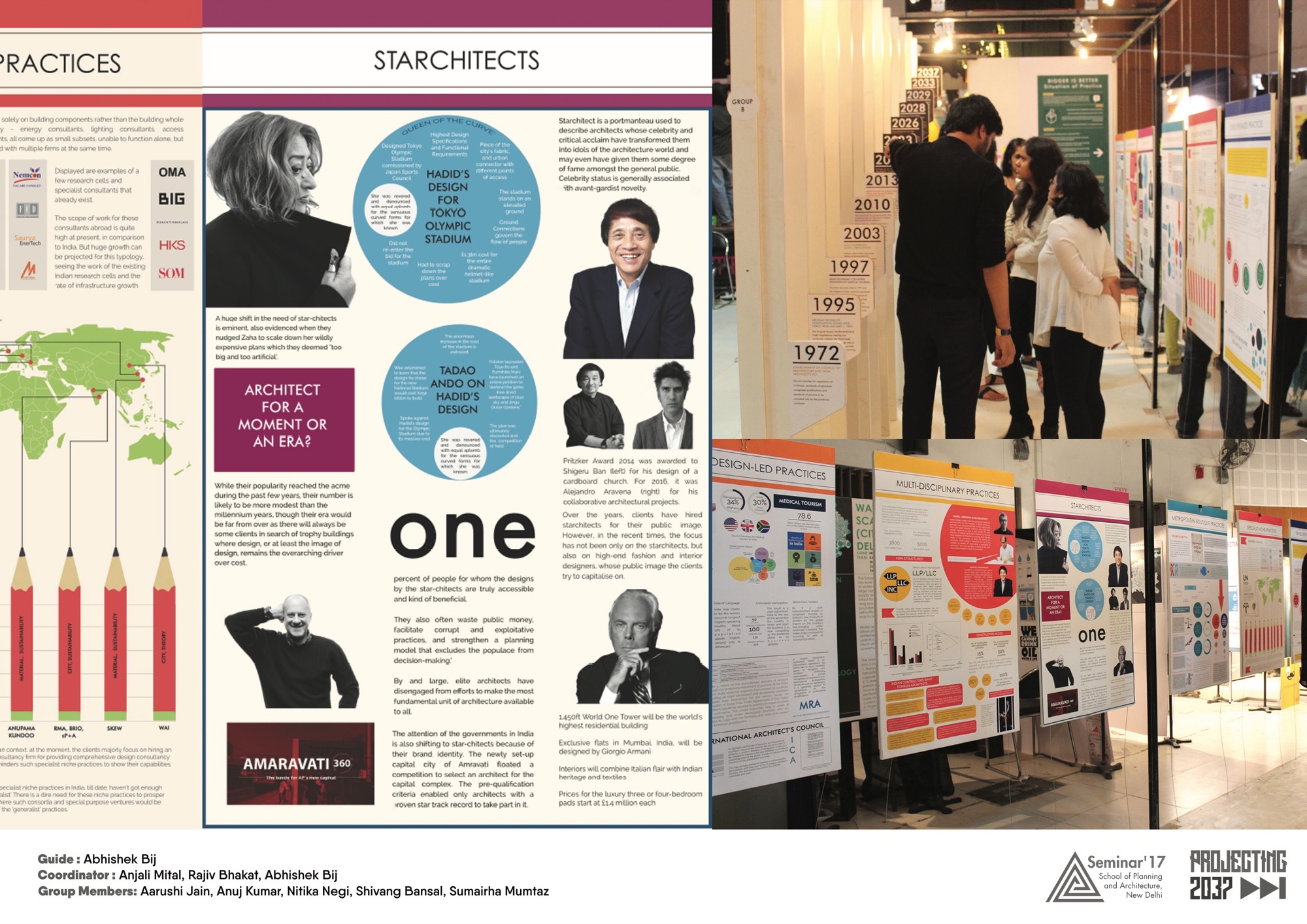
Each year the Seminar programme would therefore culminate into series of presentations by each group (10 to 15 in number) over 2 to 4 days. However, this year as a new experiment, using new emerging technologies in visual media all the presentations (29 groups) took place simultaneously in a single space over multiple podiums. These presentations were not only running simultaneously but were also interactive, installation based and maximised on user participation. The student group employed various multimedia techniques including VR glasses, games for user experience, installations etc. Each student was allocated a vertical wall space of 10’ x 8’ as their final mode of presentation which could extend into any three- dimensional space of their choice. Both the students and the audience found this new experiment extremely successful for primarily two reasons:
- Audience could visit and interact with in each of the Seminar group as their ease. They were also able to have more focussed discussions with them.
- The students found the mode of presentation to be very effective as they could interact with the audience, respond to their questions and more importantly it offered them multiple opportunities to present their work.
At the end of the term, each group submitted a 2000 word essay along with photo documentation of the final presentations. The final papers are being currently processed for a publication into a Seminar book.
Seminar Topics
1. TwentyYearsofNothing-TheFutureofHousingInadequacy+1
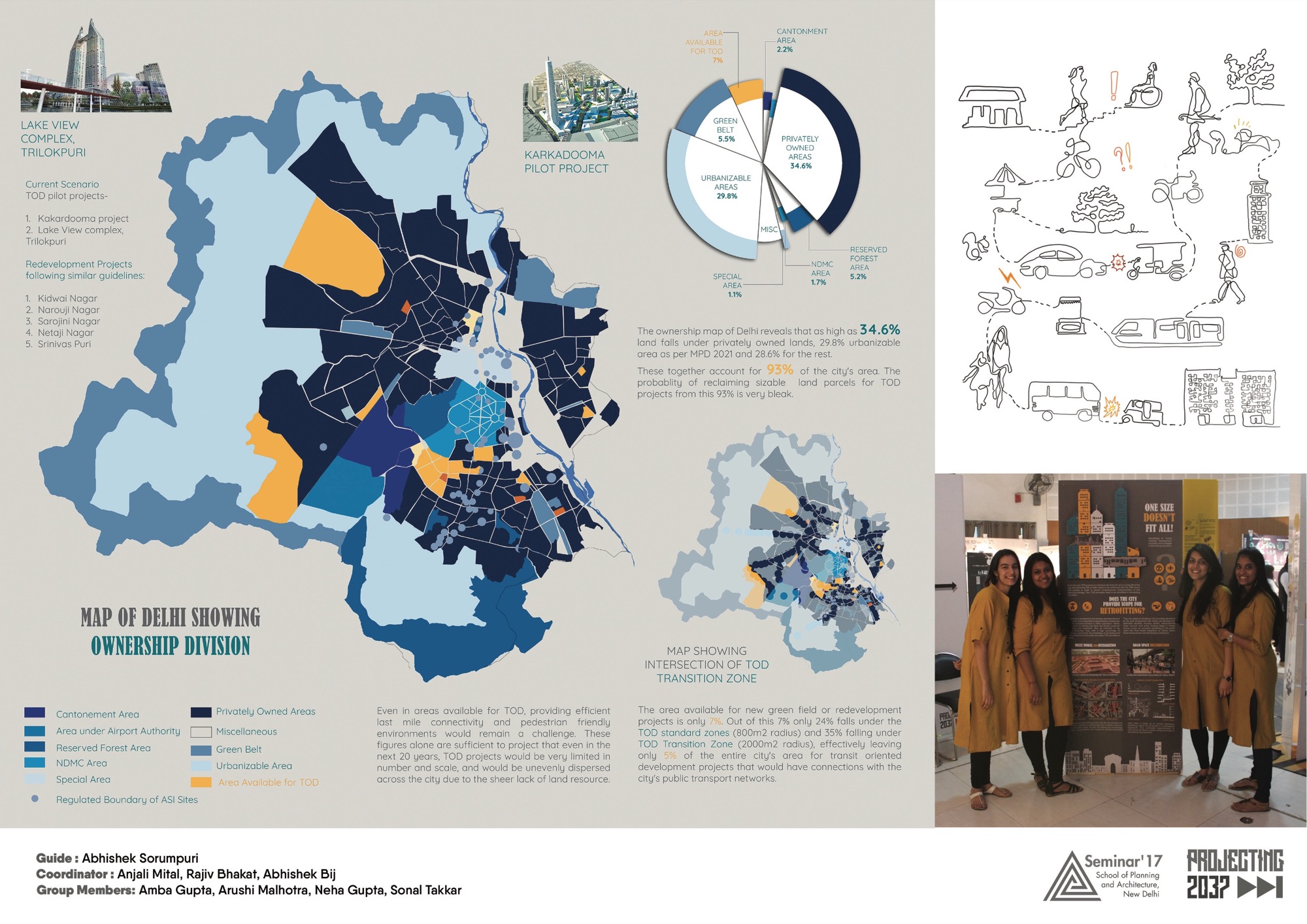
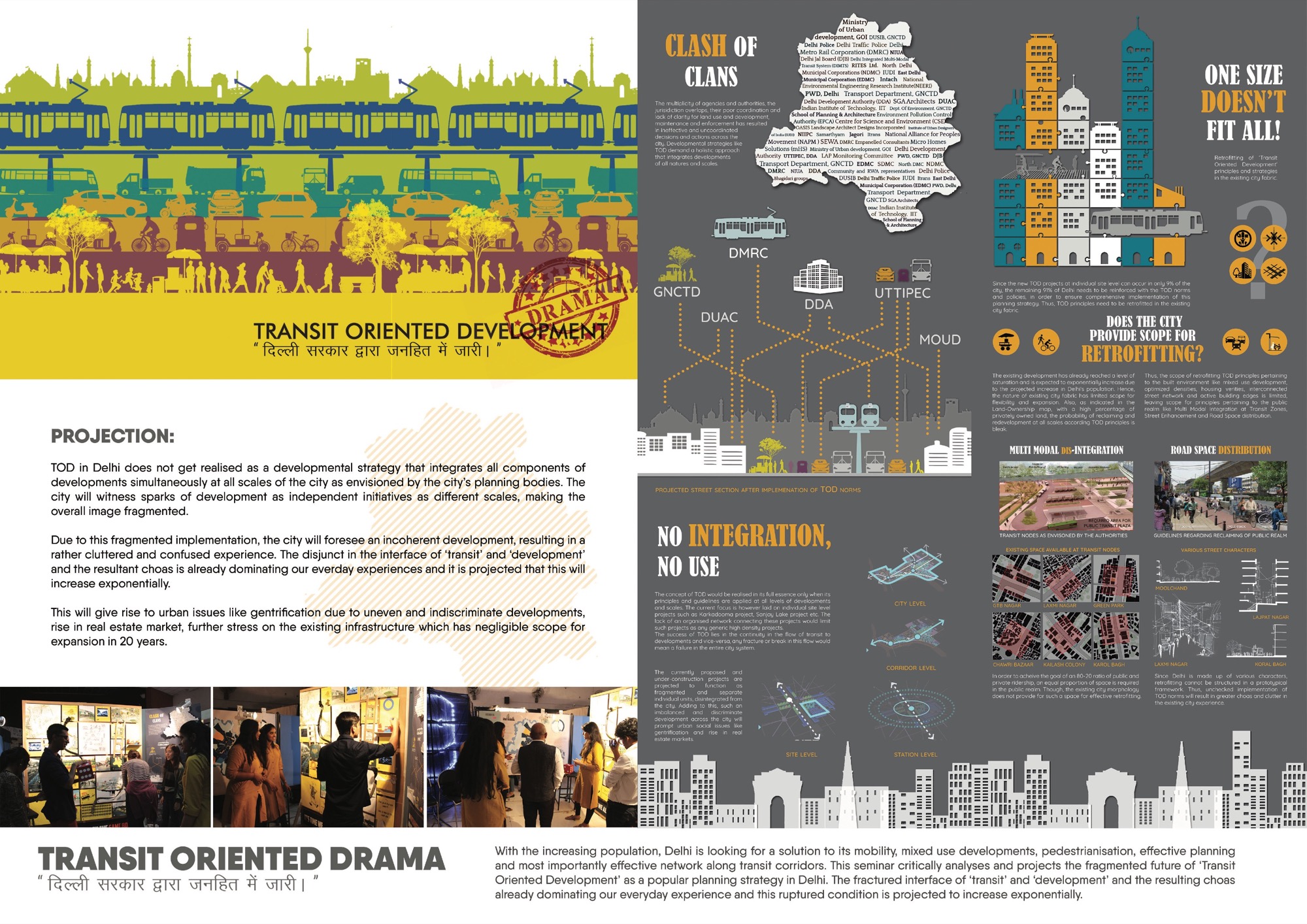
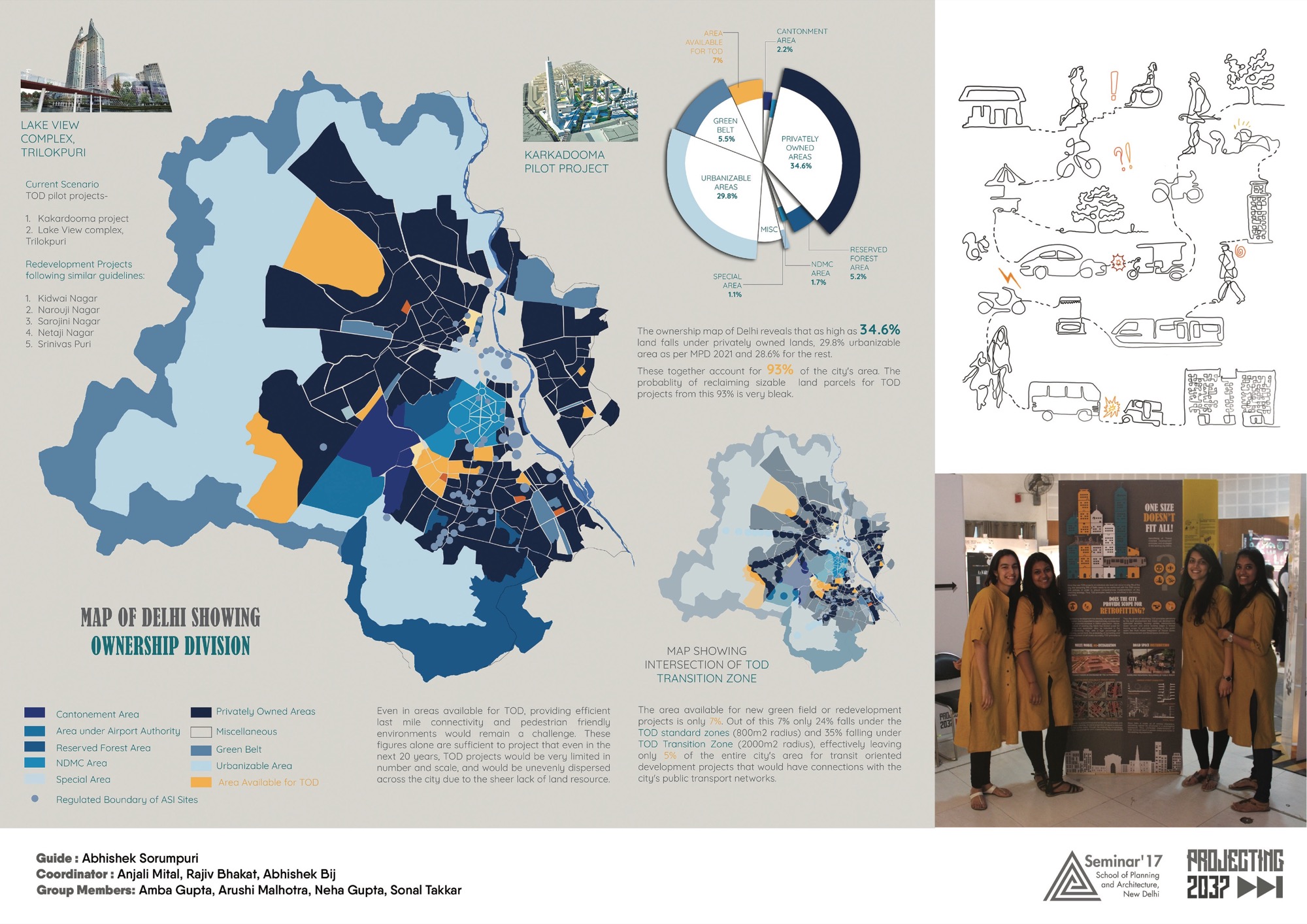
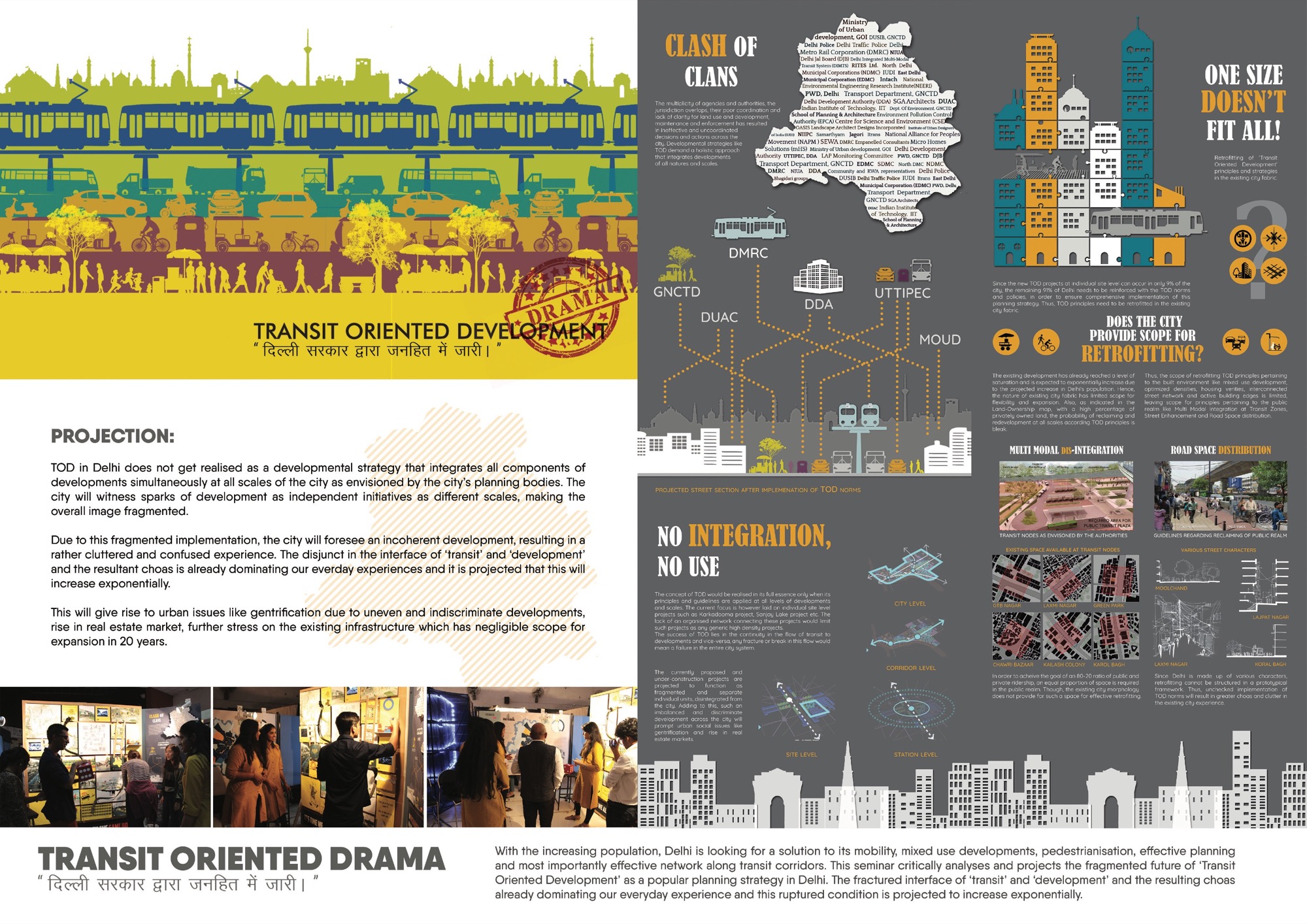
2. TransitOrientedDrama+1
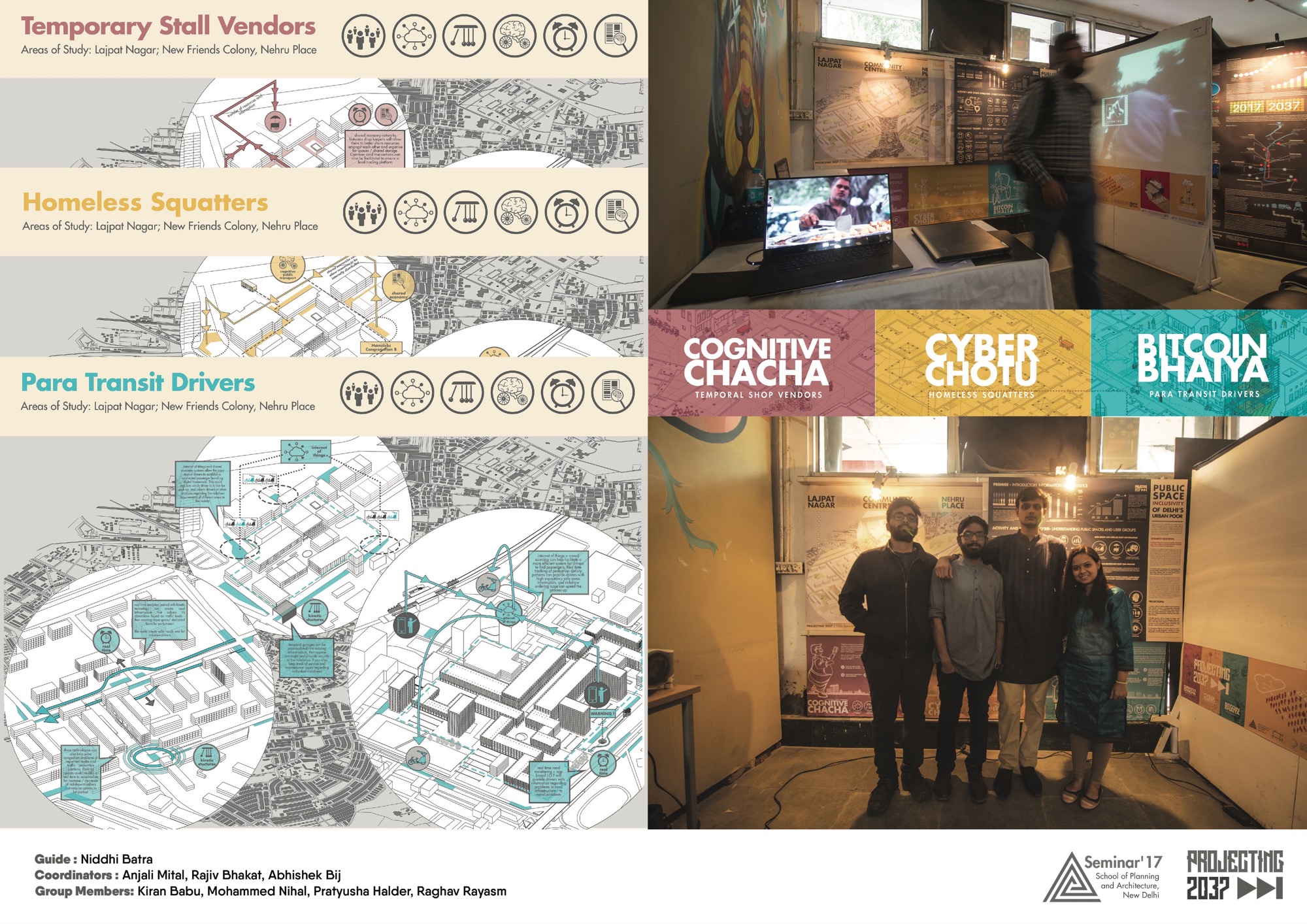
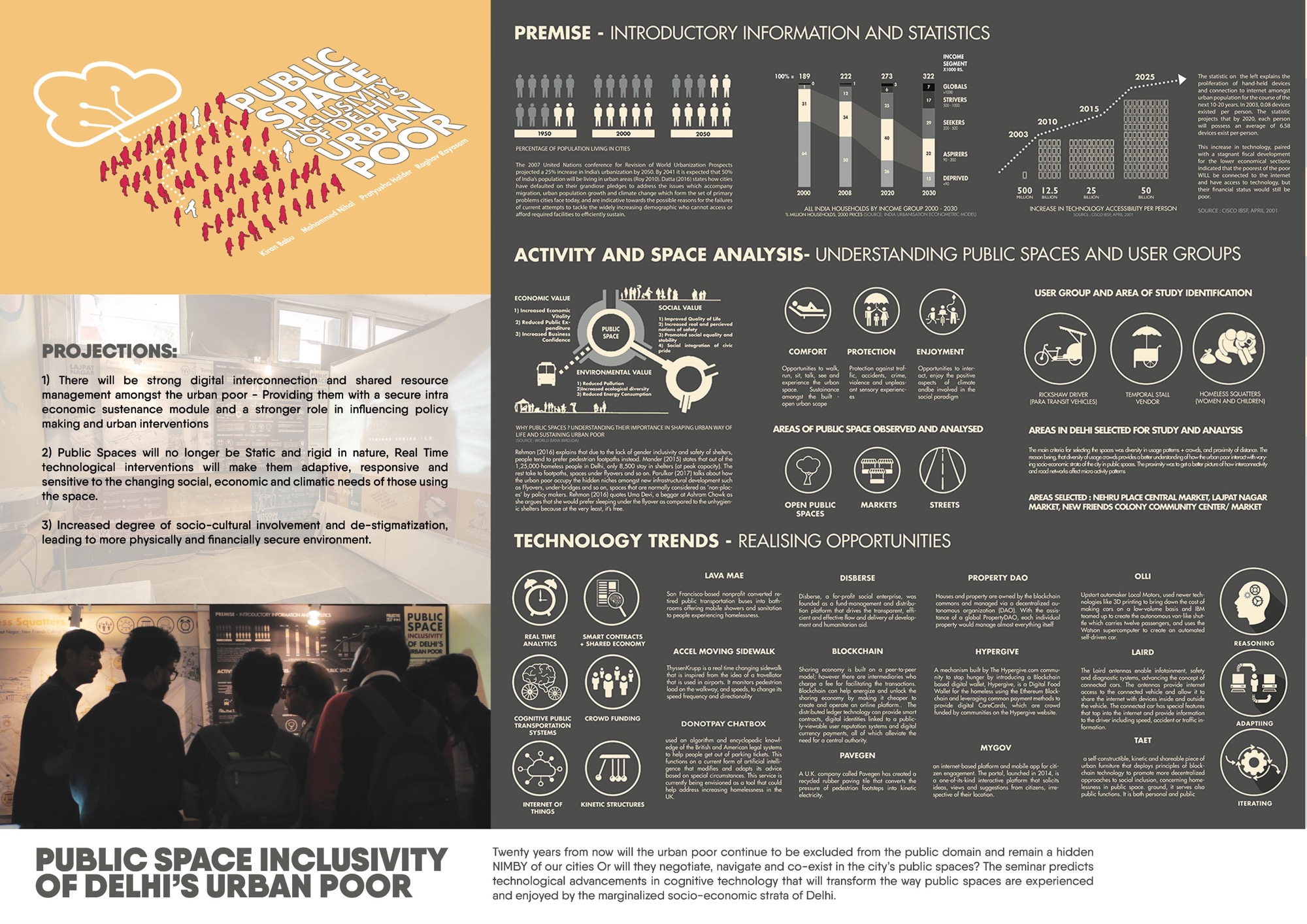
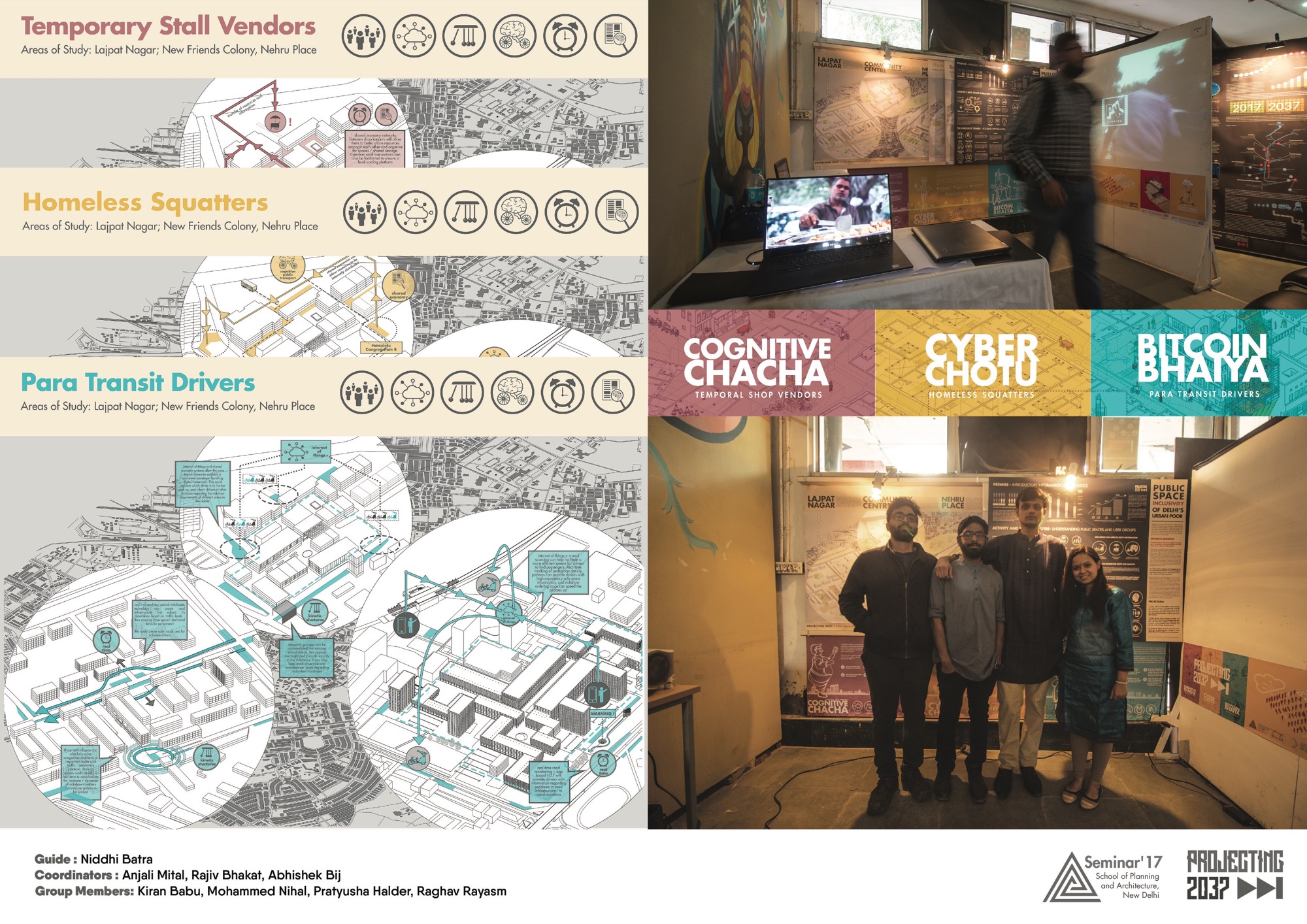
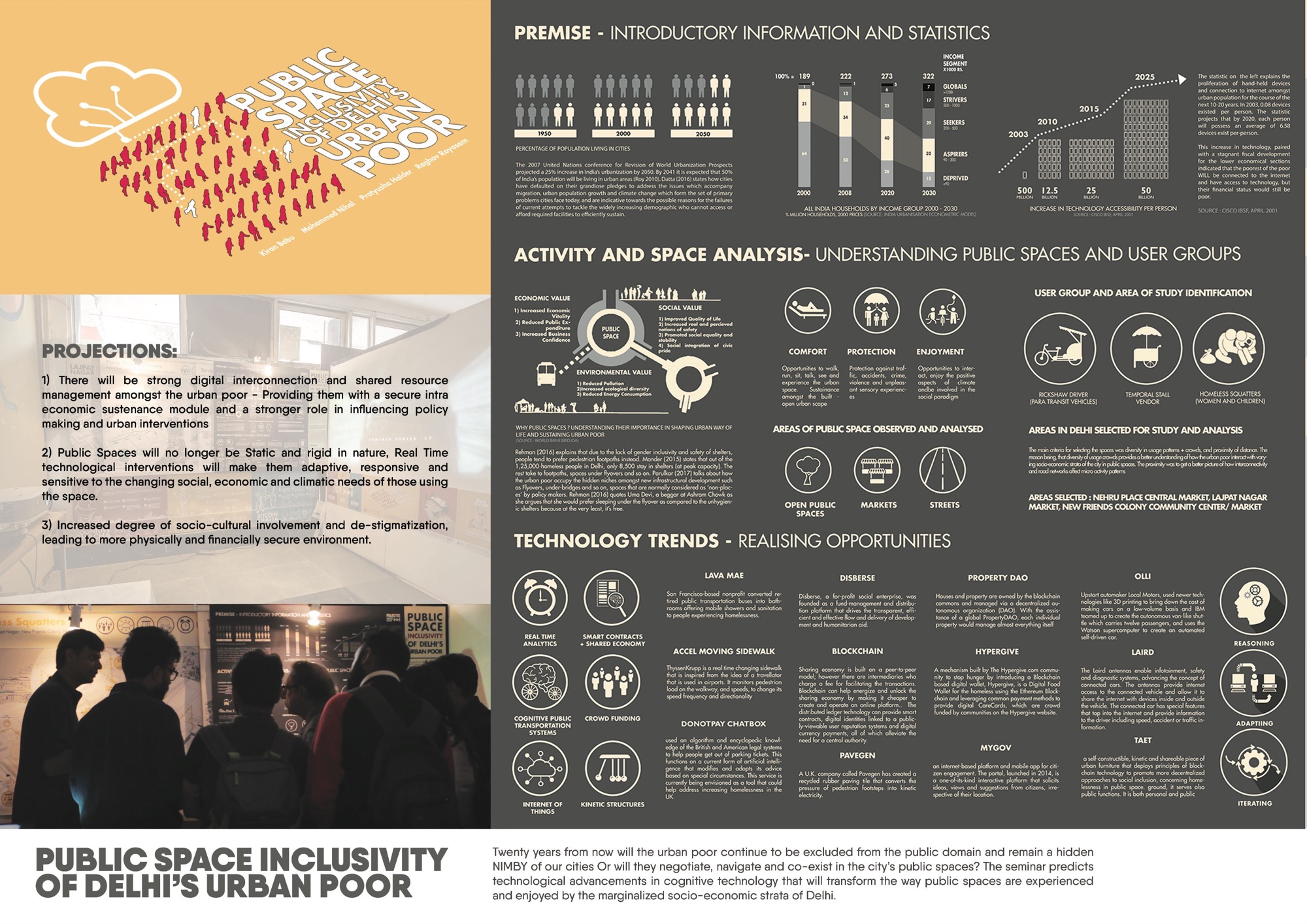
3. PublicspaceinclusivityofDelhi’sUrbanPoor
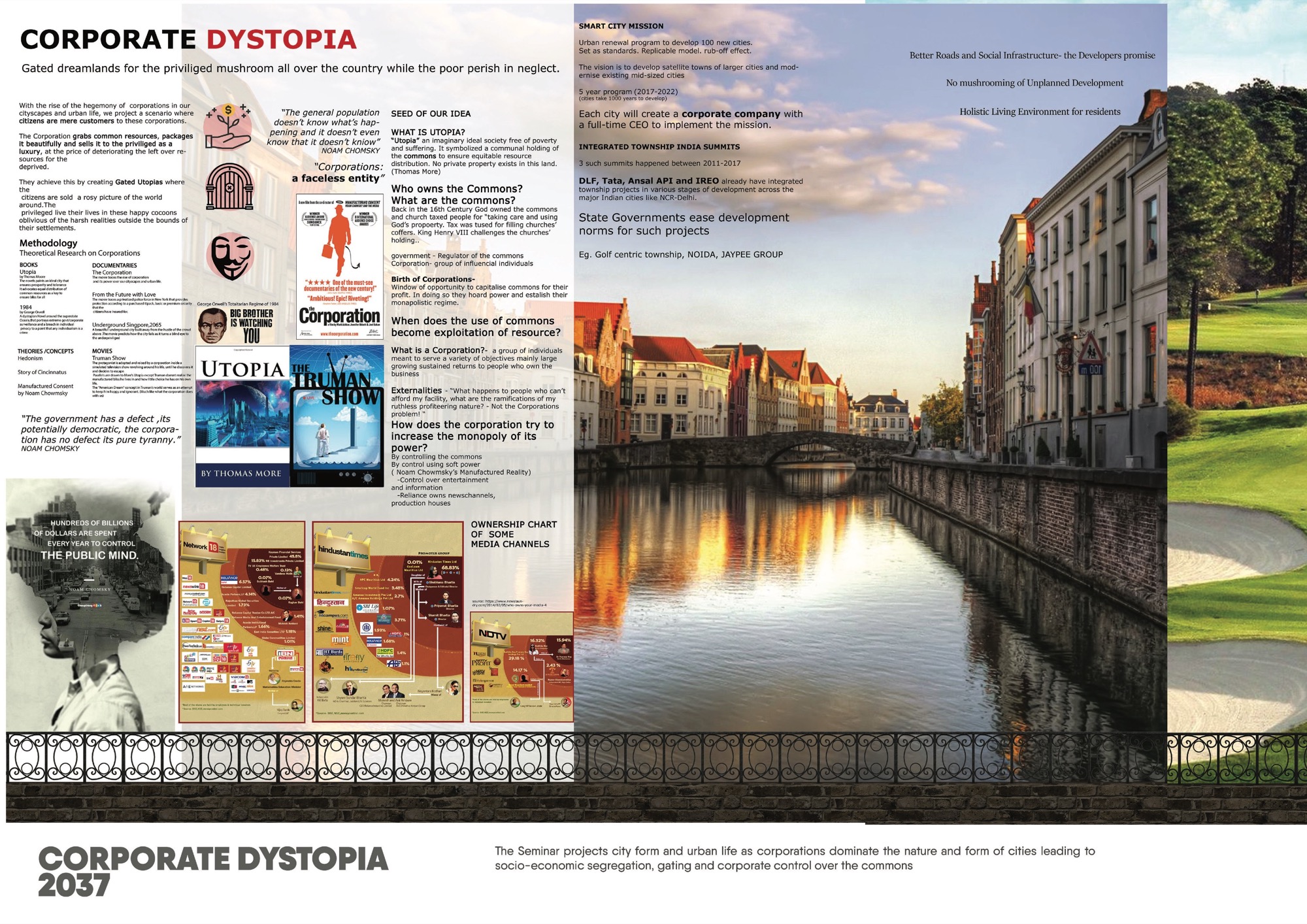
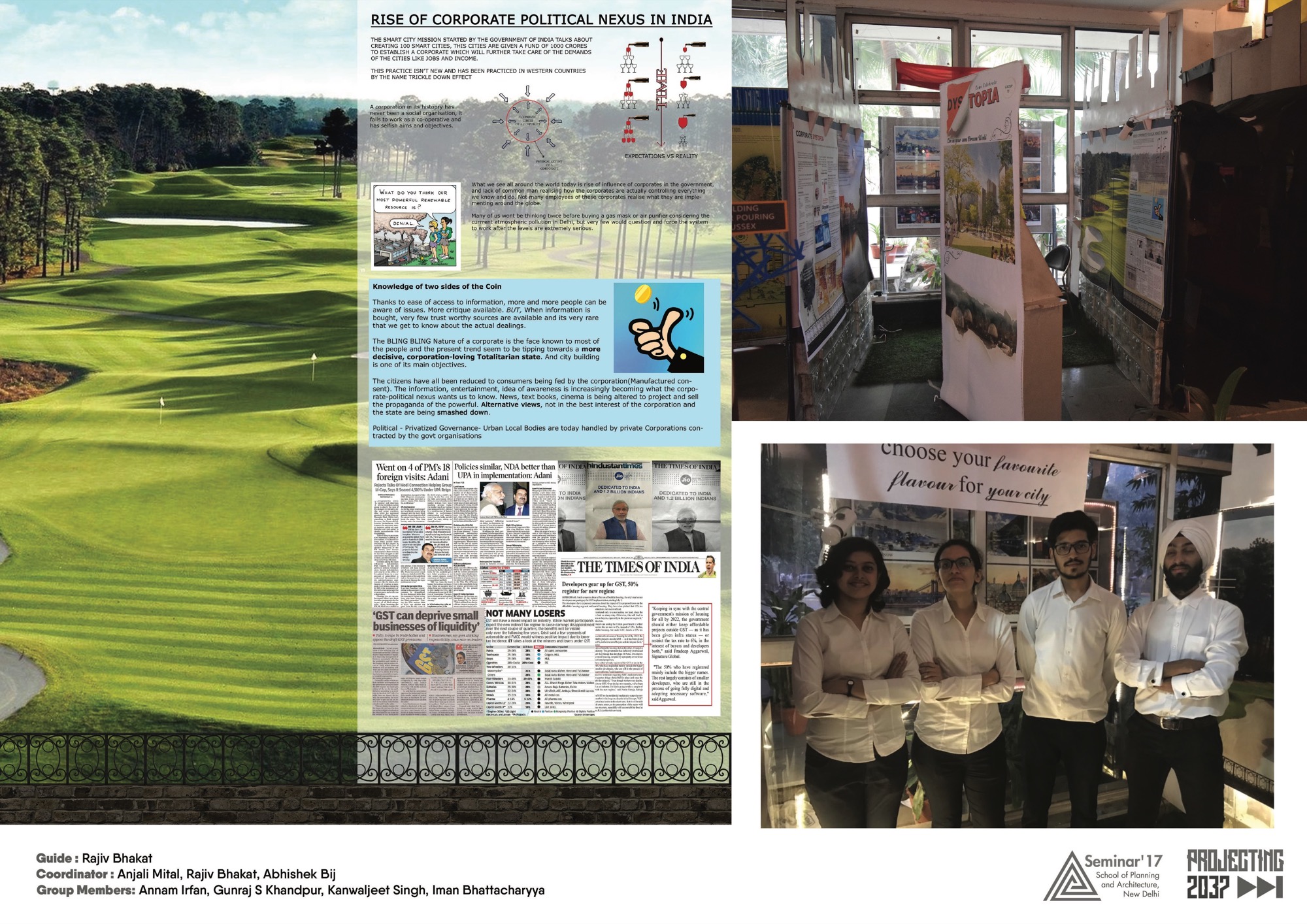
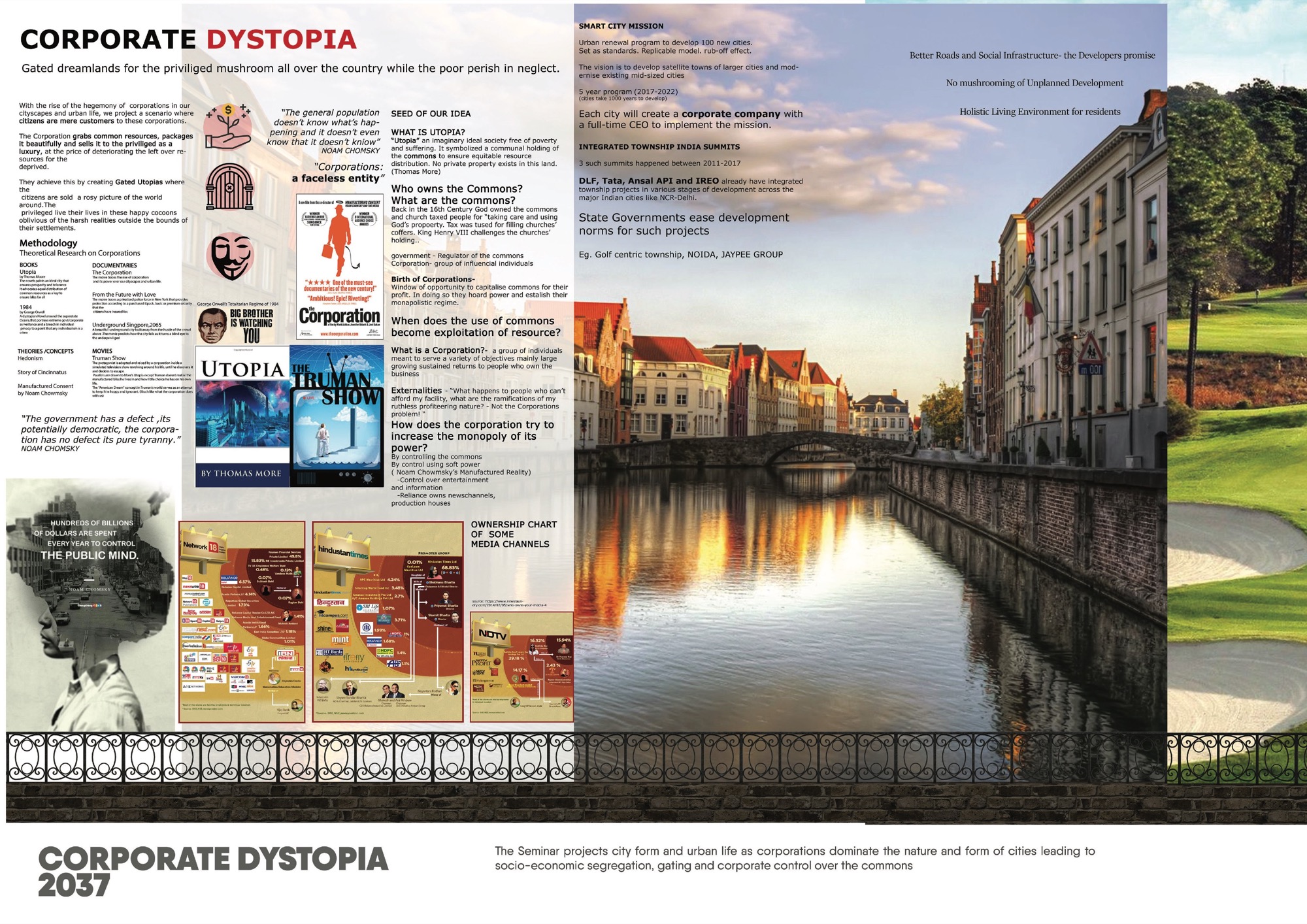
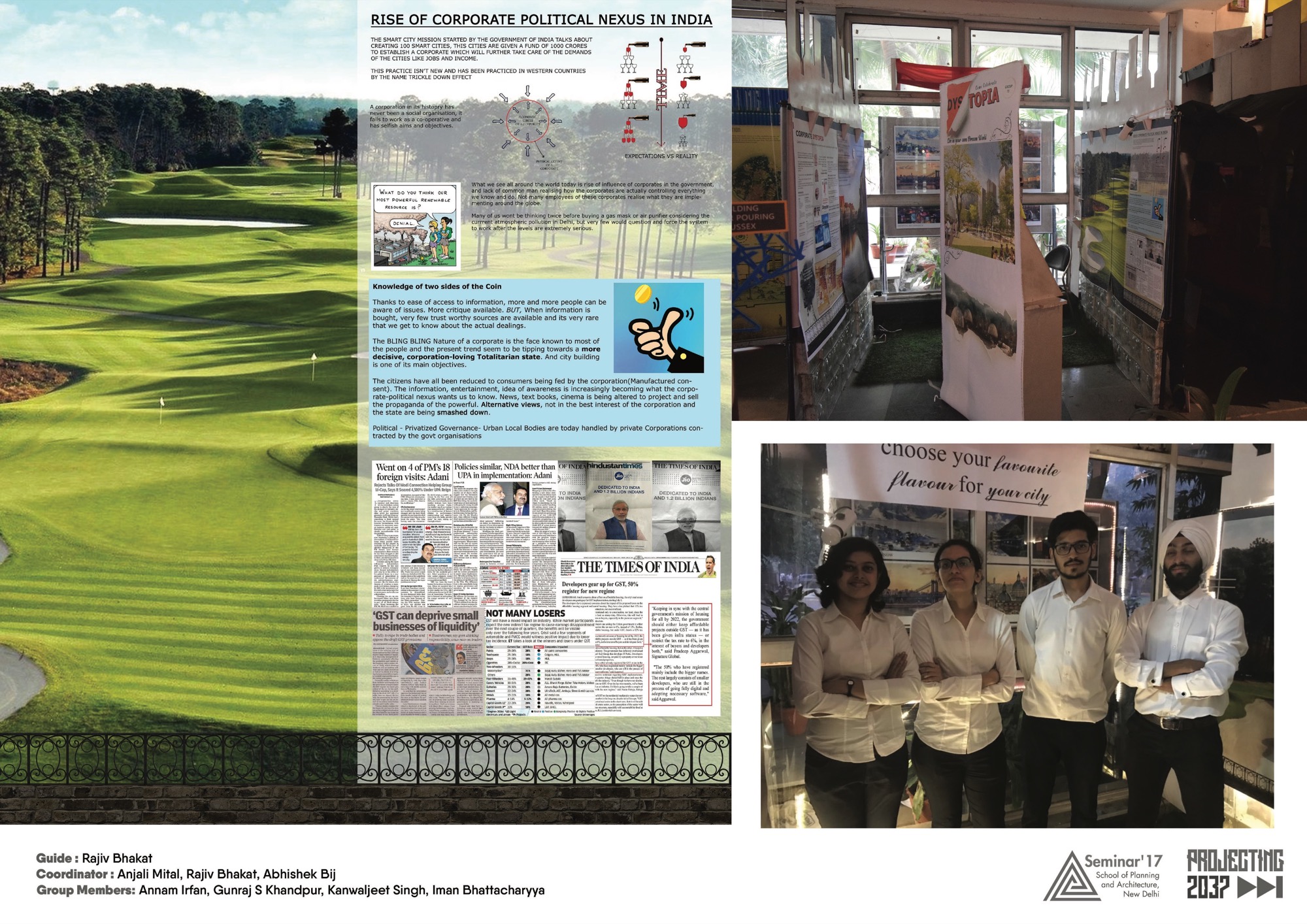
4. CorporateDystopia+1
5. ACOLLABORATIONOFINTELLIGENCE 6. WATER WARS
7. PROJECTINGTRANSITIN2037
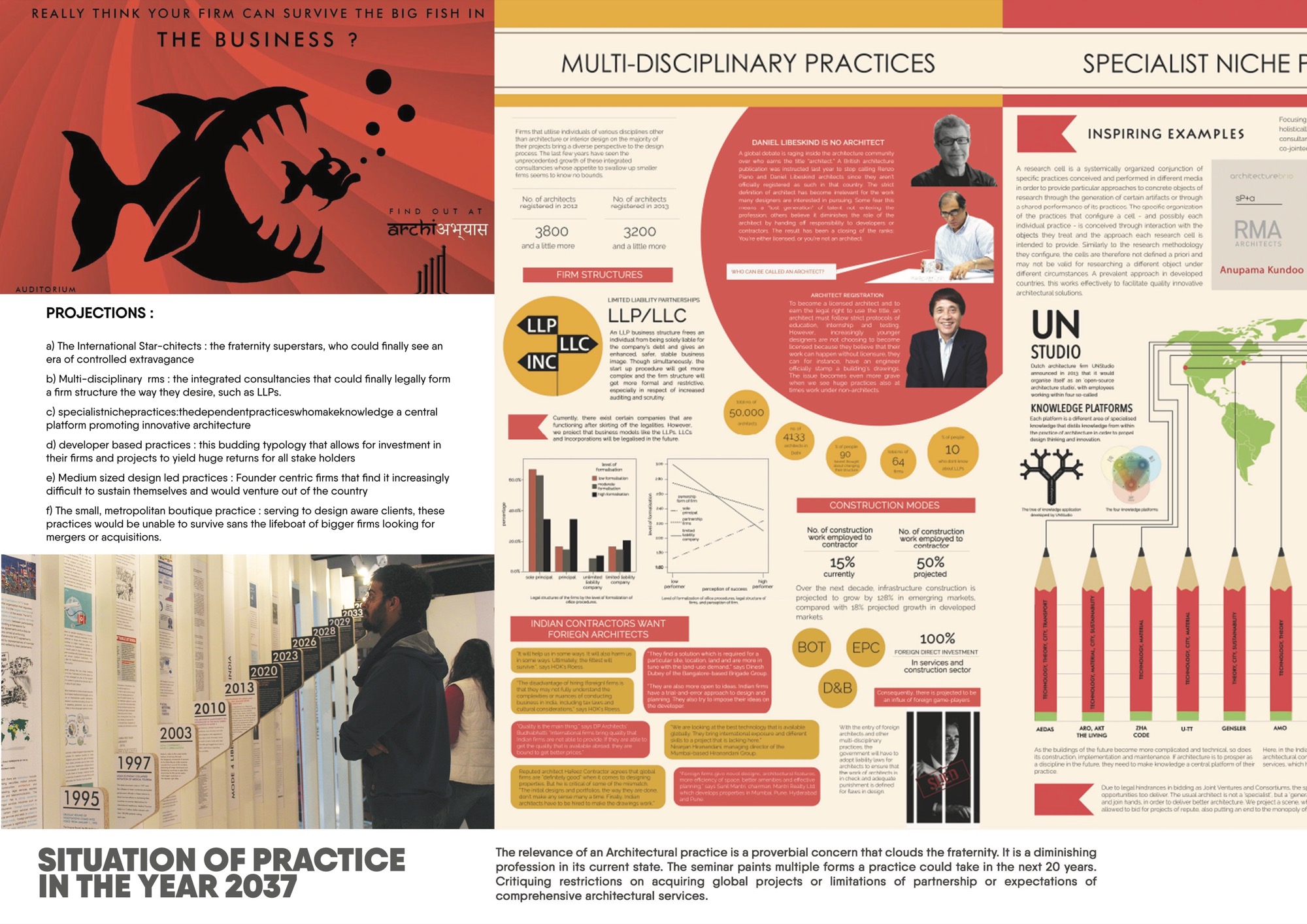
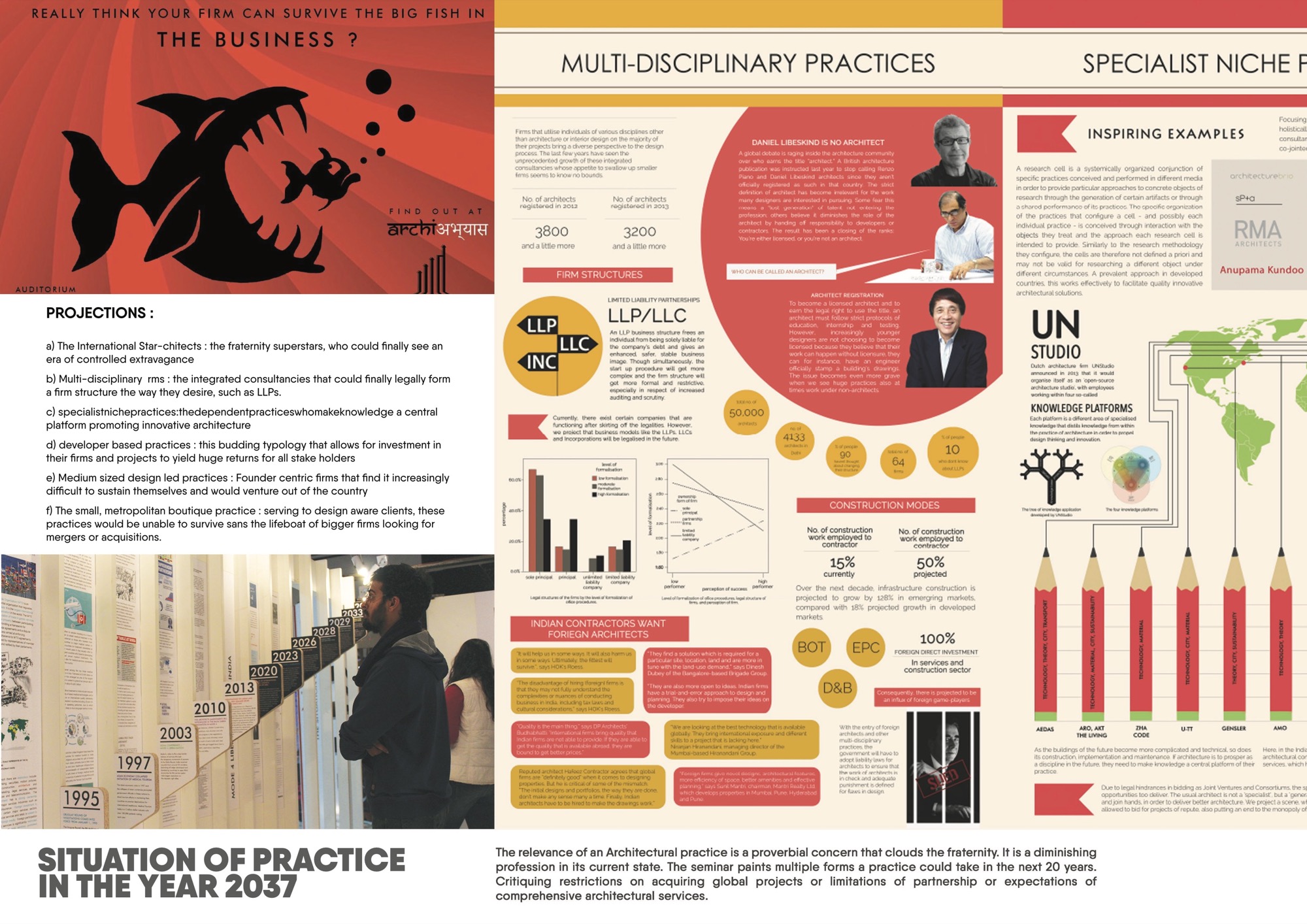
8. Archi-Abhyas+1
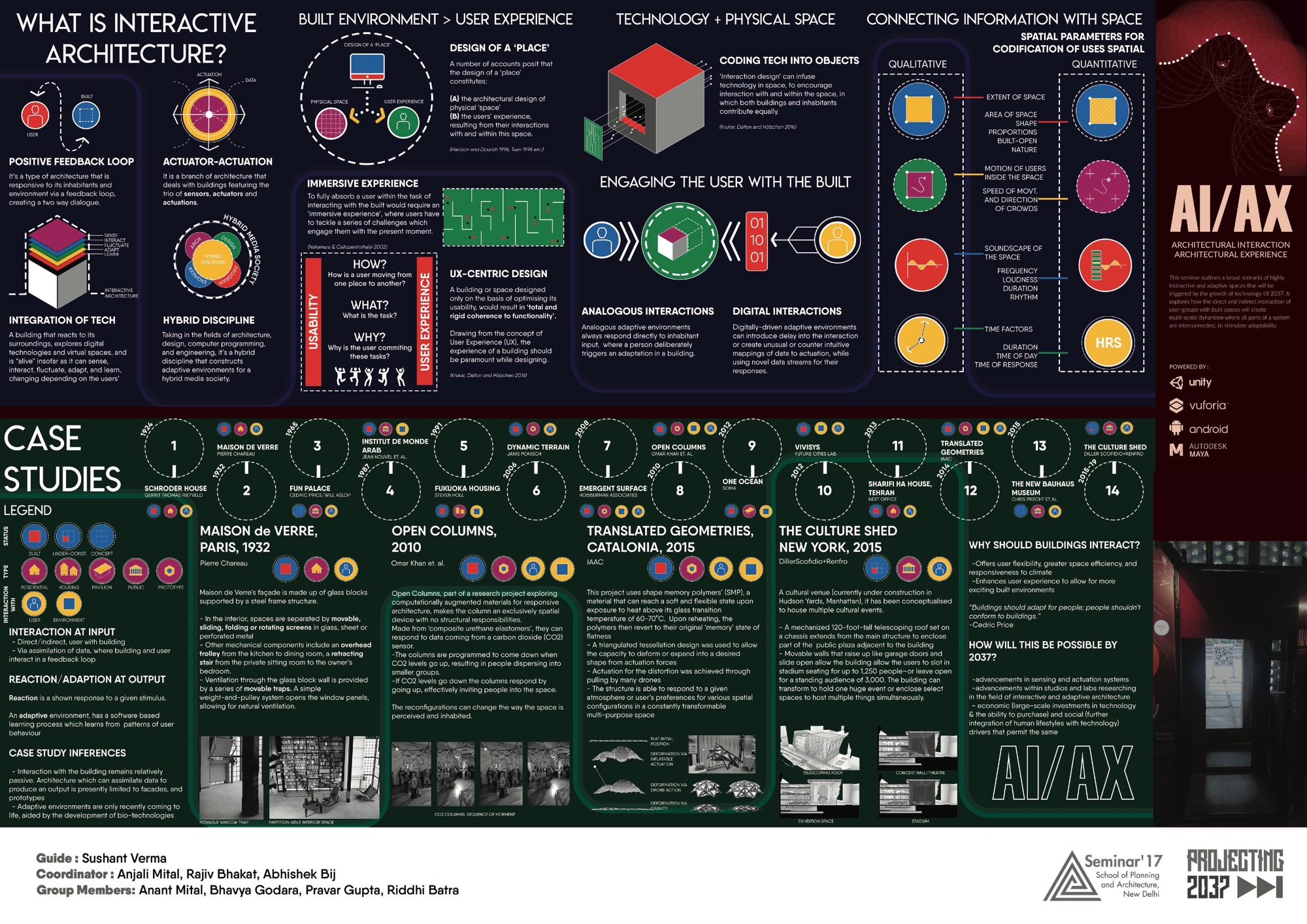
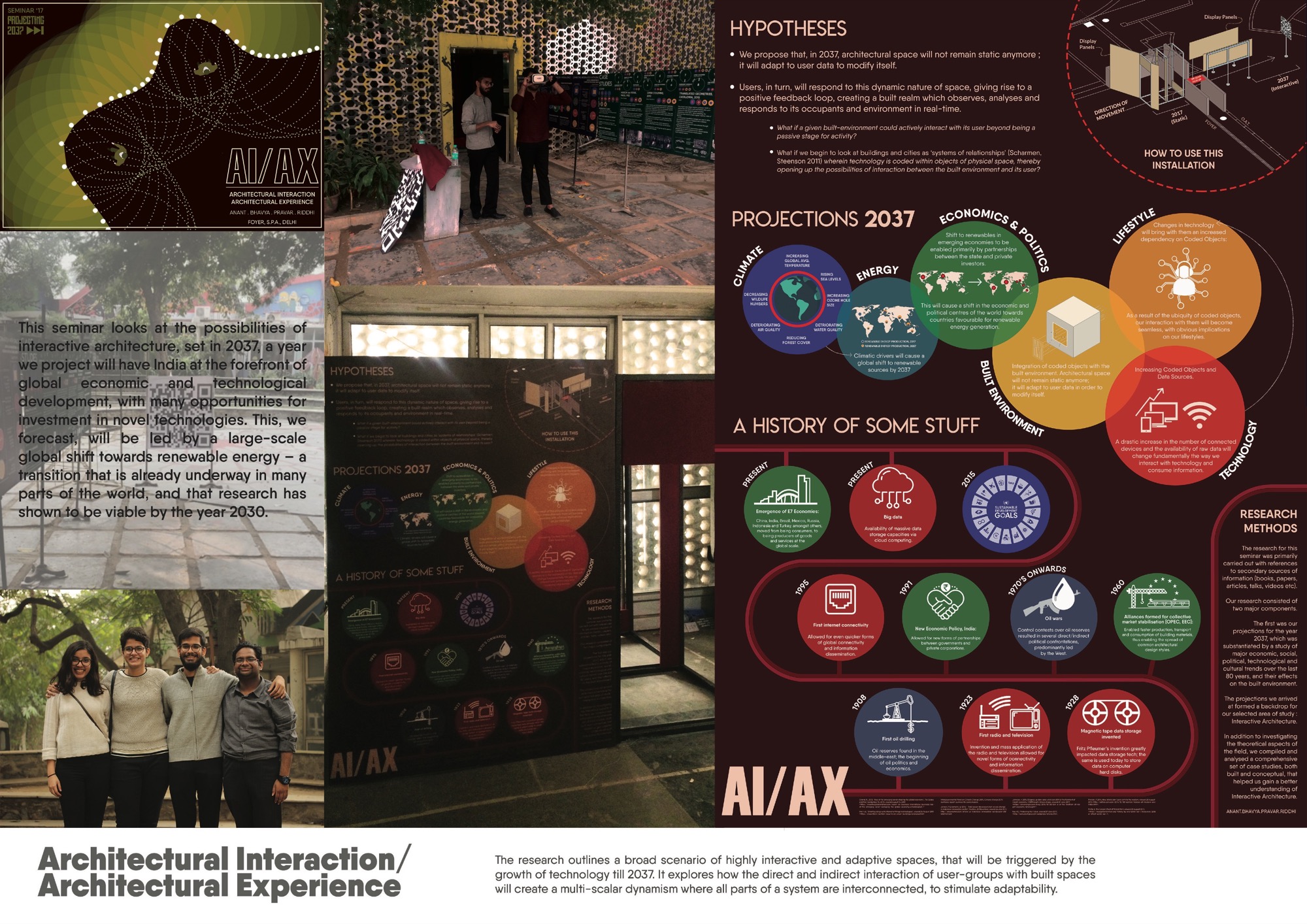
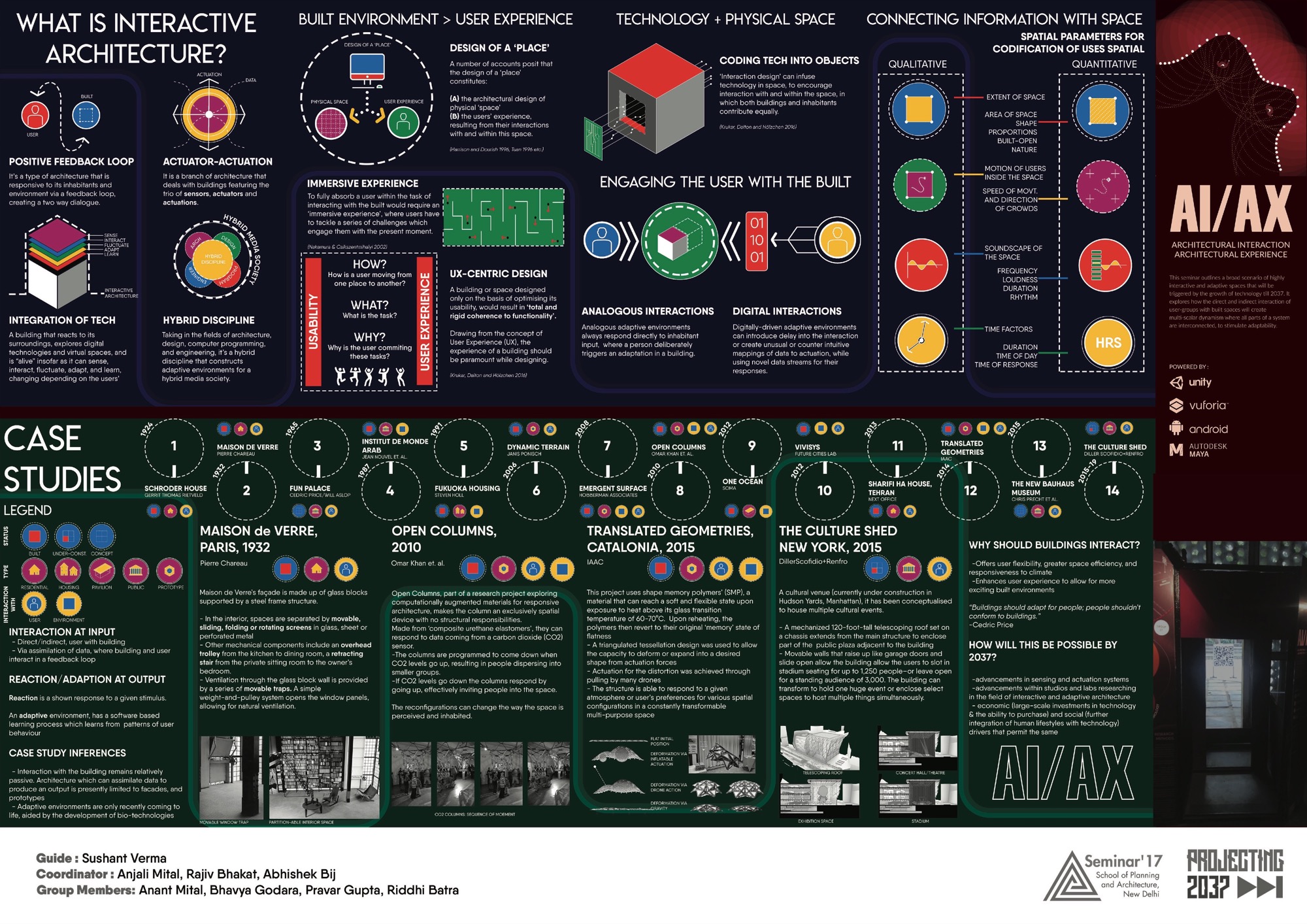
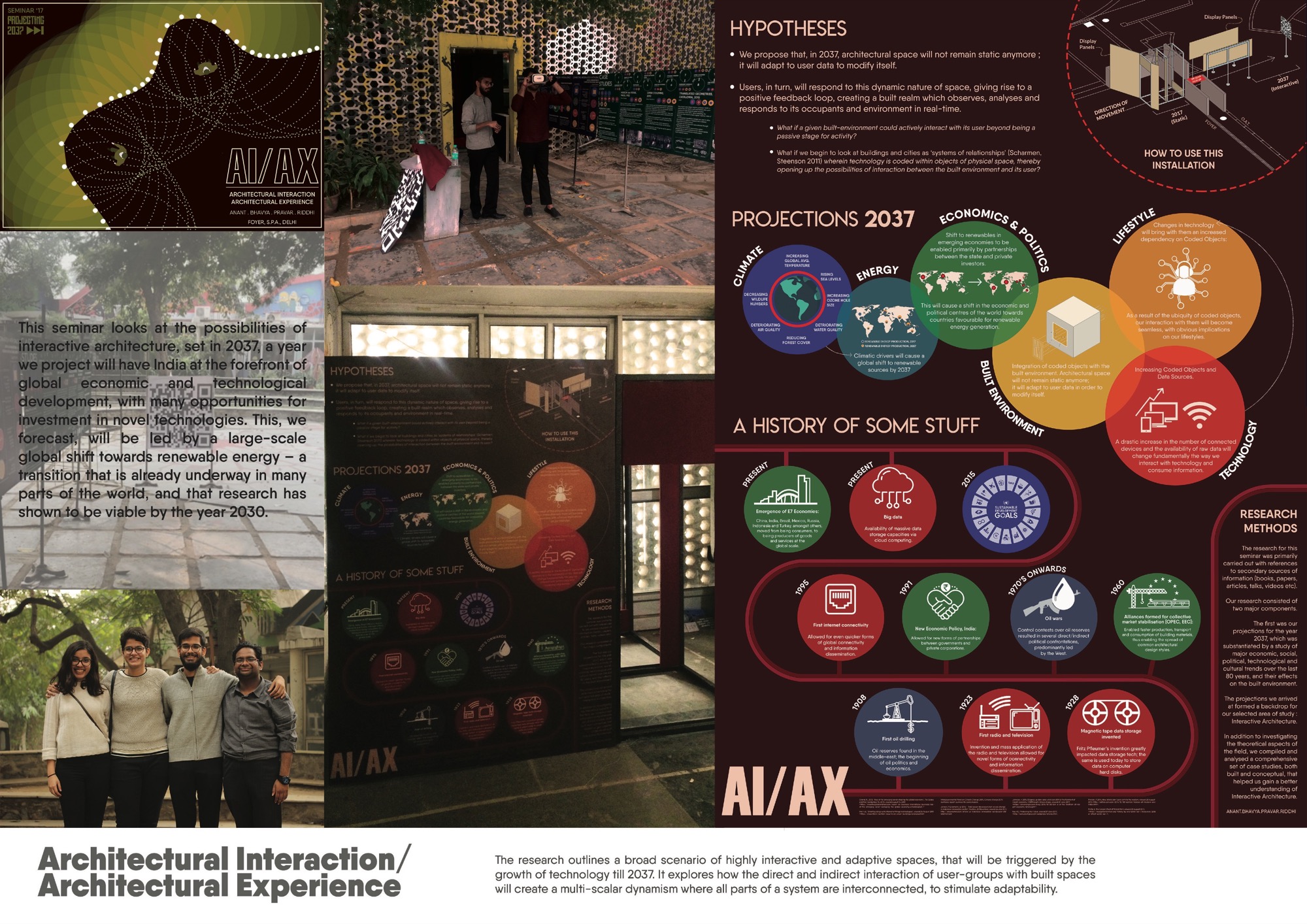
9. AI/AX+1
10.REINFORCING THE CONTEMPORARY FOR 2037
11. RIP-Master builder
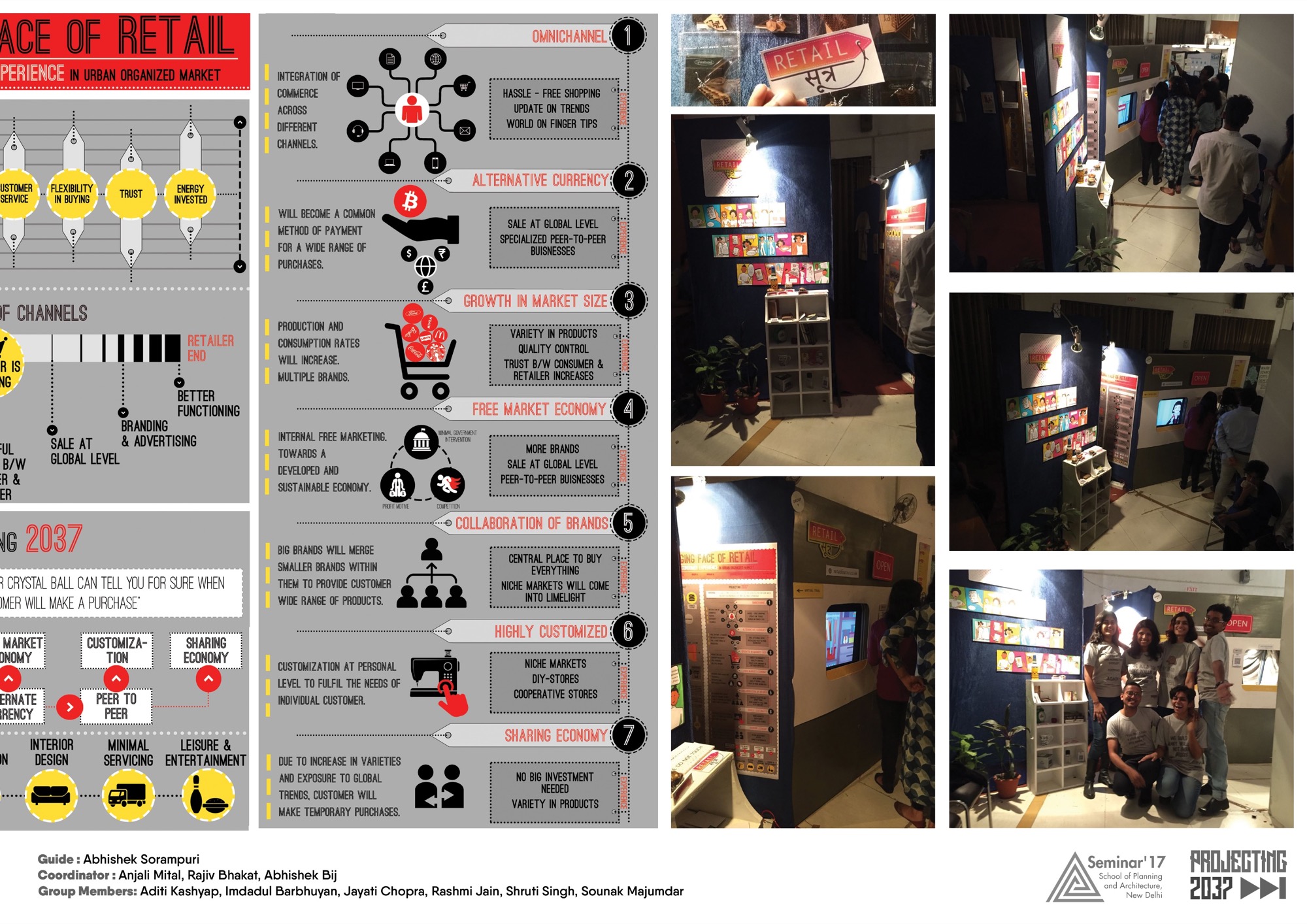
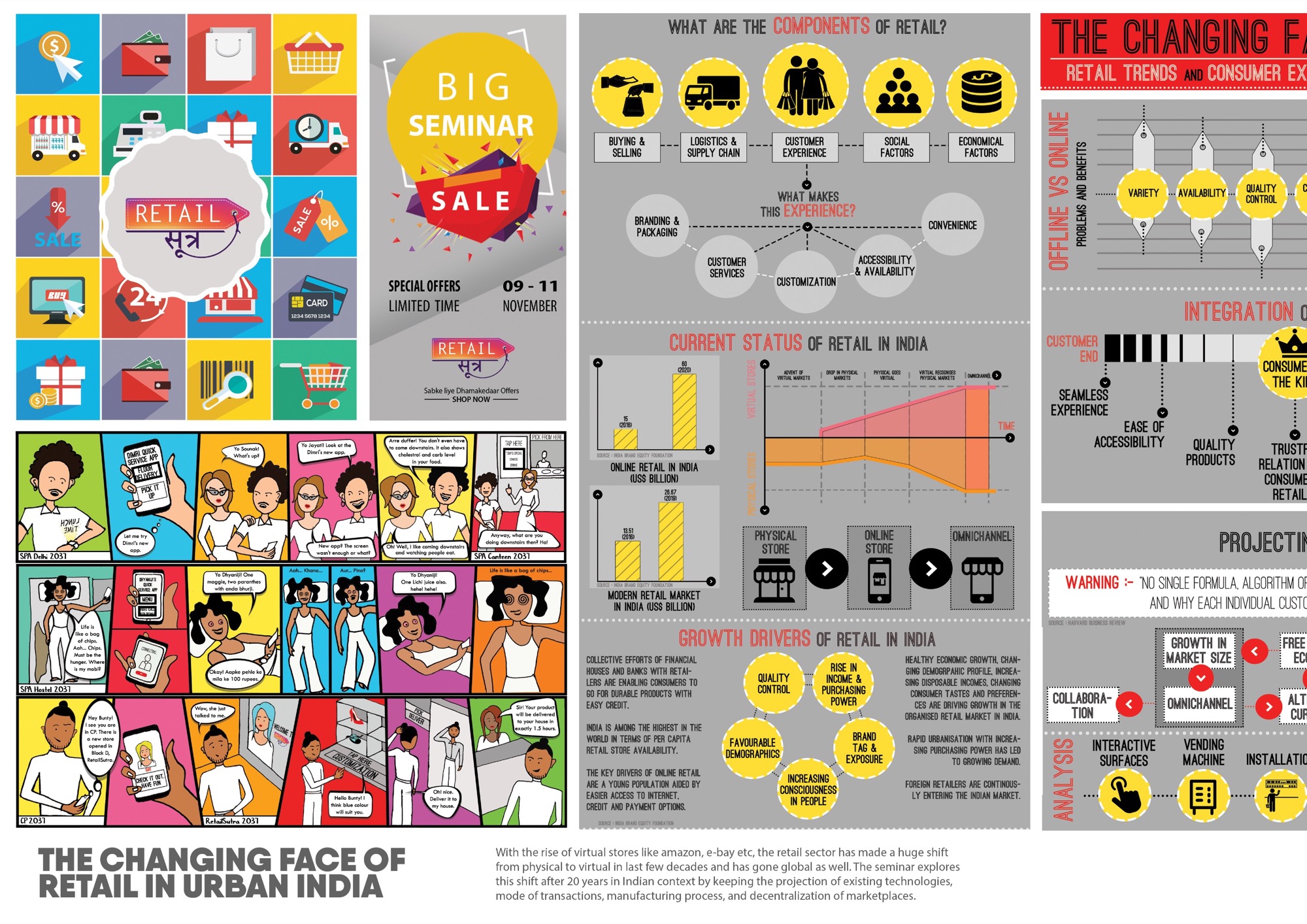
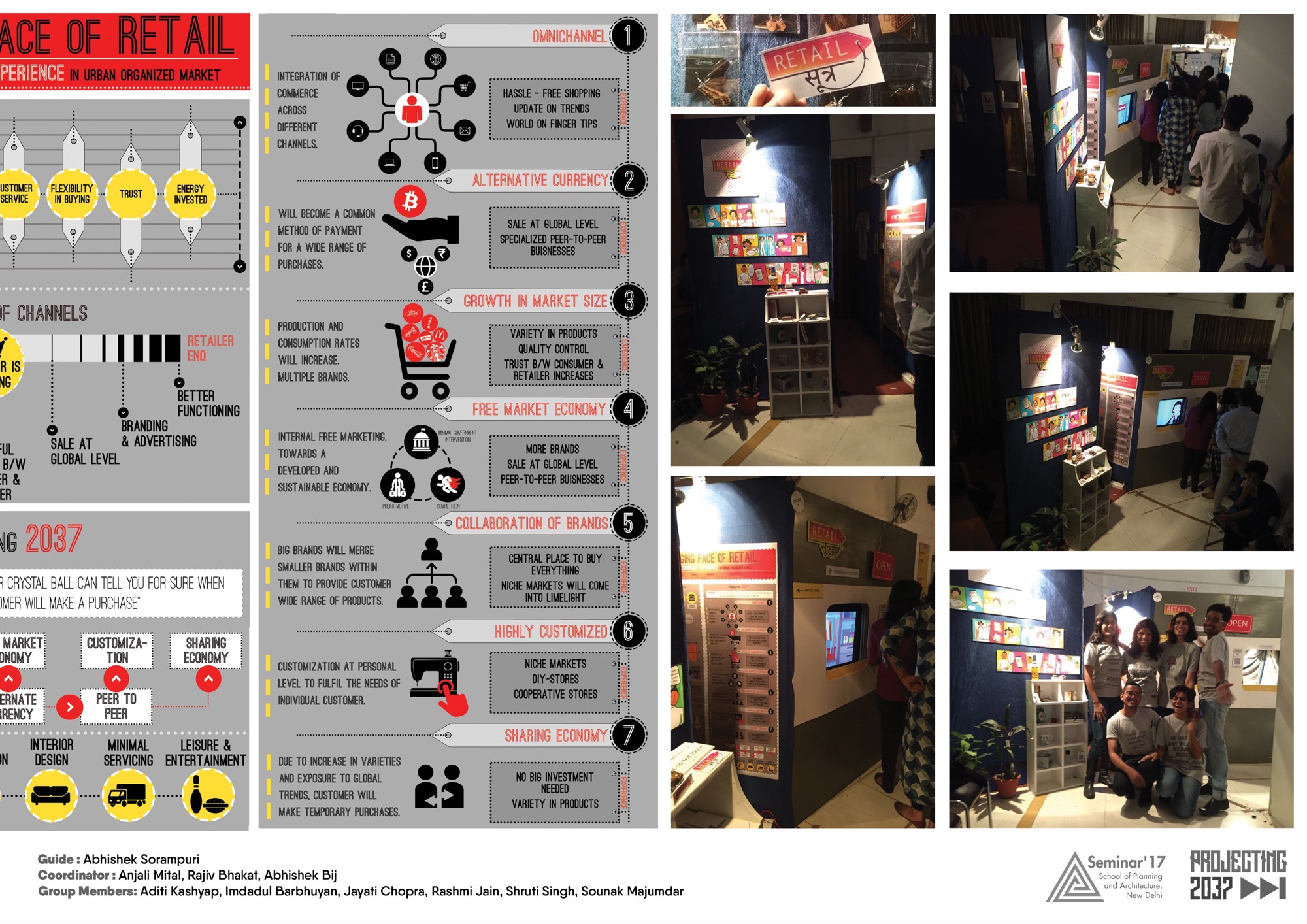
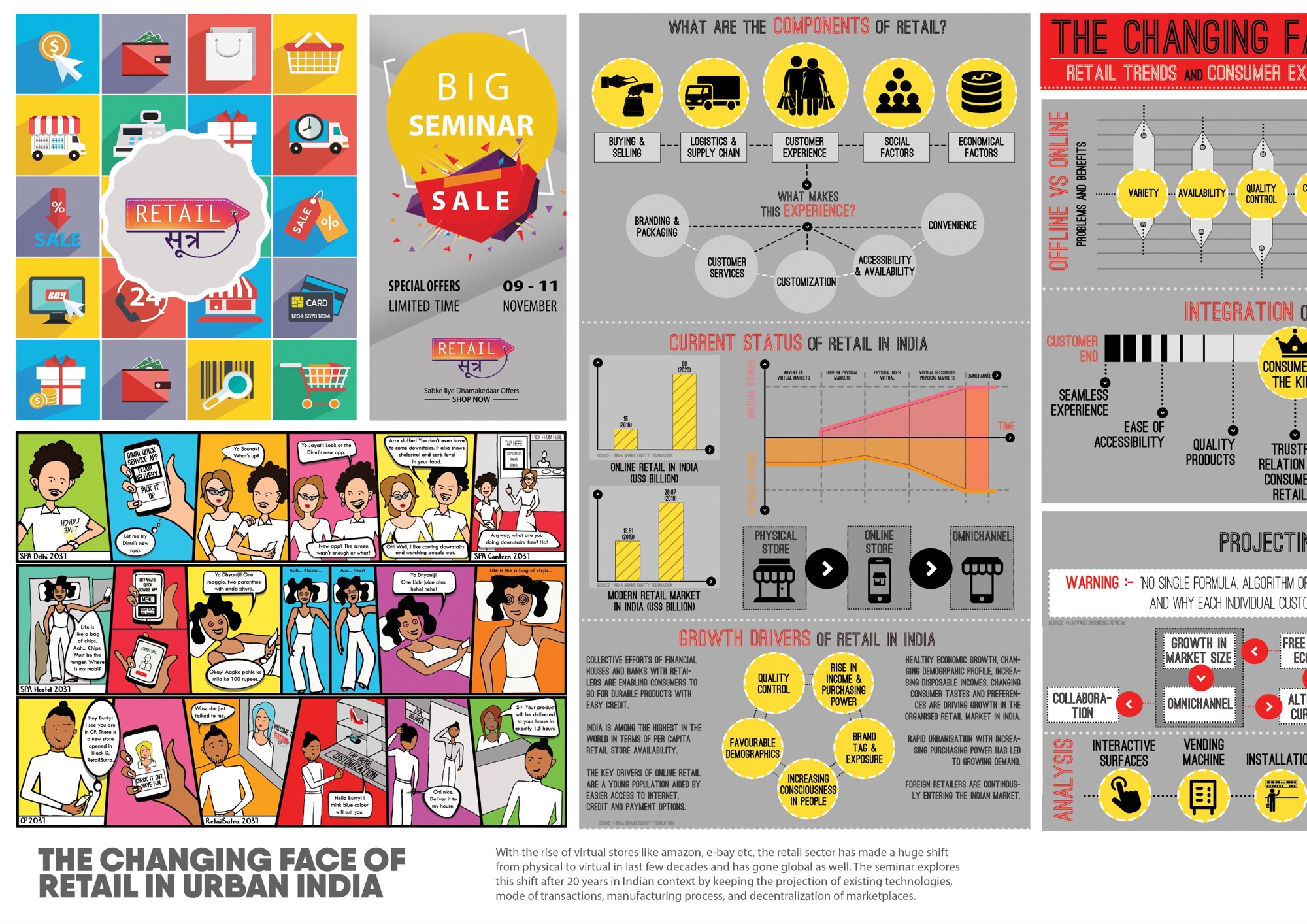
12.Retail Sutra
13.Apotheosis of algorithms
14.connected and autonomous
15.Net Zero Neighbourhood
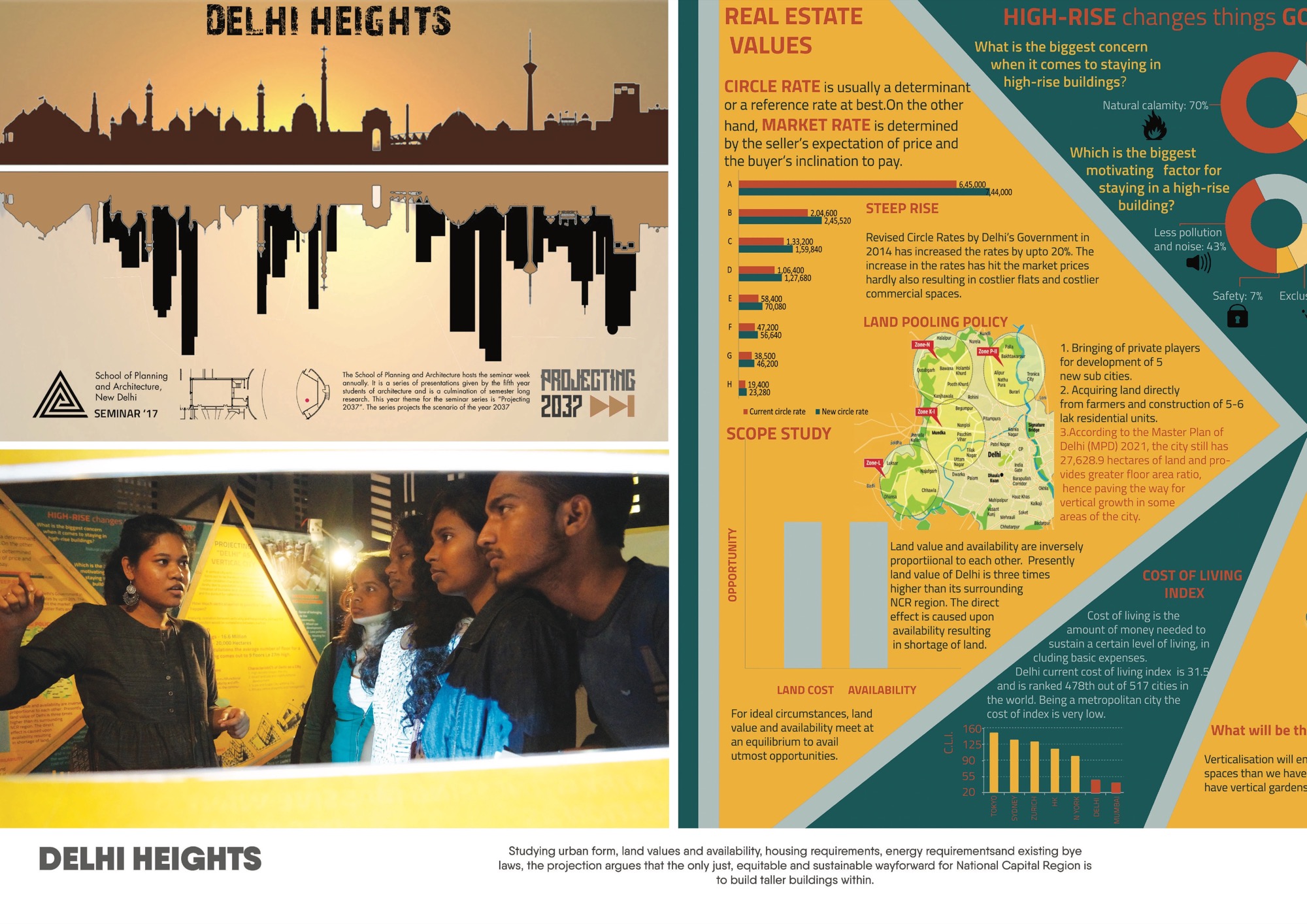
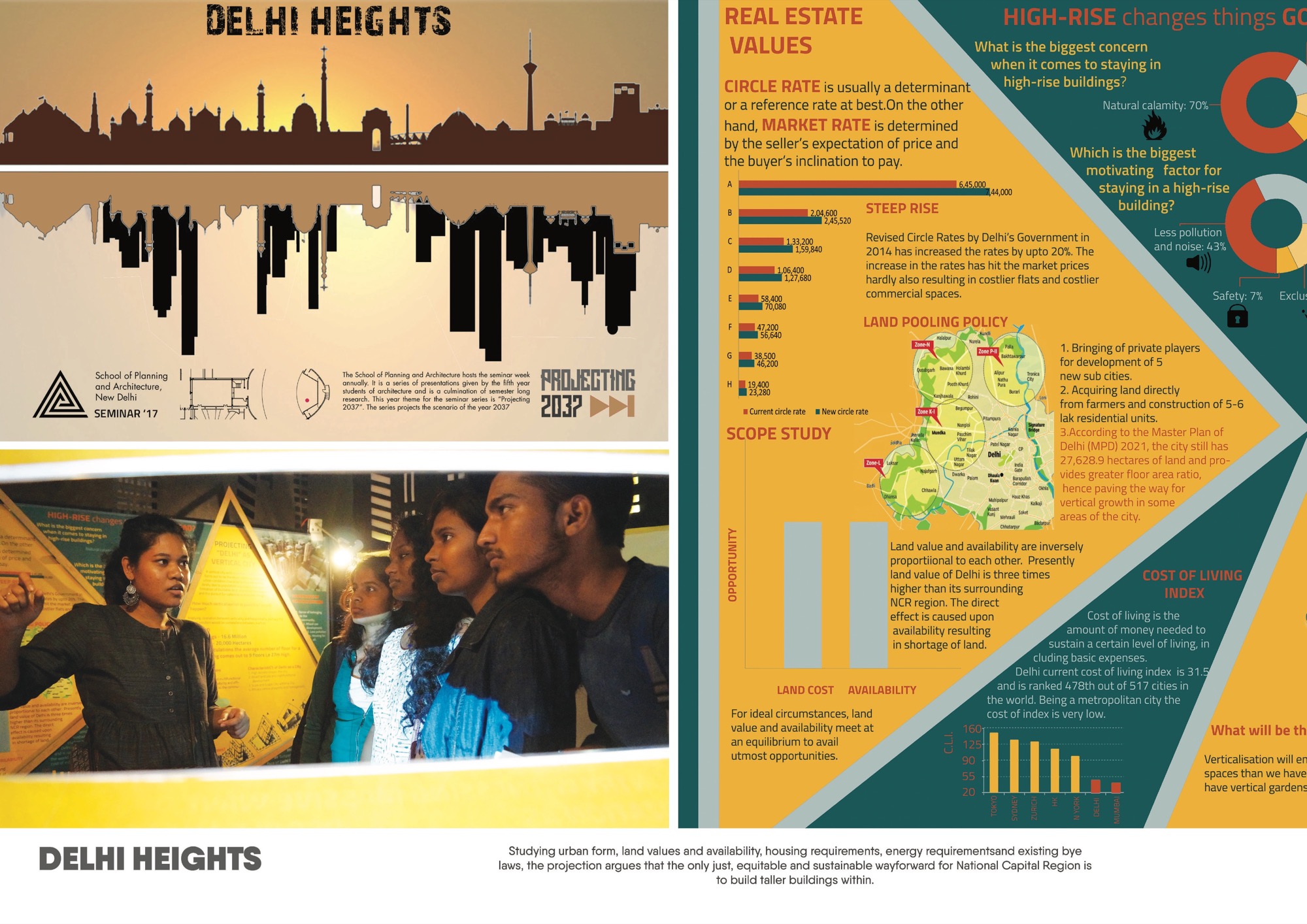
16.Delhi Heights
17. Archishala
18.Chalte Chalte Kat Jaayein Raste
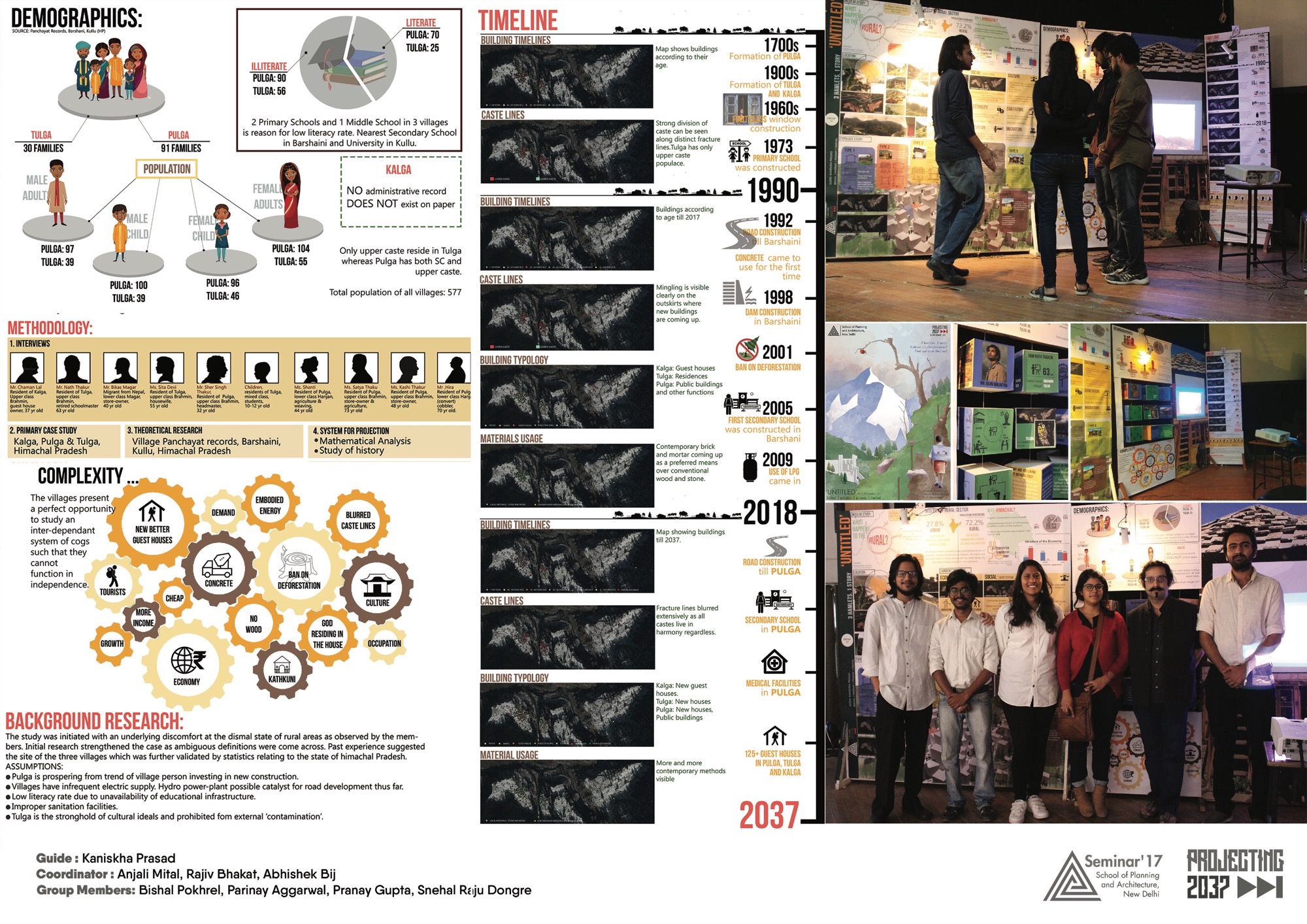
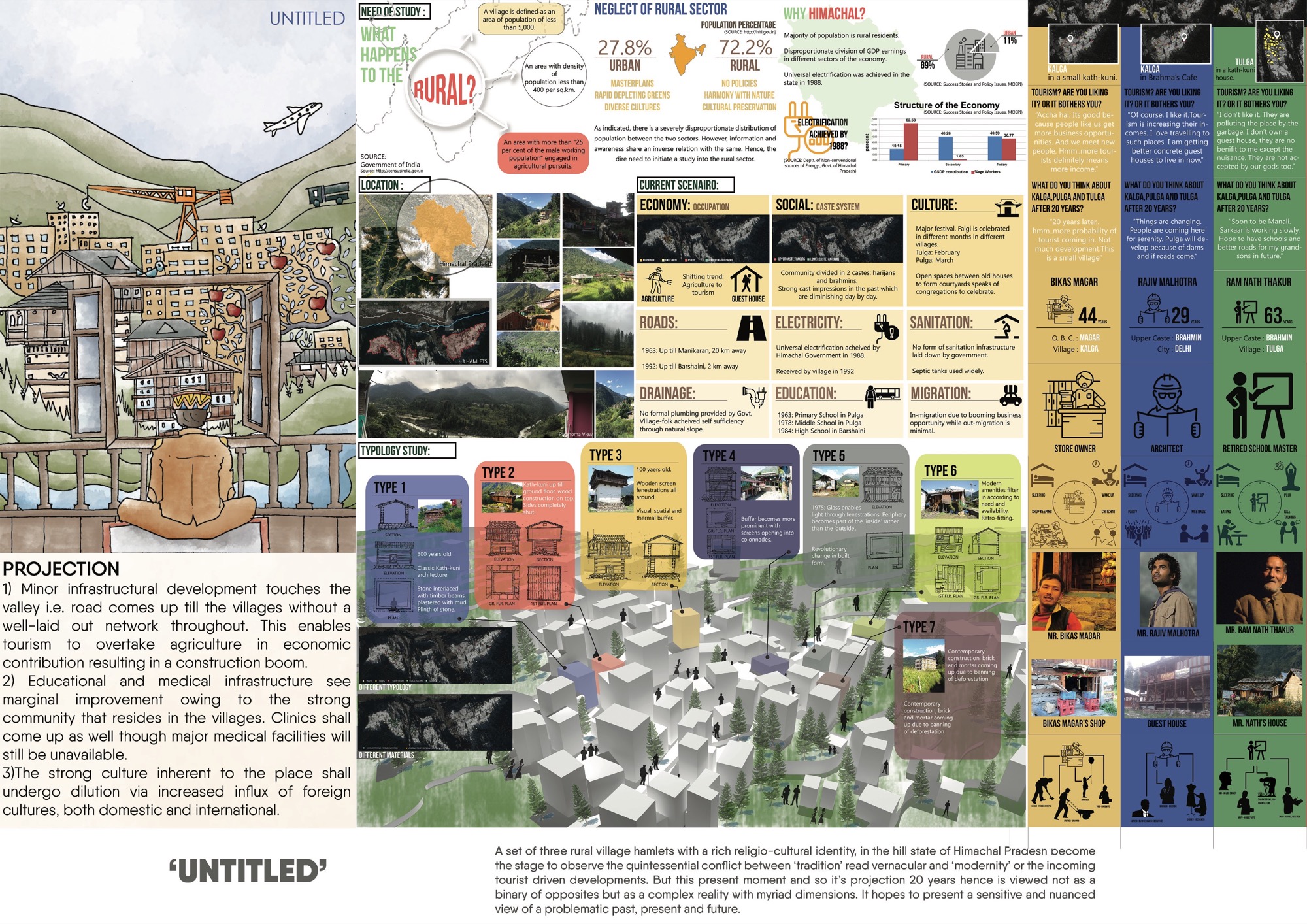
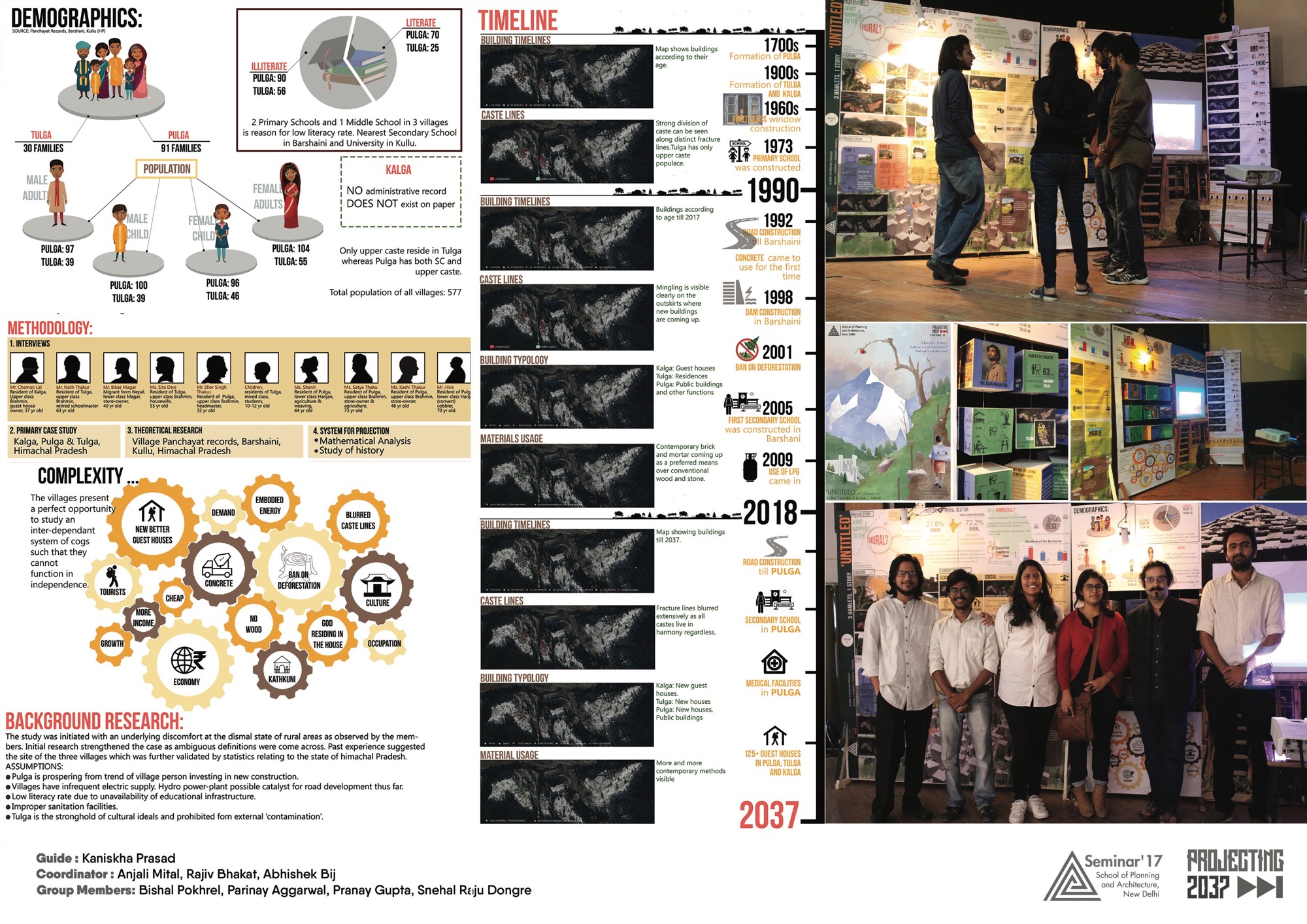
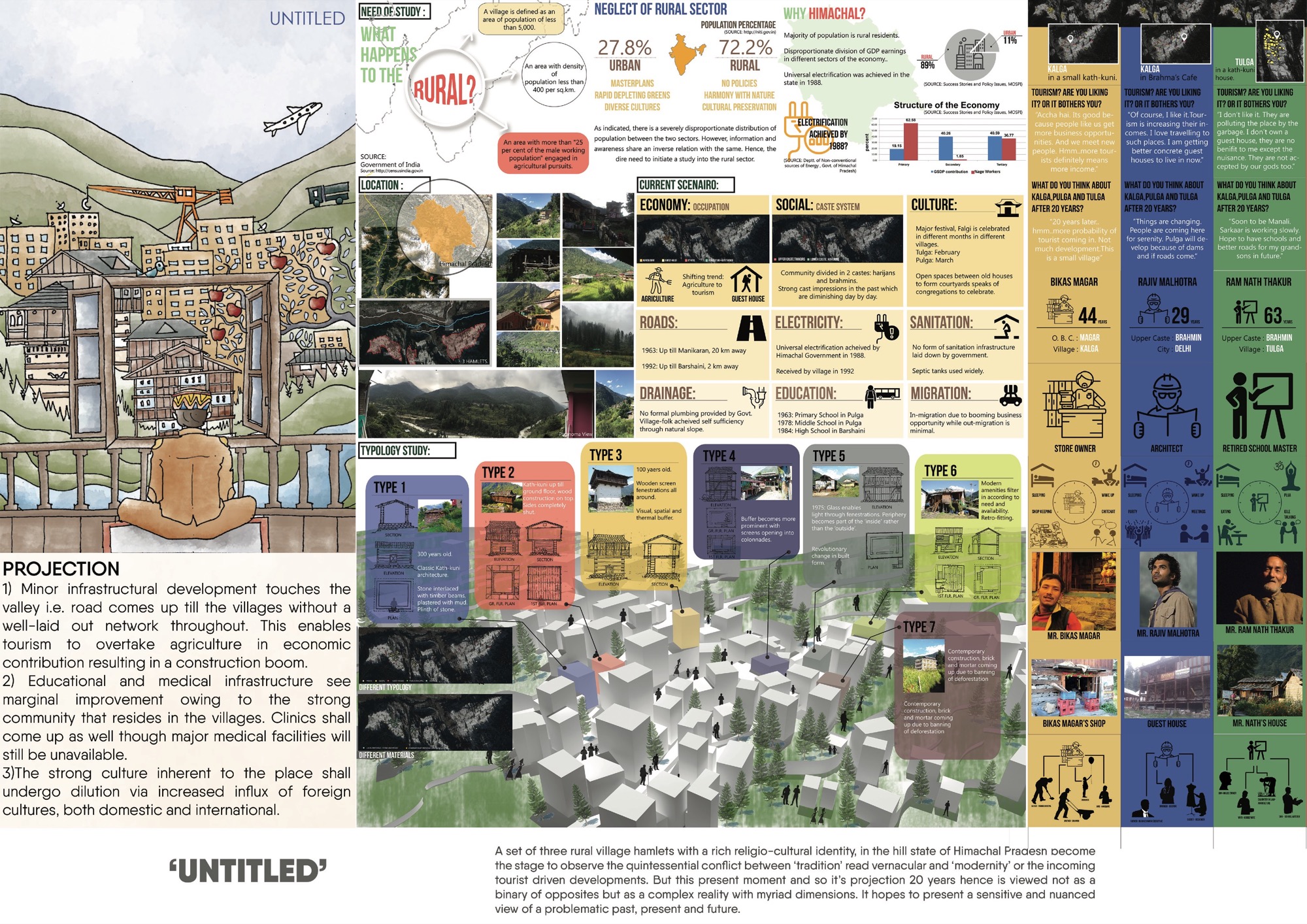
19.Untitiled -Rural
20.Remote Working
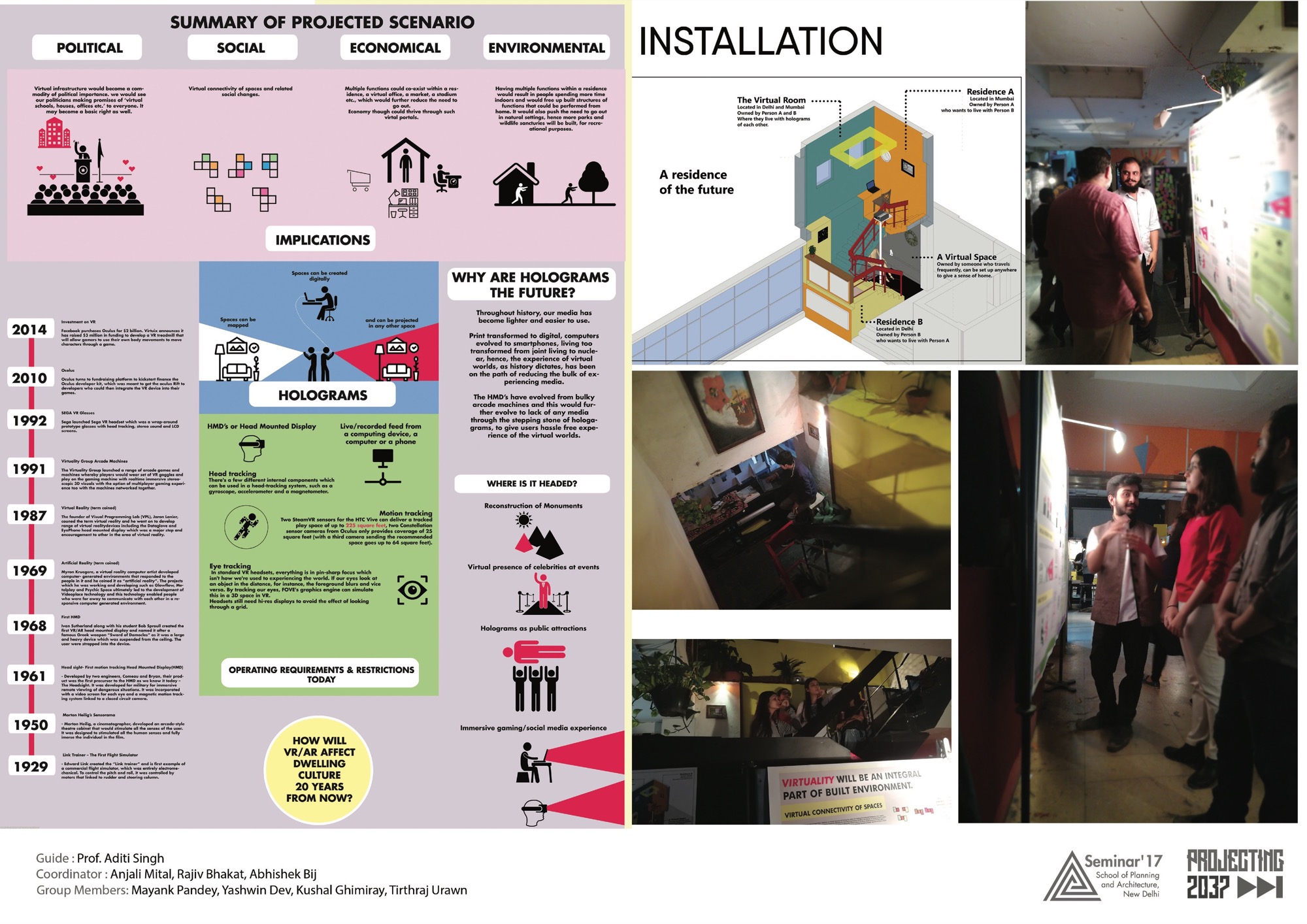
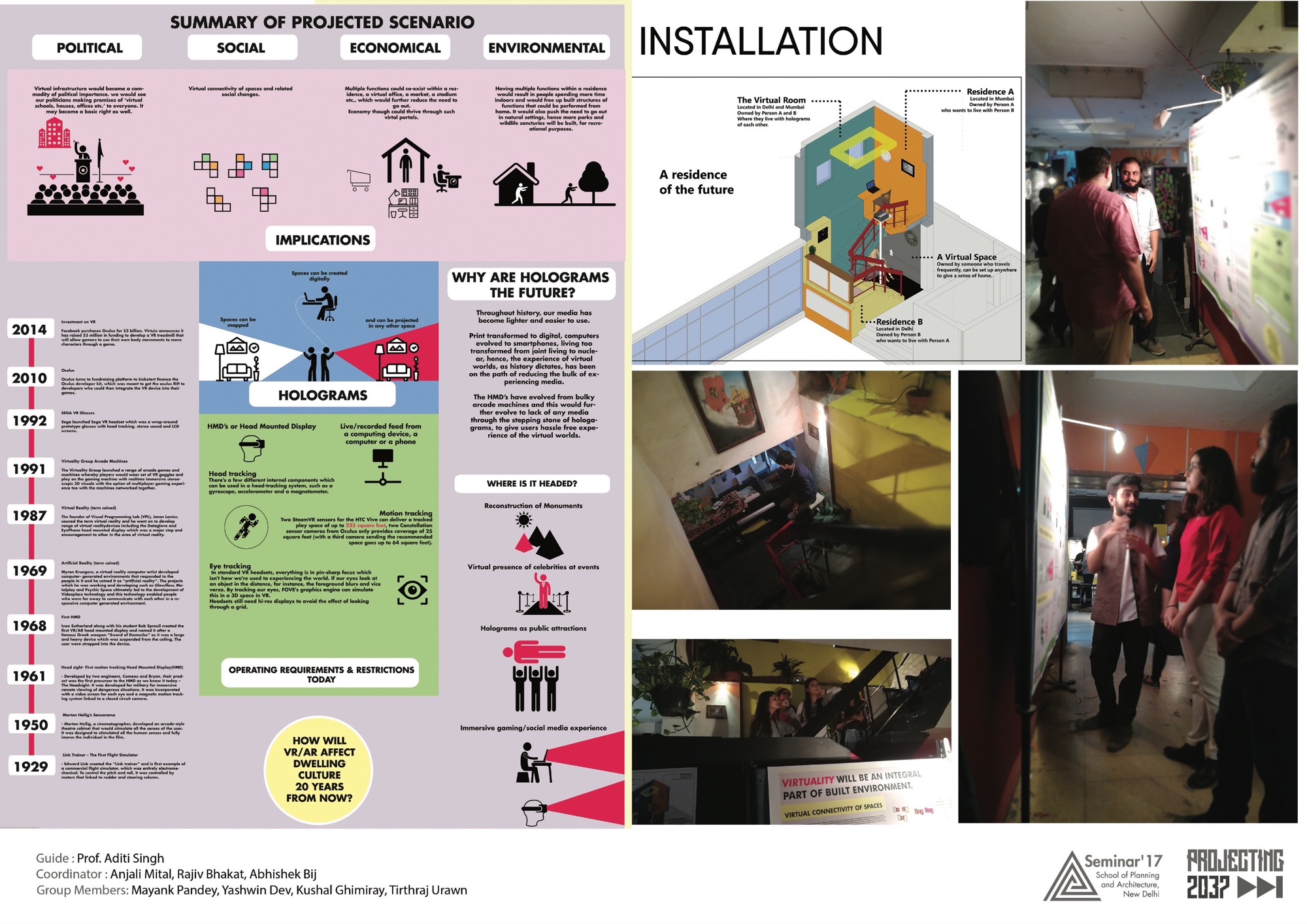
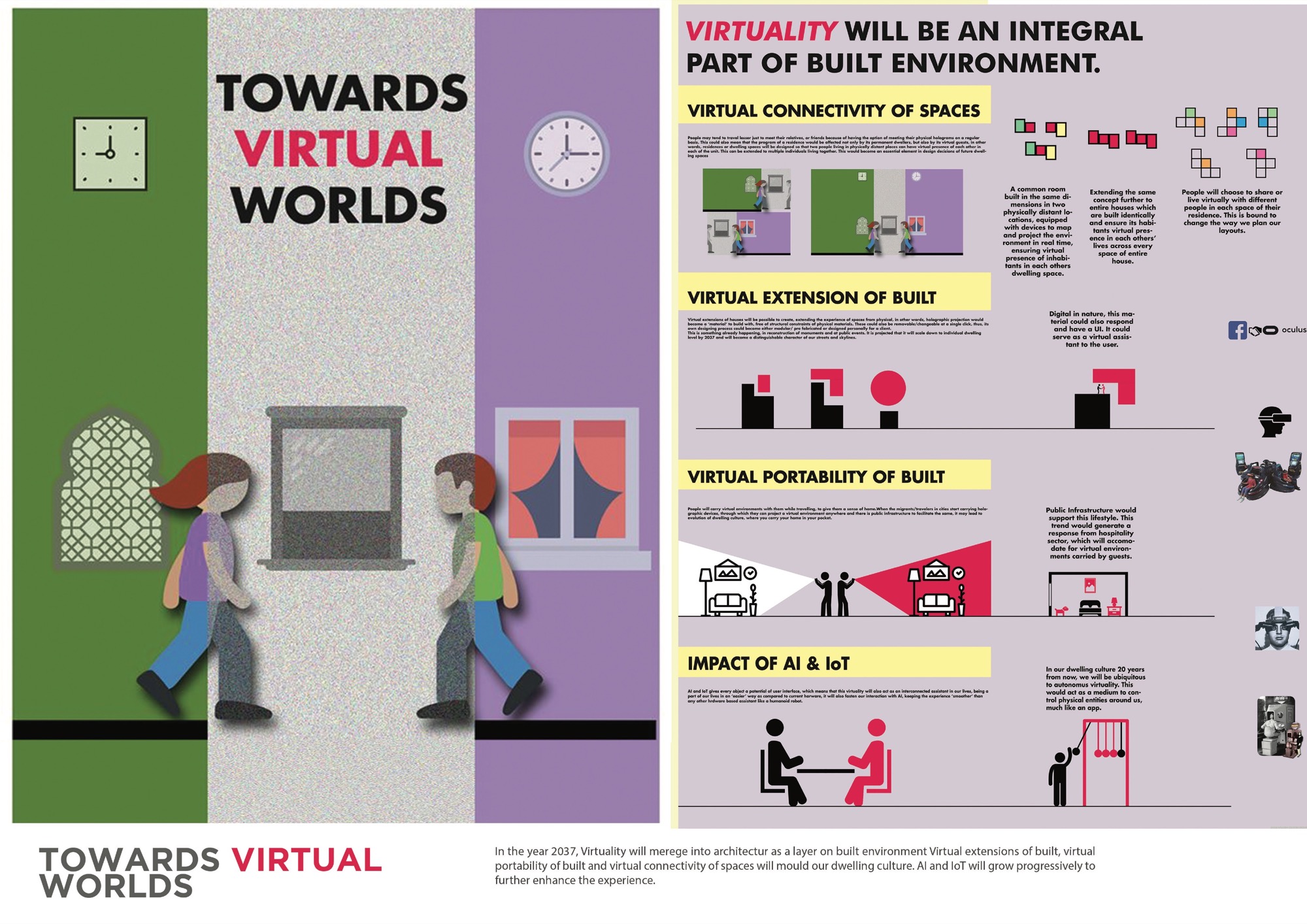
21.Virtually together
22.Future Cast
23.Vanishing Islands
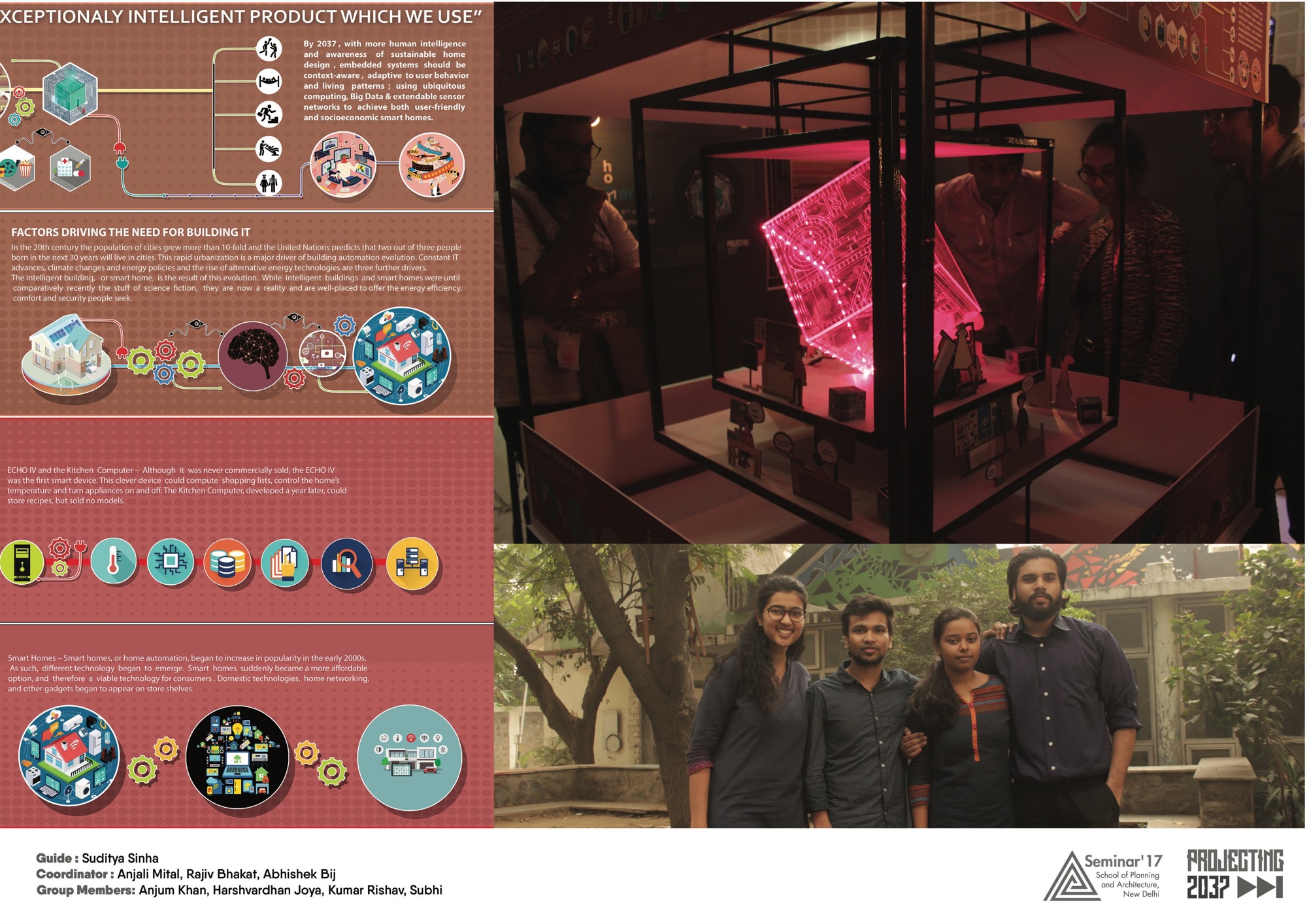
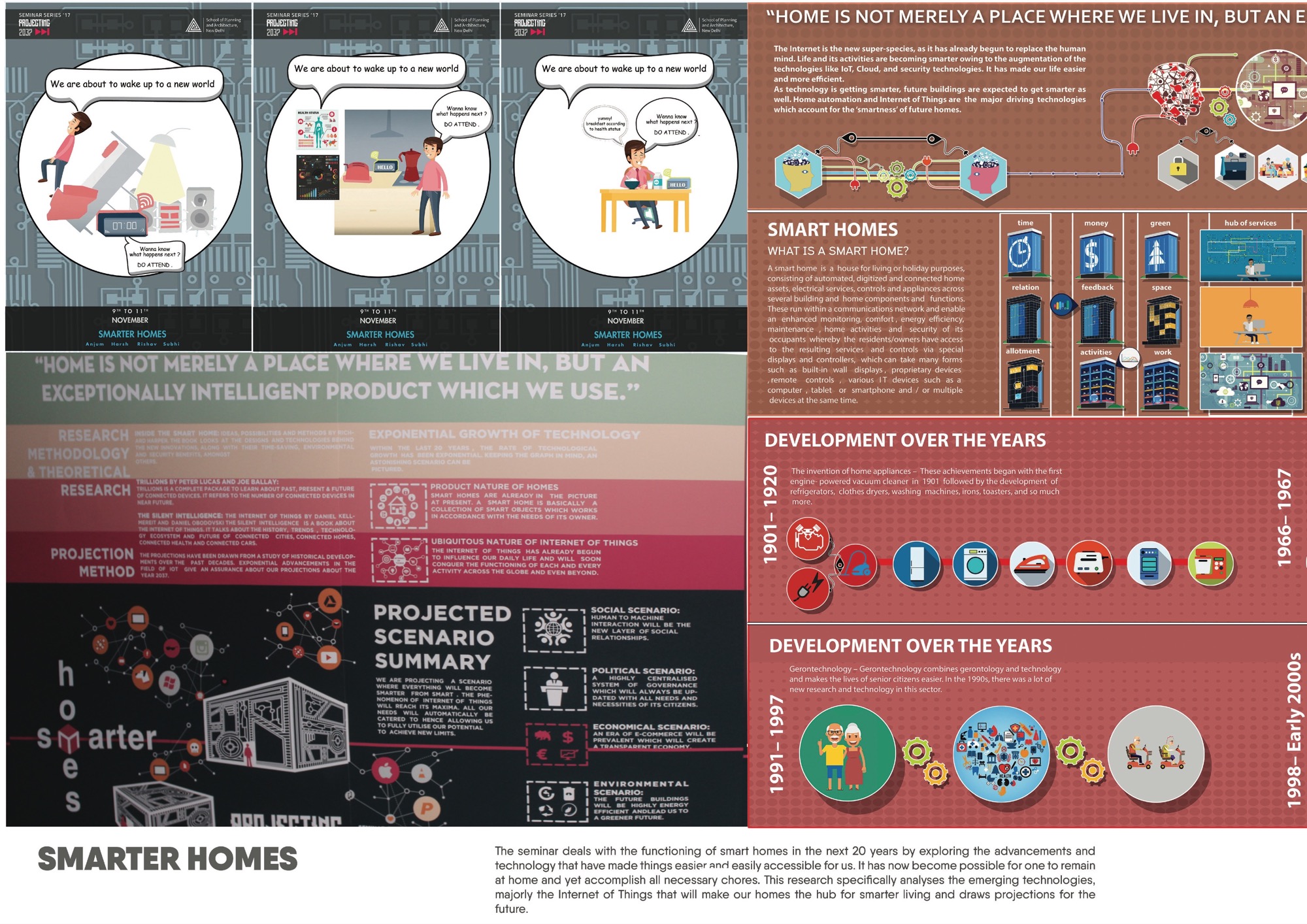
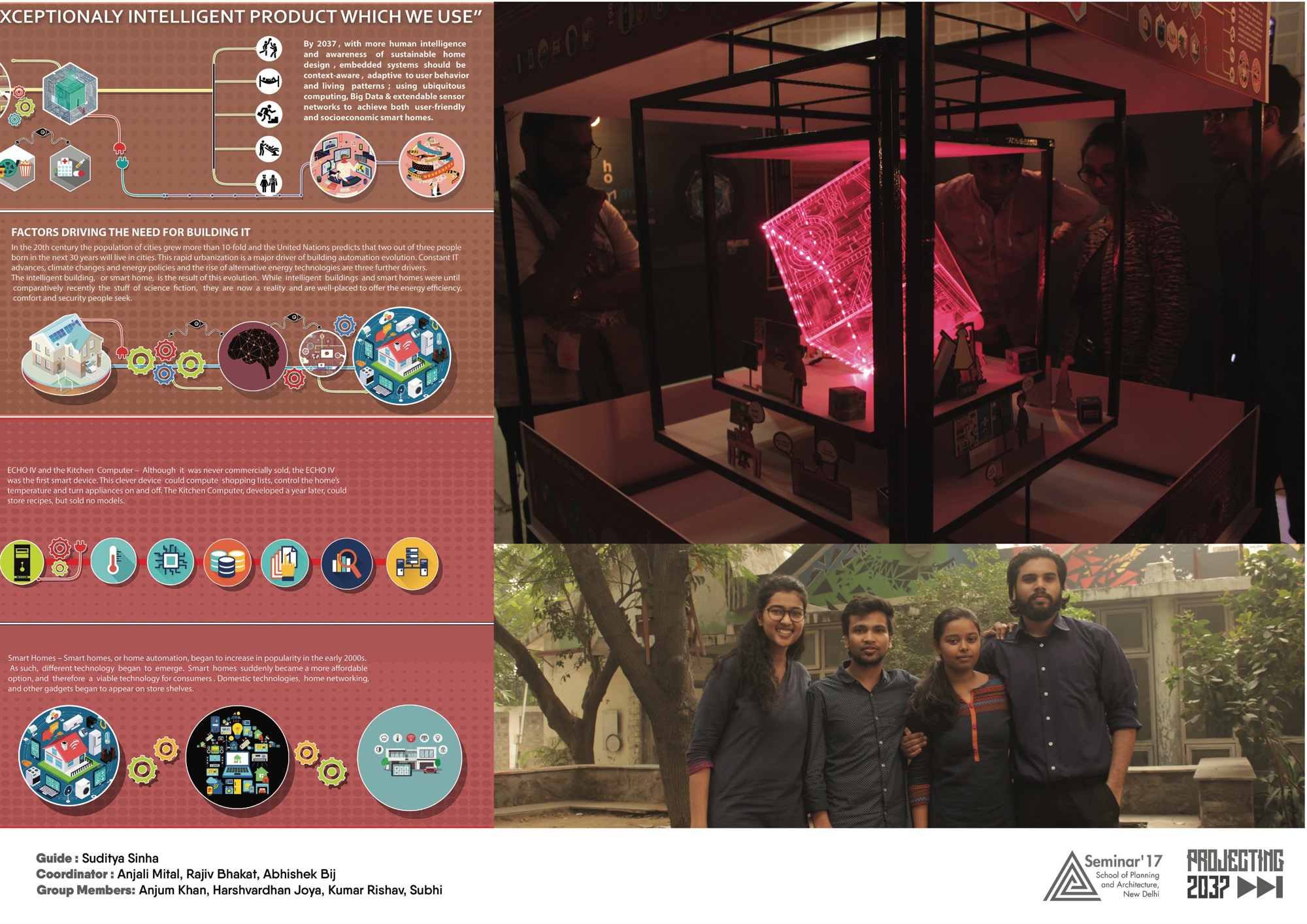
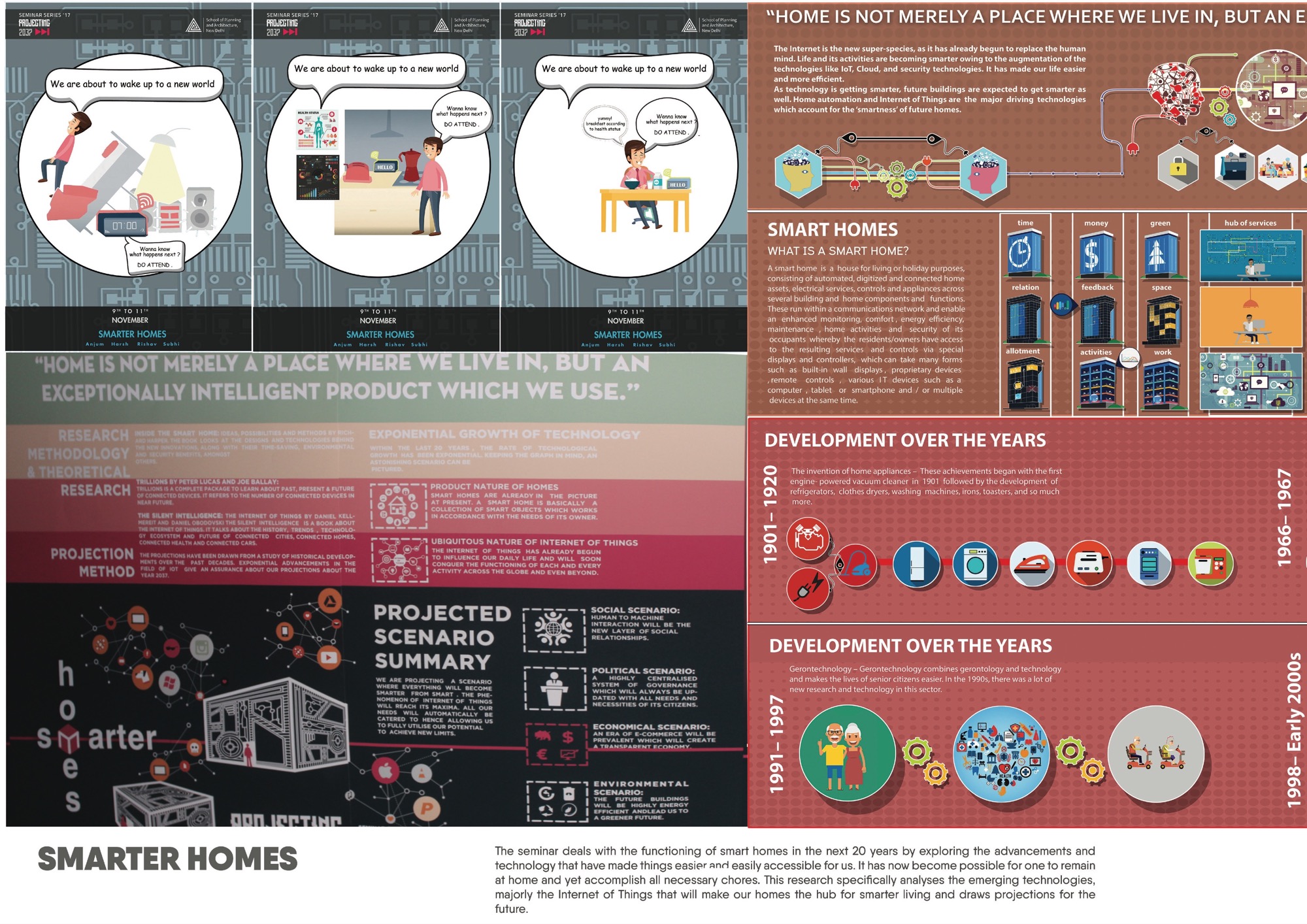
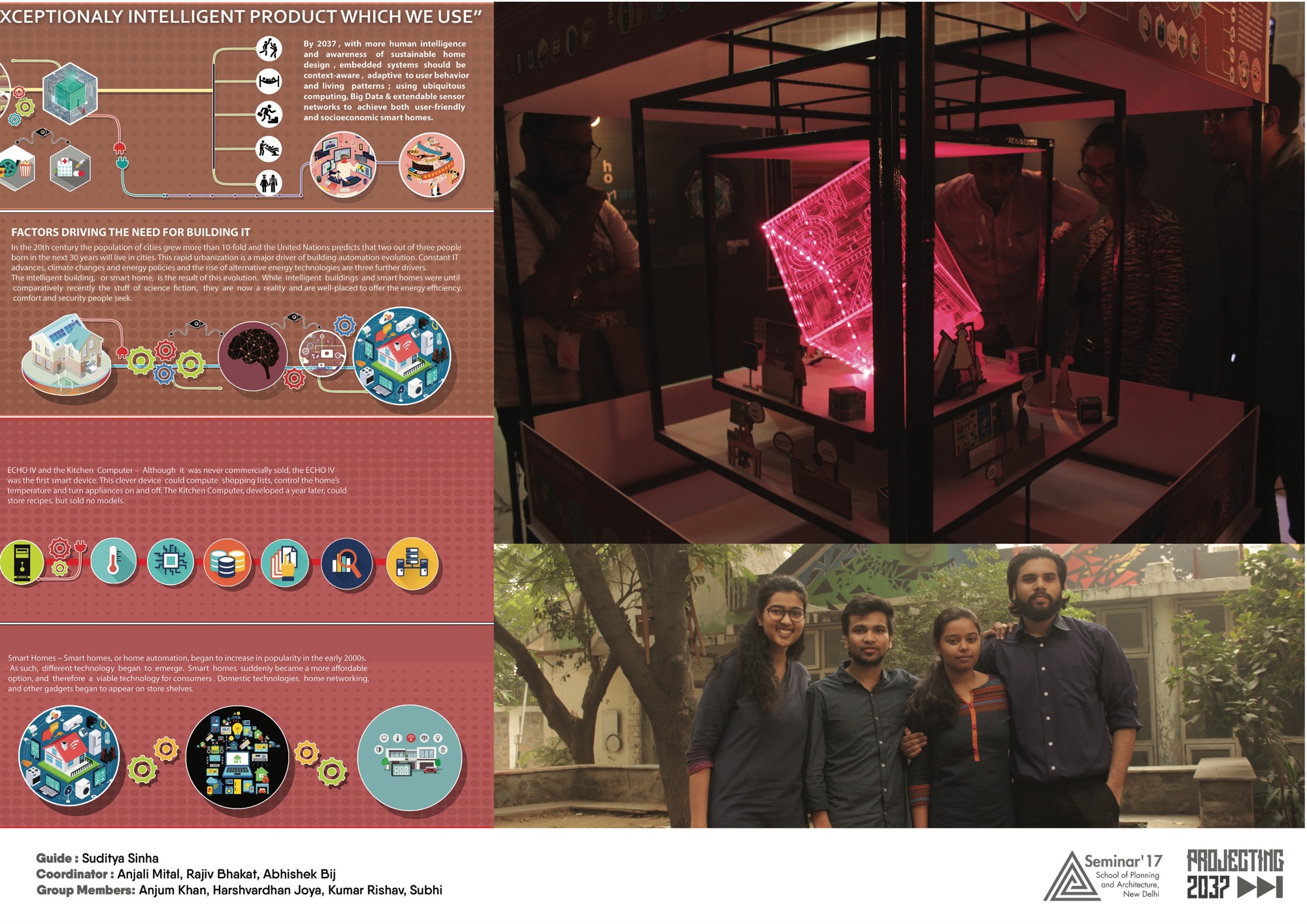
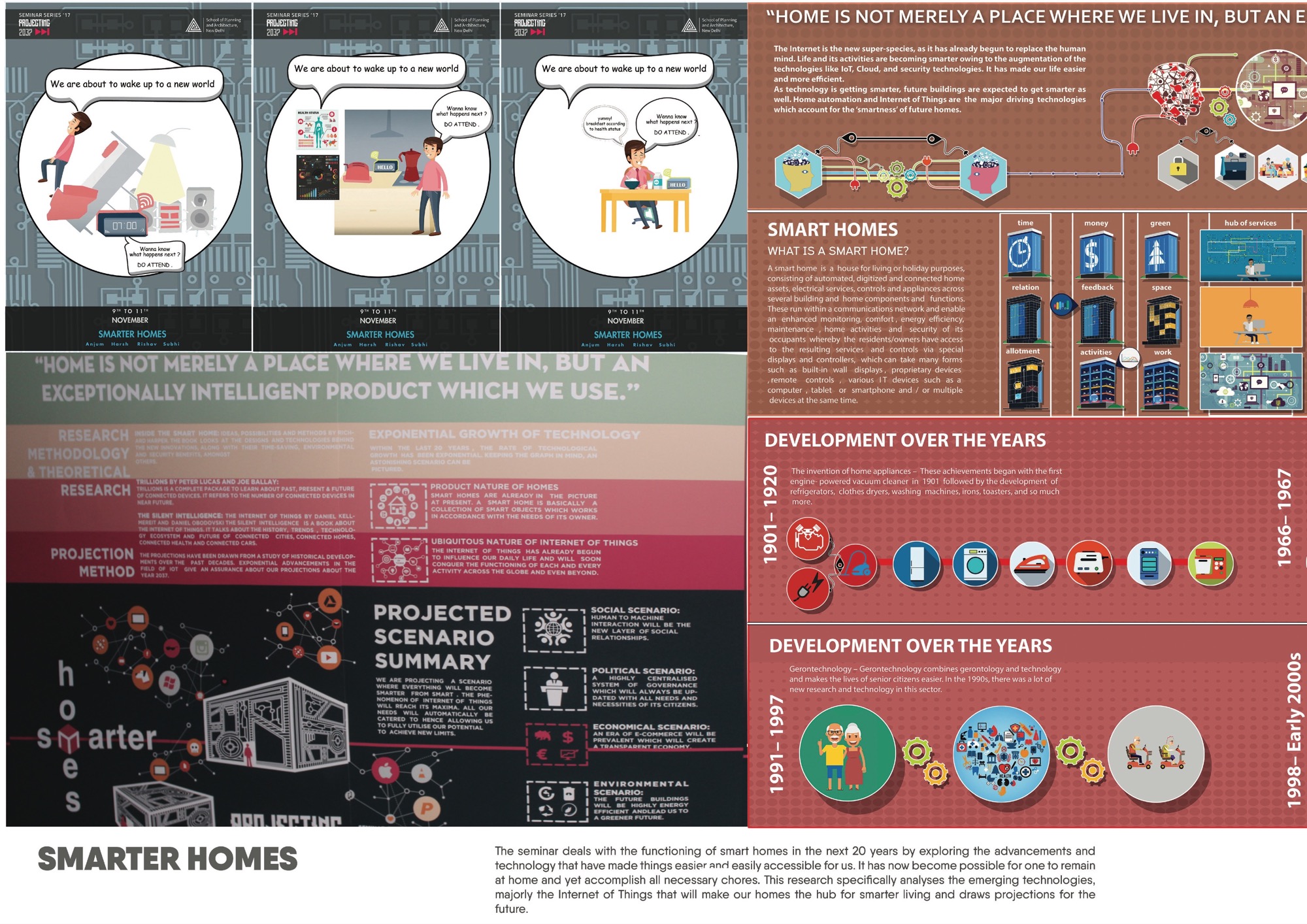
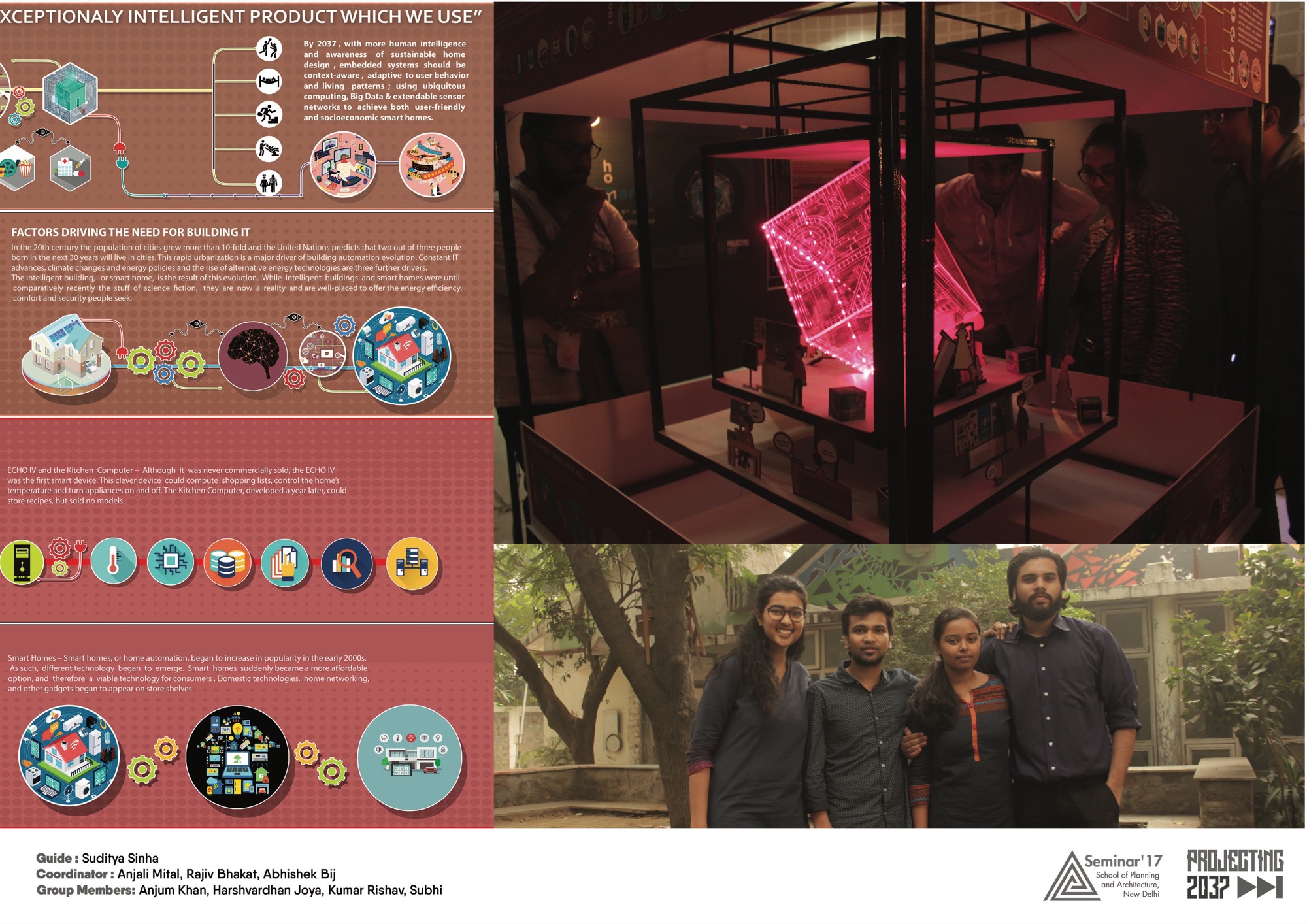
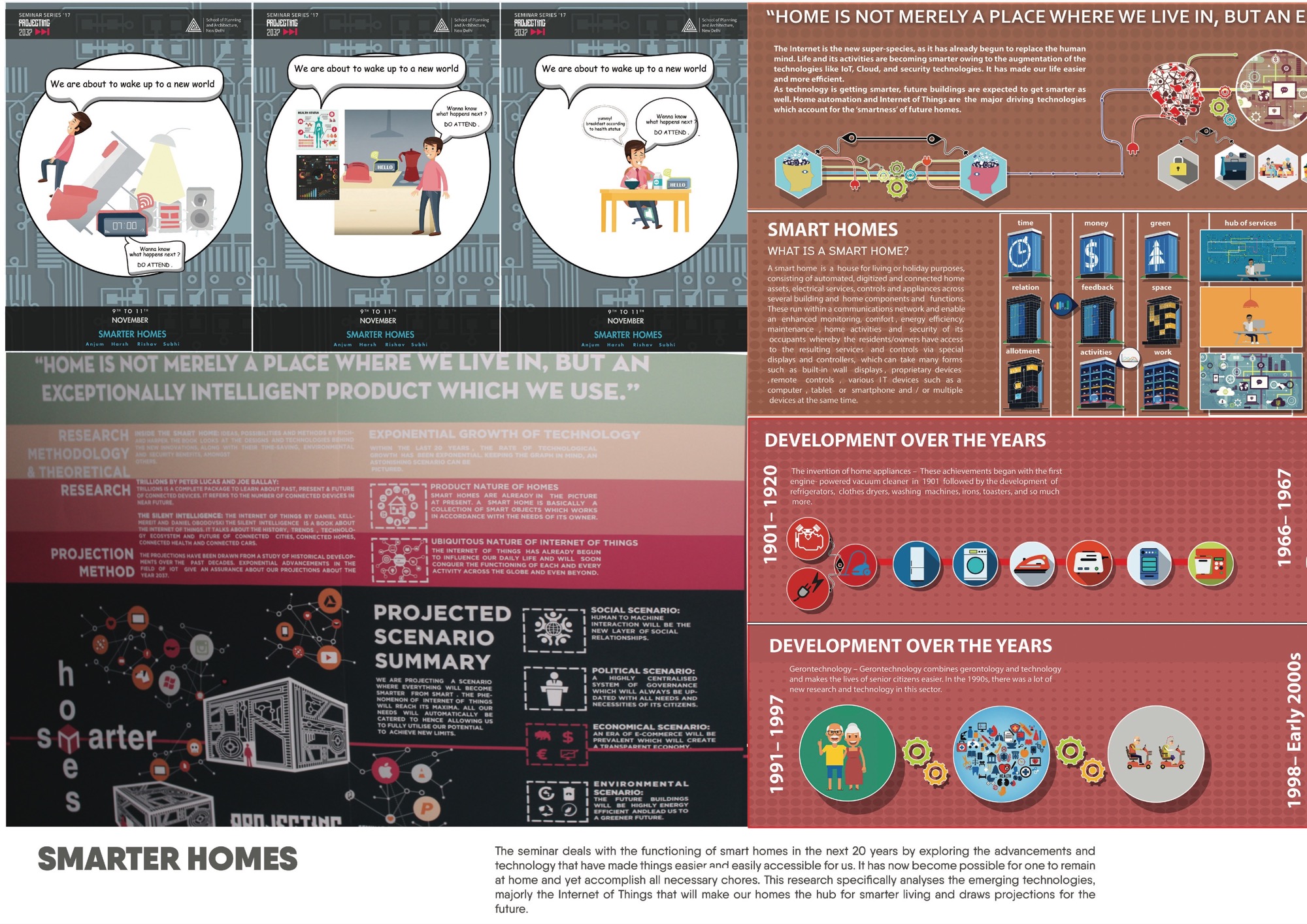
24.Smarter Homes
25.WARNING! SPEED BUMP AHEAD
26. F_unemployed
27.Facade’37
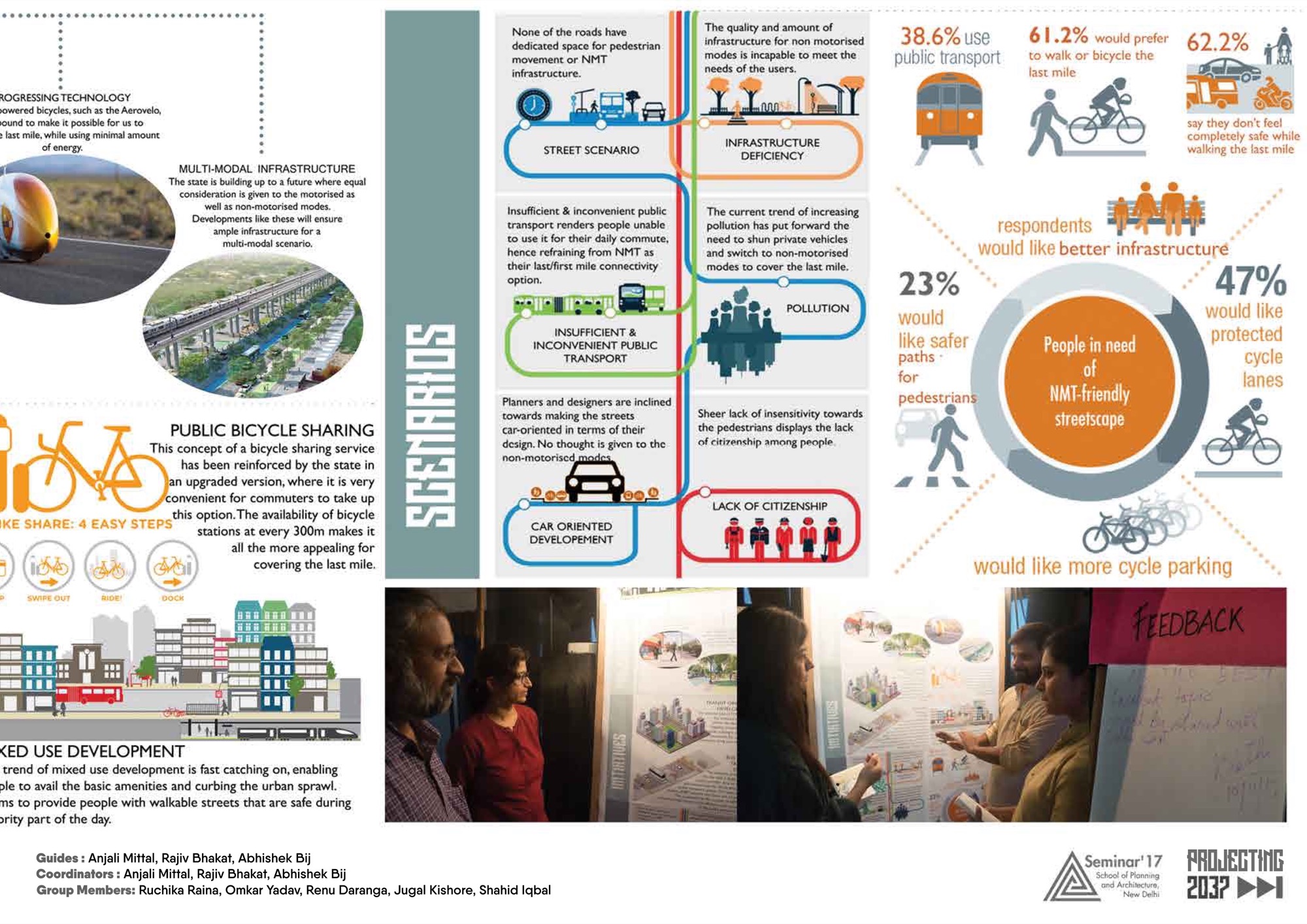
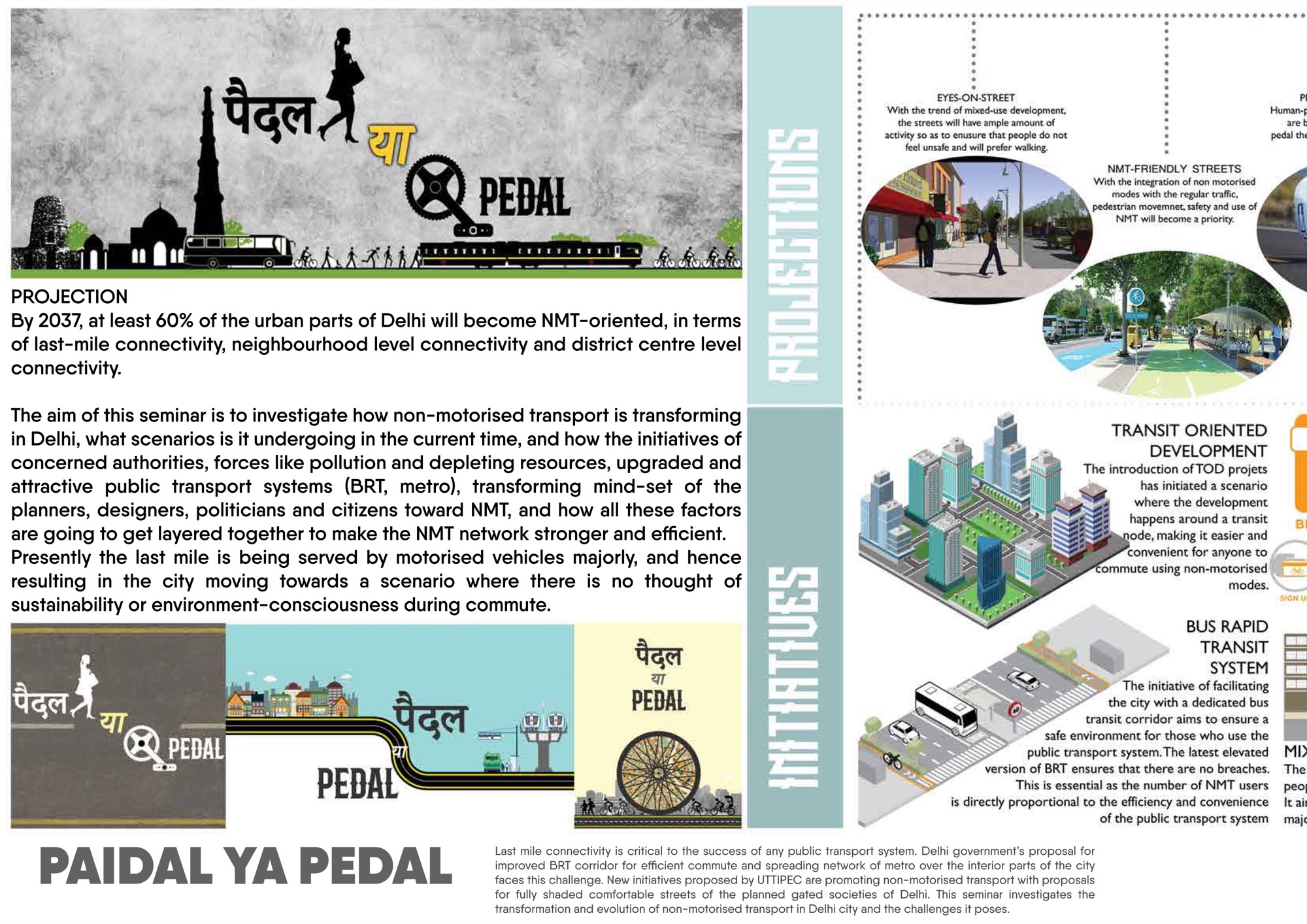
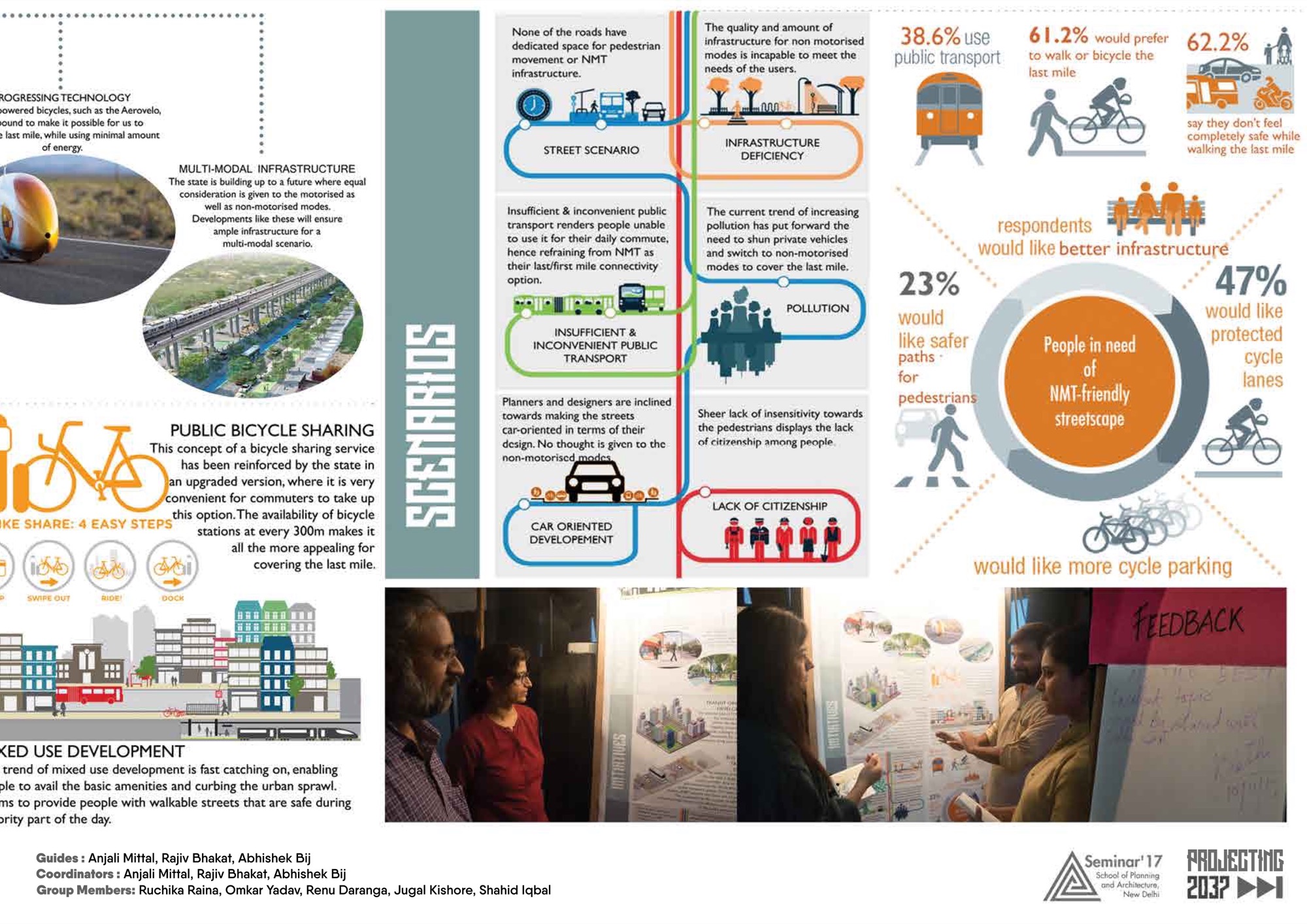
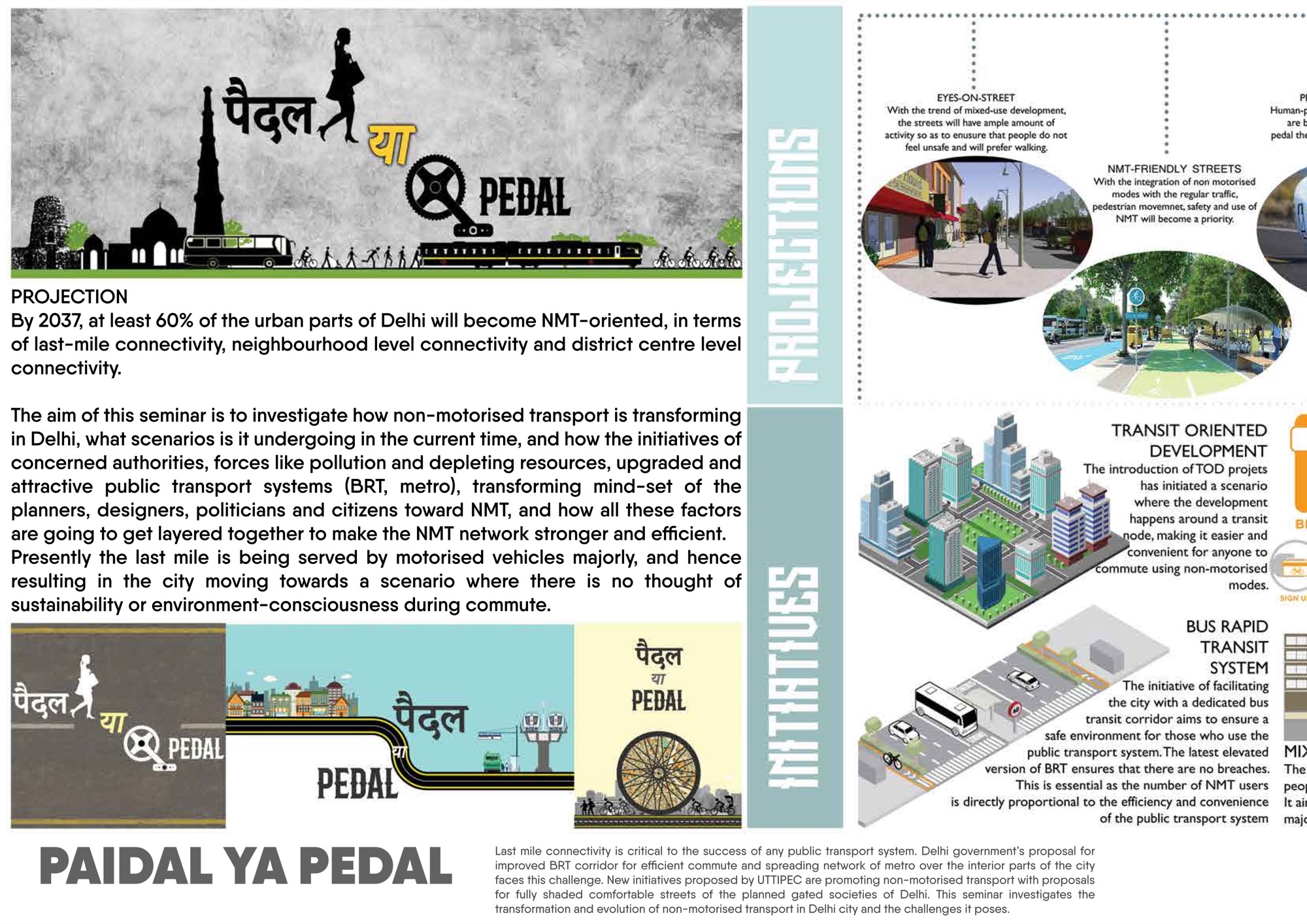
28.paidal ya pedal
29.Modular Architecture