In the Contemporary world, the definition of a home has evolved substantially. The Expectations and demands are changing from just Comfort, aesthetics and safety of a shelter to lifestyle, luxury, statement, a work of art with personalities in their own right. It’s the Architects’ responsibility to take up this challenge to not just meet these demands but bring in traditional and global concerns consciously on the board, innovatively. Conceding that each unique idea getting built as someone’s home will stay there for the sands of time and will influence the society, the ecosystem in a micro and macro level. Thus the approach towards the idea and how it is nurtured shall define the course of the private residence design.


The site, around 25000sqft, was a flat, long rectangular profile orienting North-South with an existing house of the owner on the extreme Southwest segment of the plot and a vast garden towards the north.
The brief was to design a new contemporary house next to the existing one, with the open garden all to it. This new house belongs primarily to the new Generation, two young boys who were about to start their own family soon.


The Family being affable and social always believed in meeting and hosting community gatherings often in their own premises, hence we have aspired to ideate a zestful, young Contemporary Indian house nestled within nature, dedicated to recreational pursuit!
To start with, The Ground floor level was conceived as a free-flowing open layout with blurred boundaries between the interconnected spaces, which eventually could act as one big public space when needed.


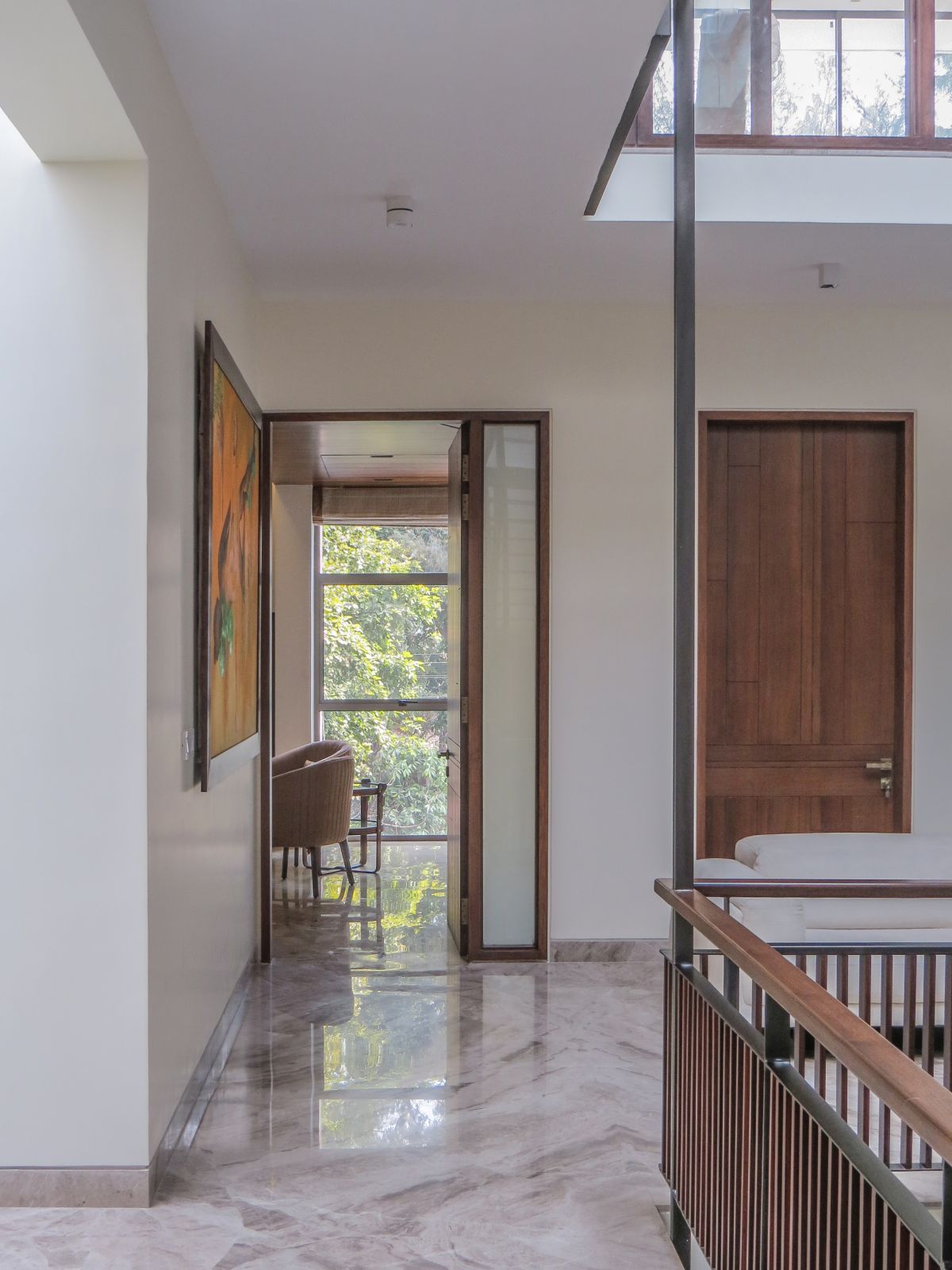
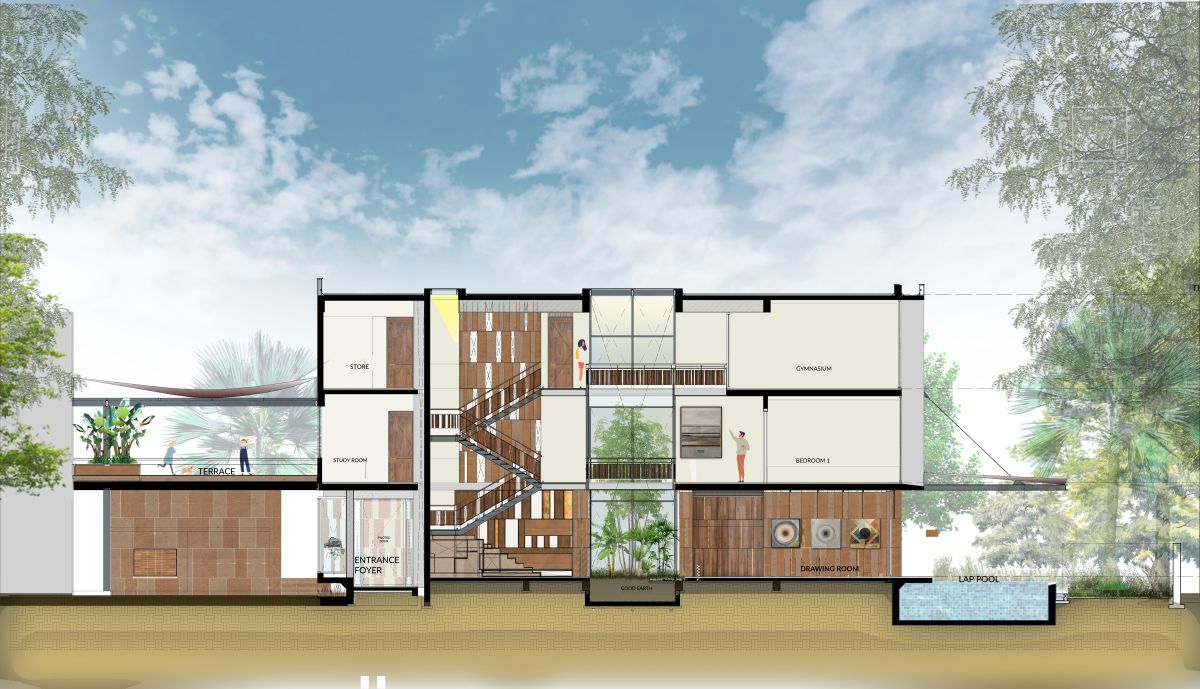
The New house shares the entrance porch and reception with the existing house. Both the house units have been intentionally connected with an axial wall, which originates from the existing house, travels through the fascia of the existing Temple and divides the entire building footprint in 1:2, which is further divided into three equal rectangular zones – Living, Common area and Private Zones stretching from North to South. The Fragmental Wall, as we call it, is the transition element, made out of indigenous limestone, articulated with strategic openings, between the Living, Drawing and Common lobby. Once in the entrance lounge, this free-standing wall is the main guiding axis traveling throughout the length along with the common lobby and Drawing room to the edge of the Pool.


On the south end of the Pool sits the secluded entity ‘The Pavilion’ overlooking the pool. The glass Pavilion has been envisaged as the tranquil recreation hub of the house, floating above the pool, is the final destination of all the movement routes at the ground floor level. It is connected to the semi-covered bar extending out of the Drawing room on one side and to the living room deck through glass steps over the pool on another side. The Drawing room to participates with the pool on the east with large full-height windows. The flexible nature of the living areas molds themselves by spilling over and merging together as per the size of the gathering.


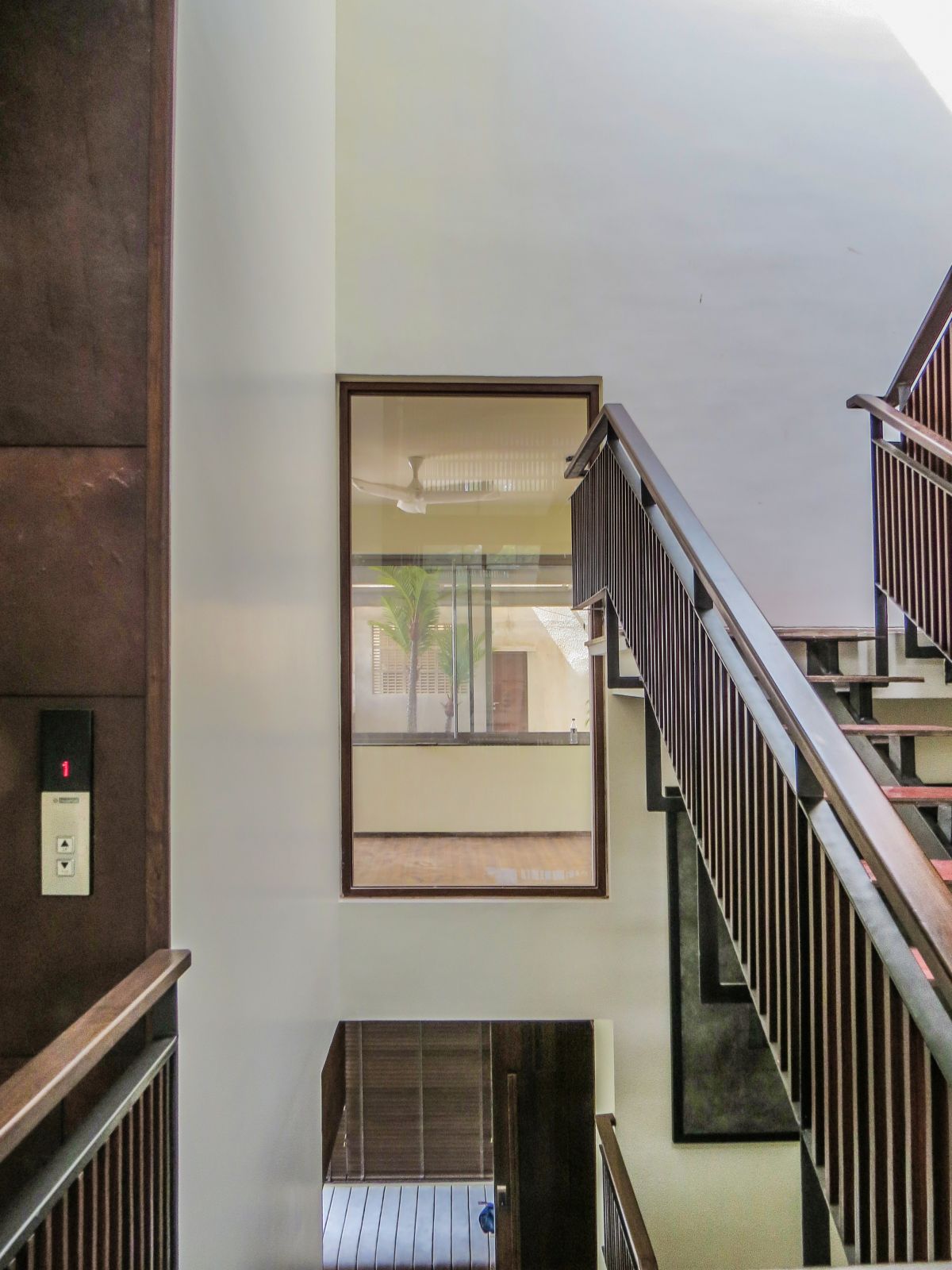
A prominent existing Plumeria tree in the center of the rear Garden in North induces the built mass and carves in a part of the garden deep into the core of the building, thereby bringing the nature indoors to bloom right in the center of the living pace and be in constant transmission with it. The green court is secured by a double-height glazing and an inclined north skylight on the top making it a large Green Terrarium amplifying the openness and bringing in the abundance of North light throughout the day for the living and common areas. The living spaces are oriented towards the vast garden, features full height glass windows to invigorate transparency and undeterred views.

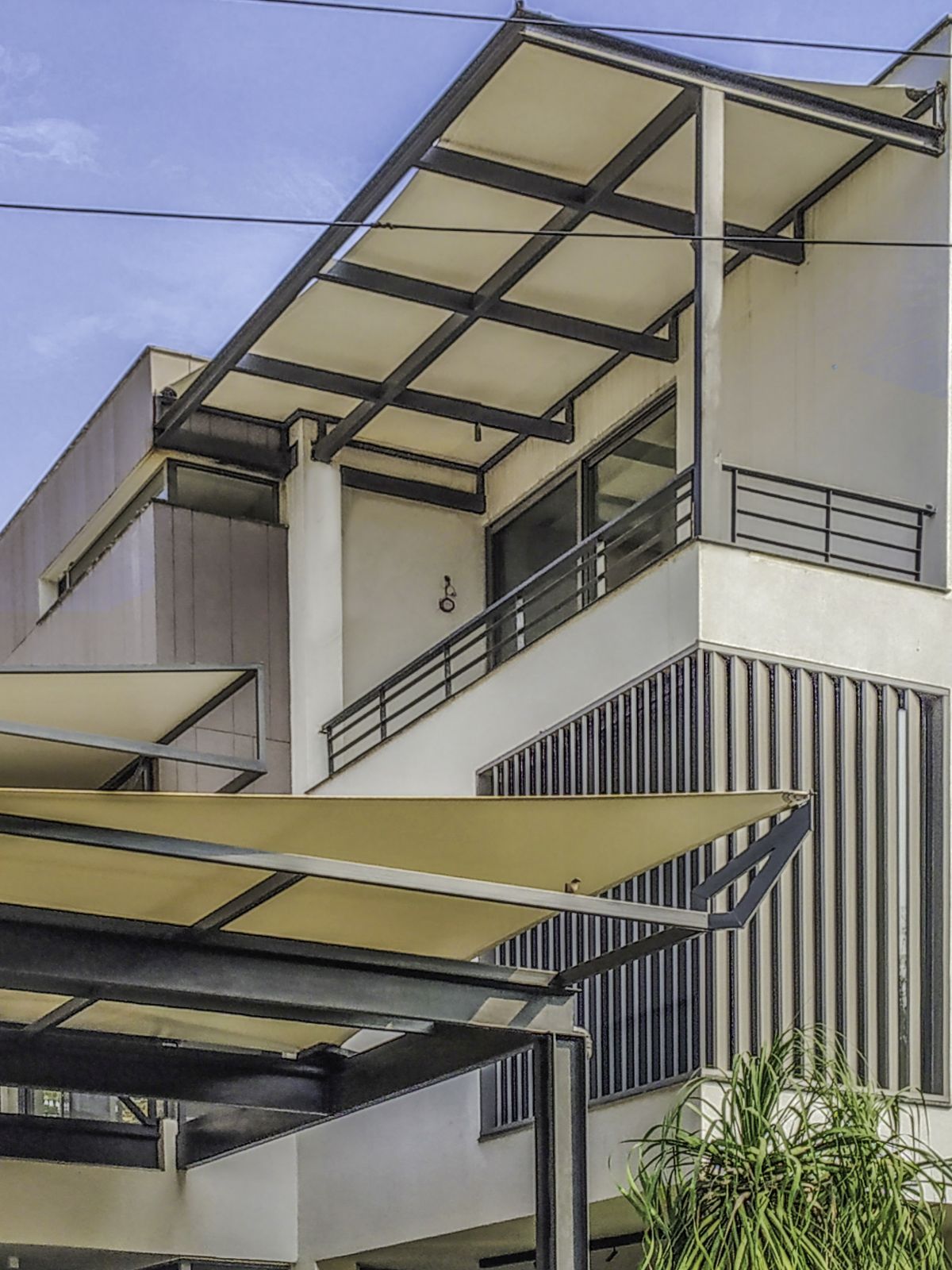


The South façade of the house comprises a thick double cavity wall with small apertures integrated with specifically designed solar shading louvers to achieve efficient passive thermal insulation and block the harsh Sun of long summers of central India.
All the master bedrooms sit on the first and second floor and aligning to the south edge of the house.
The New house connects the existing one on the first floor through a wide green bridge, right above the entrance portico. The connecting bridge and the terraces flaring out in north and south have been encapsulated with the spunky, light MS canopies with soft Tensile Fabric coverings that not just protect from sun and heavy monsoons but also distinctively complements the heavy solid built mass.


The clients being Art aficionados had huge collections of legendary paintings and sculptures; the fragmental wall and others become the display background for the selected paintings and the souvenirs add another layer of harmony and charm to the stimulating inside-out environment of the ‘Pavilion House’.
The House made beneficently comprises of a large recreation area, a swimming pool, a home theater, a fully-fledged Gym, spa and huge open green lawn which was meant to host community gatherings however it got finished just before the world came to halt in March 2020 due to pandemic and the new house motive got reformatted and instantly suited to the present need of the family to lock themselves in and relish the sublime living all by themselves.


Physical Model –


Drawings-



Project Facts –
Project name: The Pavilion House
Architect’ Firm: Flyingseeds studio, New Delhi
Lead Architects: Abhinav Chaudhary, Kakoli Bhattacharya,
Team: Pushpendra Kashyap, Shubham Jain, Akshita Rana
Project Location: Bhilai, Chhattisgarh, INDIA
Completion Year: 2020
Gross Built Area: 12500 sqft
Total Site Area: 25000 sqft
Photo credits: Abhinav Chaudhary
Brands / Products / Materials
- Shuco / Wooden Windows
- Saint Gobain / DGU glass
- Gessi, Grohe, Geberit / Sanitoryware
- Luz lights / architectural lighting
- Indian limestone, Marble /Flooring, Cladding
- MS structure, Tensile Fabric / Canopy