


Yes, even today, after 72 years of its inauguration, the inherent craft of the man-made design embedded within the lavish foliage of the urban fabric of French/Swiss architect Le Corbusier’s city of Chandigarh, India, is a pleasant cultural and visual experience. A city which has had stalwarts like Pierre Jeanneret, Maxwell Fry, and Jane Drew involved in its planning process, a city which is often touted as a workshop for architecture design and planning, once also dubbed as a city for the retired, still stands apart as the only Indian city which has with success, got it right the delicate equilibrium of built spaces to open ones.
While many point to evolving stressful issues like traffic, population and housing costs, the city’s reputation for being peaceful, clean, and green has earned it the “happy city” and “garden city” tags. A recent visit of mine to Chandigarh after many years left me refreshed with the vast, well-maintained stretches of green interspersed with some iconic architecture. The city breathes healthily.
My visit to Chandigarh was essentially to be a part of the inaugural viewing of the documentary “The Eternal Modernist” on the living Indian master-architect Shiv Dhatt Sharma, who played an important role in the shaping of Chandigarh. It was at the Government Museum and Art Gallery, designed by Le Corbusier.


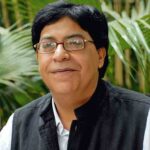
Having worked under Corbusier and Jeanneret and absorbed the then-prevalent modernism approach from them, S.D. Sharma has contributed profoundly to the design of some significant projects here. This very well-structured and emotively formatted documentary on the life and architecture of India’s iconic architect should no doubt kindle a fresh lease of love and passion for architecture amongst the students and the young professionals. Shiv Dhatt Sharma indeed further pulsates my belief that “to be a good architect, you have to be a good human being.” Even at the age of ninety-plus, he still communicates the hunger for the profession like a boy in his twenties.


Chandigarh is a city which, over time, has been nationally and internationally dissected intensely by one and all—the professionals, media and society. Extensively researched and documented, it has won applause as well as criticism—often dubbed by some as an introvert city.
Commenting on the planning concept, Corbusier had observed,
“The city of Chandigarh is planned to human scale. It puts us in touch with the infinite cosmos and nature. It provides us with places and buildings for all human activities by which the citizens can live a full and harmonious life. Here the radiance of nature and heart are within our reach.”
I would say, despite some burgeoning issues that have arisen with the passage of time and expansion, his views were echoed by many city-dwellers whom I interacted with. A resident professional colleague shared with me,
“Well to be honest, as an architect/planner I have travelled a lot in India. I have been a resident of this city for over thirty-five years. I am also a cribber of so many issues that plague the city now and the administration is not able to address them appropriately.
But yes, we residents in Chandigarh have a far better quality of life than most of you in the dense urbanity in the other parts of the country. Abundance of green zones, well-articulated road network with footpaths and cycle tracks, a disciplined architecture by the modernist masters, more respect for the law, a lovely setting of the city at the foothills of the Aravalli mountain ranges, a great cultural hub, clean and fresh air to breath; I could go on endlessly.”
In hindsight, I am in agreement with him, with an add-on that it has also inherited the typical urban chaos associated with any Indian metropolis.


For the uninitiated, Chandigarh’s grid-iron plan, based on initial concepts by Albert Mayer and Mathhew Nowwicki, was masterminded by Corbusier in the fifties. Analogous to the human body (head, heart, lungs, etc.), this grid-plan has large rectangular self-sufficient sectors providing residences, markets, schools and above all, ample green spaces with a well-defined road network for smooth traffic flow. The built market spaces in the sectors have adjacent to them, articulated ‘rehri markets’ (market for street vendors).
Conceptualised as a living organism, the Capitol Complex is the Head and now a UNESCO World Heritage Site, the City Centre is the Heart and the green belts are the Lungs. Inputs from Wikipedia and the Chandigarh administration website say,
“A hierarchical road network (V1 to V8) separates vehicular traffic, pedestrians, and cyclists, with green belts allowing non-vehicular movement. Buildings are often slightly tilted (aligned to cardinal directions, not the grid) to manage sunlight and heat, optimising natural light and minimising solar gain.”
Sculptures are in abundance in the city. Corbusier attempted to symbolise peace and harmony through his very popular metallic Open Hand Monument in the Capitol Complex, which comprises three iconic structures—the Secretariat, High Court, and the Legislative Assembly. Vast piazzas interconnect them.


Many would no doubt be envious of the twelve to thirteen lakh residents of Chandigarh. I am one of them. I was told that it has also become an important educational centre in India with a sprawling university campus and research institutions in diverse fields. A tourist would be captivated by attractions such as the Rock Garden, Museum of Dolls, Le Corbusier Centre, Leisure Valley trails and of course, the inherent architecture and design embedded in the planning.
My brief explorations here no doubt brought a resolve to visit this brick and concrete city again and rediscover the city’s modern-day modulor fabric.


One Response
Dear Sunit Paul,
Inspiring account and thought provoking artical. Thanks for sharing