


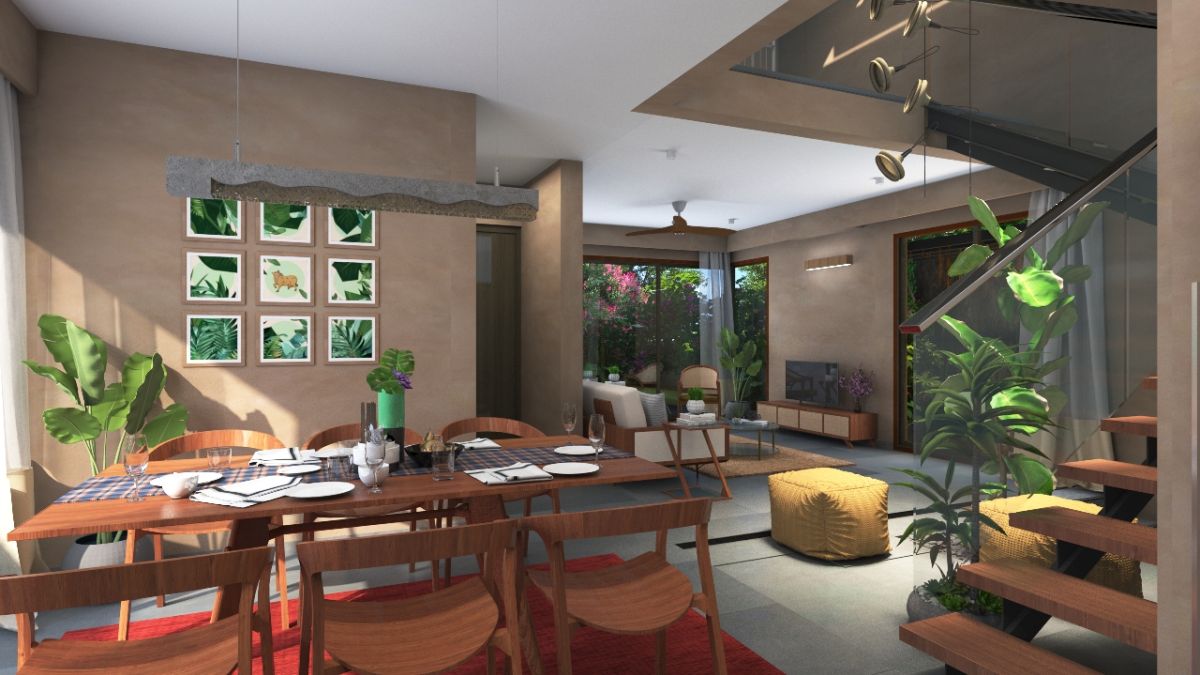
Situated in a 28 acre site, the Terravana also called the Earth house is a design intervention that travels along the lines of earth and sustainability. In a plot size of 34.4×60 ft the unit focuses on a minimum footprint integrated with greenery. The interior setting transcends with the Pairing of age old technique of lime plastering with mid-century themed furniture. With delicately chosen décor that complements the theme of wellness and the colour palette of natural tones exhibits strength, sound and health.

The sofa combines rustic and modern design elements to enhance the time-honoured surface treatments in the given space . The hand painted artwork above specially commissioned by client becomes an element to draw attention and add character, perhaps a conversation maker.

The Dining area opens to a landscaped niche that perfectly adds volume and glow to the compact nature. The green cota stone that covers the floor almost blurs the line from the inside to the outside landscape. The exposed concrete light above the dining table, emphasizes the true nature of the material and colour.
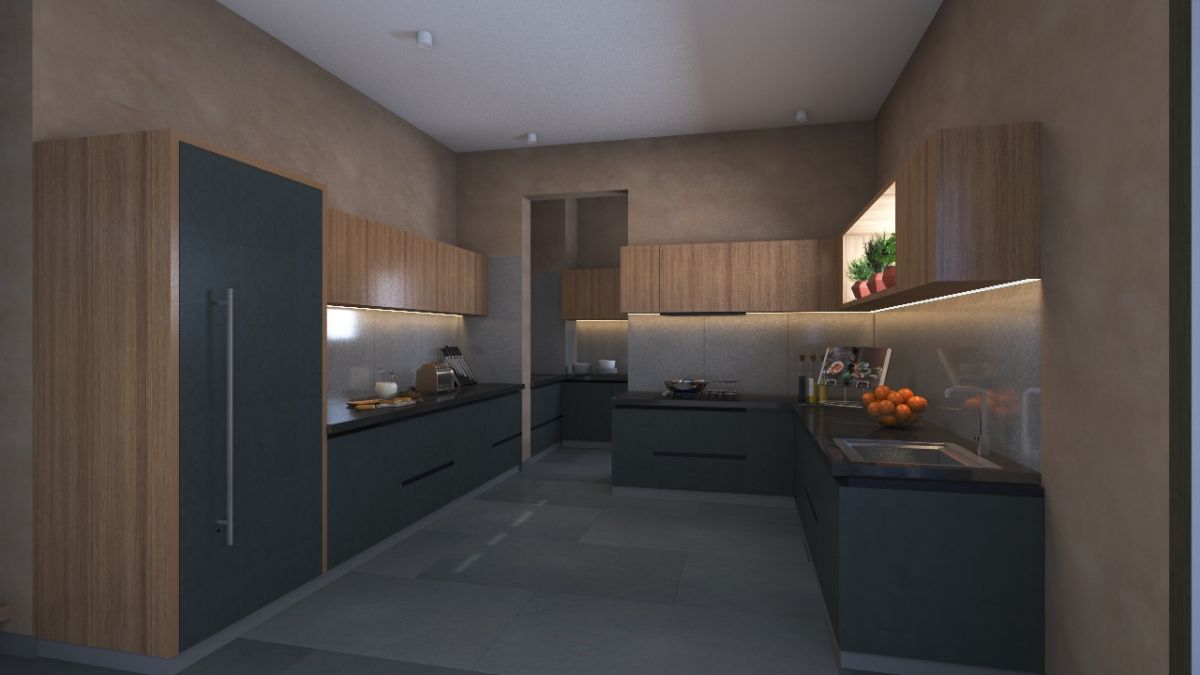
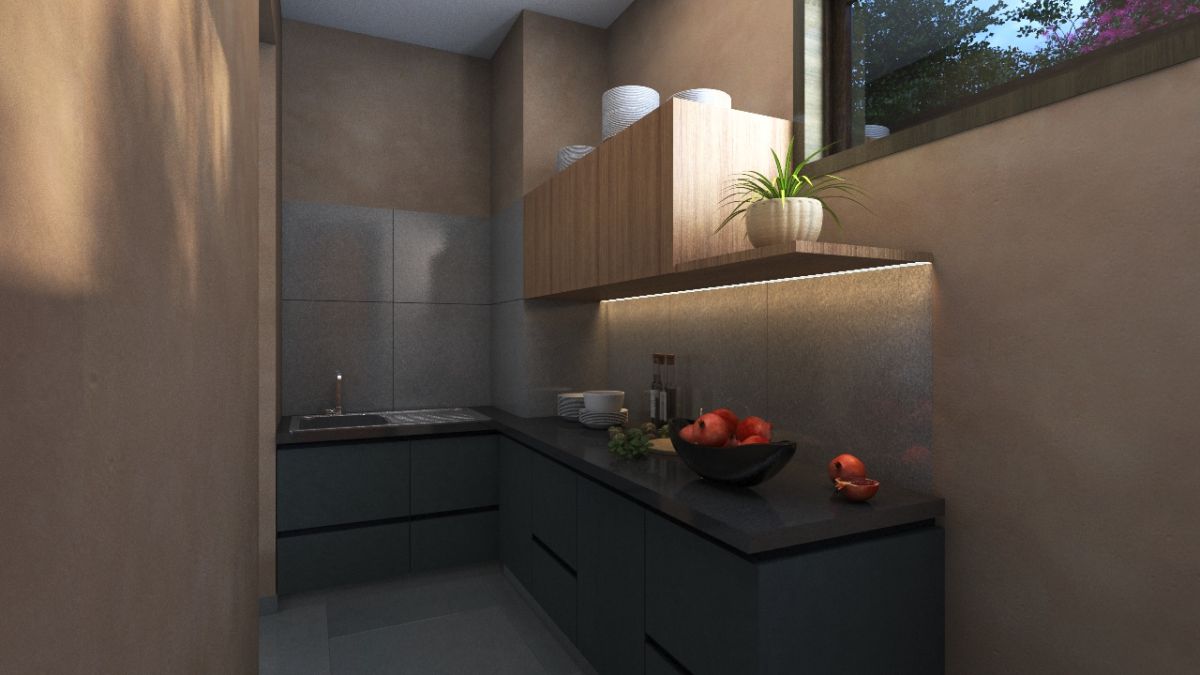
The kitchen space stands apart through the triality of colours and textures. The homogeneity of the space is accentuated through the use of contrasting textures, but complementing colours.


Diffused natural light complements the warm hues of the decor to add an ethereal element to the space. By minimizing the transition spaces between rooms, the efficiency of the design is significantly magnified. The central atrium connects all spaces in the residence seamlessly while also accommodating as space for relaxation, conversation and enabling a channel of easy communication throughout the house.
The central atrium and the transition space are augmented by the colour palette to give an even more expansive feel to the double-height volume. This double height itself being carefully articulated to detail with lights fixtures made from the banana leaf that drapes down, and curios that lighten corners.


The intent for the bedroom was to make befitting use of the sylvan design elements to compliment the natural tones of the interiors. The complementary colour palette for the bedroom perfectly augments the fine texture detail of the elements in the space. The selection of the classic bedpost is a refreshing throwback to the memorable designs of old. The framing gives a definition to the volume.

Together with the Curated Artisan furniture and Extensive range of thoughtfully designed decor pieces along with custom made lights that revive past traditions and art forms. Integrating them with modern technology the earth house explores the modern setting of lifestyle through traditional tones of nature and nurture.
Project Facts –
Project Name: Earth Villa (Interiors)
Interior Design: Svamitva Architecture Studio (Interior)
Firm Location: 110/2, 3rd Floor, Krishnappa Layout, Lal Bagh Rd, Bengaluru, Karnataka 560027
Completion Year: 2021
Gross Built Area: 2400 sq ft.
Spec: 3 BHK, Family Room, 1 Car Park, G+1, East Facing
Project location: Kanakapura, Bangalore, India
Interior Design :Svamitva Architecture Studio (Interior)
Architecture: Mindspace Architects
Media Provider
Photo credits: Create Studio
Additional Credits
Design Team: (Interior team) Akshay Mehta, Yash Mehta, Sarada Krishnamurthy, Haritha
Clients: Svamitva Group
Landscape: 3-Fold Design, Bangalore
Architect : Mindspace Architect
Materials and Brands
Paint: Lime plaster
Flooring: Kota stone, wooden laminate
Kitchen: Stosa Cucine
Furniture: Magari, Woodlabs, Pepperfry, Urban Ladder, Insaraf



One Response
NOT MY CUP OF TEA