Hafeef PK - Zero Studio

Hafeef leaves behind a fleeting but lasting legacy – Lijo John Mathew pays a tribute to Hafeef PK

Lijo John Mathew pens down a tribute to architect Hafeef Pk, who passed away recently.
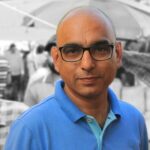
Hafeef PK - Zero Studio
Picture by Lijo John Mathew

Hafeef PK, a young architect and a partner at Calicut based Zero Studio passed away yesterday morning, leaving behind many award winning works. His colleague and friend, Lijo John Mathew pays tribute to him.

Hafeef was a respectable colleague, a loving friend, and an inspiration to many of us.

Hafeef hailed from a humble and modest background, and was always a brilliant talent who began his architectural studies with the aid of a scholarship. From his early years as an architecture student, he showed immense potential in both the field of design and as a capable leader. His undergraduate thesis on a multi-faith cemetery was selected for the prestigious NIASA Thesis Competition. Also, as NASA secretary, he received numerous honours for his institution.

Soon after graduating from TKM, Hafeef along with his friend Hamid established Zero Studio in Calicut. Zero Studio in a short span, went on to become a critically acclaimed atelier in Kerala’s architectural scene.

The young and promising Zero Studio won several awards from the IIA in 2012–2013, when it competed nationally in the category of unbuilt projects. It continued to win awards and prizes in the years that followed.

His residential work titled Mausam, house of seasons built in Mannarkkad has been extensively featured in publications and demonstrates Zero Studio’s unique direction and architectural language. Hafeef has been one of the influential names who spearheaded a contemporary interpretation of modern, Kerala architecture in the last decade.

Hafeef was a mentor and an inspiration to the many young and aspiring architects.

He personally went above and beyond as a friend for the people he cared about. He was a rare example of a coworker and comrade who freely shared details of architectural projects, resources, references, and his advice. He had a huge penchant for discovering new places and good food which he loved sharing with his friends.

He was younger than me, but to me he played the part of an elder brother who was always there to provide guidance and support when I needed it.

Hafeef will be sorely missed, not just in the lives of his loved ones but in our profession. He leaves behind a fleeting but lasting legacy.


Lijo John Mathew is an architect and partner at Cochin Creative Collective.
Leave a Reply

Your email address will not be published. Required fields are marked *

This site uses Akismet to reduce spam. Learn how your comment data is processed.

Recent

Source - Deccan Chronicle

Wall As a Public Space
“To read public space only as a spatial condition, as a matter of square footage, zoning, or physical access, is to miss half the picture.”
—Reshma Esther Thomas

Reshma Esther Thomas examines how Hyderabad’s flyover pillars, painted with Cheriyal-style murals under the GHMC’s ‘City Art Scape’ initiative, reveal the paradox of managed public space. What appears to be beautification is actually cultural assertion in the wake of the 2014 bifurcation, bureaucratising a surface that once belonged to those without institutional power.

Read More »
Khazans in Slavador du Mundo, Bardez, Goa. © Kusum Priya (1)

The Map That Was Never Yours
“If publicness is reduced to what is legally accessible, then these landscapes were never public to begin with.”
—V.V. Kusum Priya

As part of our editorial: What makes a space public?, V.V. Kusum Priya argues that Section 39A of Goa’s 2024 Town and Country Planning Act this isn’t just a legal issue, and that it’s the erosion of an unrecognised but collectively sustained commons, and a question of what “public” really means and who benefits from the legislations surrounding this.

Read More »
Life on the public spaces in downtown Calcutta. Source - Wikimedia


“Appropriation of public spaces is the genesis of political movements, of ideological apparatus, and of endangering the city’s multi-dimensional fabric.”
—Dr. Seema Khanwalkar

Dr. Seema Khanwalkar, explores how the public spaces in India are dynamic, contested areas shaped by informal economies, migration, and social negotiation. She reveals how the transactional activities democratise ownership of these spaces, while the political and religious appropriation increasingly displaces this organic vitality, creating exclusion and anxiety. This shrinking of inclusive public space threatens urban social fabric, yet remains largely absent from city planning conversations, making it a far deeper crisis than mere encroachment.

Read More »
Sen Kapadia


“… people like Sen [Kapadia] don’t really leave. They become the questions we continue to ask.”
—A Tribute by Nuru Karim

Nuru Karim reflects on his relationship with Sen Kapadia through three transformative “states of being”—as a student, as a studio colleague, and as an independent professional. To capture Sen’s essence, Karim draws on three powerful metaphors: a mountain (commanding yet silent), a banyan tree (generous and sheltering), and a river (unseen yet ever-present). Together, these images paint a portrait of a man whose quiet depth left an indelible mark on all who encountered him.

Read More »

Featured Publications

New Release

Stories that provoke enquiry into built environment

www.architecture.live

Subscribe & Join a Community of Lakhs of Readers

We Need Your Support

To be able to continue the work we are doing and keeping it free for all, we request our readers to support in every way possible.

Your contribution, no matter the size, helps our small team sustain this space. Thank you for your support.

Contribute using UPI

Contribute Using Cards