Bridge Studio

CUBES – Multi Dwelling Residence, at Rajkot by Bridge Studio

Bridge Studio

Text: Bridge Studio Photography: © Radhika Pandit, Satyam Dave

CUBES - Multi Dwelling Residence, at Rajkot by Bridge Studio 1

The word “CUBES” is derived from the form of the building itself. The architecture of ‘cubes’ is highly influenced by the work of legendary architect Ludwig Mies van der Rohe and reflecting his famous saying “LESS IS MORE”.

“CUBES” has a very simple rectangular form which is the amalgamation of four cubes where each cube holds one particular function. Living, dining and kitchen bounds within its form.

CUBES - Multi Dwelling Residence, at Rajkot by Bridge Studio 3
Plan

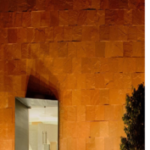
Eastern facade of the building is full of glass to allow morning sunlight within functional spaces. Sliding windows allow us to merge inner spaces with outer spaces (i.e. backyard deck with swimming pool) results into again flexible plan and multifunctional spaces. Southern facade has no opening to obstruct harsh sunlight. Western facade has 3′-6″ entrance within 14′-0″ high standing wall making a benchmark entrance which hides the surprised eastern opening on the other side.
All villas are detached from each other creating another access to the pool and garden without disturbing inner spaces and also it acts as service entry for the same during functions at villa.

Landscape area has trees bearing different kinds of fruits and vegetables. Its compound wall is avoided of masonry. It has bamboo fence with creepers all over so that one ends its vision with greenery from within.
The architecture of the project justifies the statement “Form follows function”. The project truly reflects the architect’s principles that the shape of the building should primarily base upon its intended function or purpose.

Leave a Reply

Your email address will not be published. Required fields are marked *

This site uses Akismet to reduce spam. Learn how your comment data is processed.

Recent

The Chunli Guesthouse, Shanghai, China by TEAM_BLDG 1

The Chunli Guesthouse, Shanghai, China by TEAM_BLDG

The Chunli Guesthouse, Shanghai, China by TEAM_BLDG’s response to nature, memory, and the spirit of place. The design takes “Catching” as its spiritual core, emphasizing the relationship between the architecture and the surrounding rice field landscape.

Read More »
Gender. Hysteria. Architecture. | What Might Care Look Like If It Were Not Afraid of Women? 4

Gender. Hysteria. Architecture. | What Might Care Look Like If It Were Not Afraid of Women?

What kinds of spaces exist where women can breathe without being watched? If hysteria no longer exists as a diagnosis, why does its architecture remain? Aditi A., through her research study as a part of the CEPT Writing Architecture course, in the third and last chapter of this series follows the spatial logics that developed to manage hysteria, which continue in the contemporary environments of care safety, and everyday life. If the diagnosis has been discredited, what explains the persistence of its walls?

Read More »
Kirtee Shah on architecture profession at CEPT University alumni meet

“… the way architecture [profession] is perceived and practised, it needs to move from the pedestal to the ground.”—Kirtee Shah

In his presentation at the CEPT Alumni Meet, in January 2026, Kirtee Shah offers “something to think about” for the architects and planners regarding the future of architecture profession. He urges architects to relearn and refocus on service, sustainability, and inclusivity while addressing urban chaos, poor housing, rural neglect, and climate challenges.

Read More »

Featured Publications

New Release

Stories that provoke enquiry into built environment

www.architecture.live

Subscribe & Join a Community of Lakhs of Readers

We Need Your Support

To be able to continue the work we are doing and keeping it free for all, we request our readers to support in every way possible.

Your contribution, no matter the size, helps our small team sustain this space. Thank you for your support.

Contribute using UPI

Contribute Using Cards